
A lisp can be one of the most noticeable speech differences in childhood. For some students, it’s a mild “th” sound that comes and goes. For others, it affects clarity enough that classmates ask them to repeat themselves, participation drops, or reading and spelling feel harder than they should. The good news is that lisps are highly treatable, and with the right support, many children make strong, measurable progress.
This post explains what a lisp is, when it’s developmentally typical, what speech therapy for a lisp usually looks like, and how schools can support students effectively. It also shares how TinyEYE’s online therapy services help schools deliver consistent, high-quality speech-language support—especially when in-person staffing is limited.
What Is a Lisp?
A lisp is an articulation pattern where the sounds /s/ and /z/ (and sometimes /sh/, /ch/, and /j/) are produced with altered tongue placement or airflow. The result can sound like “th,” a slushy distortion, or a sound that seems to come from the sides of the mouth.
Speech-language pathologists (SLPs) commonly describe lisps in a few categories:
- Interdental (frontal) lisp: The tongue pushes between the front teeth. “Sun” may sound like “thun.”
- Dentalized lisp: The tongue presses against the front teeth, creating a muffled or distorted /s/ and /z/.
- Lateral lisp: Air escapes over the sides of the tongue, creating a “slushy” sound. This pattern is less likely to resolve on its own and often benefits from direct therapy.
- Palatal lisp: The tongue contacts too far back toward the palate, changing the sound quality.
Is a Lisp Ever “Normal”?
Many young children experiment with sounds as their speech system develops. A mild frontal lisp can be seen in early childhood and may improve naturally as oral-motor control and sound awareness mature.
However, “wait and see” is not always the best approach—especially when:
- The child is older and the lisp is persistent
- Speech is hard to understand in class or with unfamiliar listeners
- The child is becoming self-conscious or avoiding speaking
- There are other speech sound errors (e.g., multiple substitutions or distortions)
- The child has orthodontic concerns, a tongue-thrust pattern, or oral habits that may contribute
An SLP can help determine whether the lisp is developmentally expected, a learned pattern that needs intervention, or part of a broader speech sound disorder.
Why Addressing a Lisp Matters in School
Lisps are often discussed as a “speech clarity” concern, but in school they can affect more than intelligibility. Depending on the student, a lisp may influence:
- Class participation: Students may speak less if they worry about being teased or misunderstood.
- Reading and spelling: For some learners, unclear sound production can complicate sound-letter mapping and phonological awareness tasks.
- Social confidence: Communication differences can affect peer relationships and self-advocacy.
- Presentations and oral language demands: As grades increase, speaking expectations rise.
From a special education perspective, early support can reduce frustration, protect confidence, and help students access the curriculum more fully.
What Speech Therapy for a Lisp Typically Looks Like
Effective lisp therapy is structured, explicit, and individualized. While every plan is different, many SLPs follow a progression that includes:
1) Assessment and Goal Setting
The SLP listens to the child’s speech in conversation and structured tasks to identify:
- Which sounds are affected (e.g., /s/, /z/, /sh/)
- Where errors occur (beginning, middle, end of words; in sentences; in conversation)
- The type of lisp pattern (frontal, lateral, etc.)
- Any contributing factors (dental structure, oral habits, attention, sensory needs)
Goals are then written in clear, measurable terms—often moving from sound accuracy in isolation to real-life conversation.
2) Teaching Correct Placement and Airflow
For many children, the breakthrough comes when they learn exactly where the tongue should be and how the airflow should feel. Therapy may include:
- Visual cues (mirrors, diagrams, clinician modeling)
- Tactile cues (gentle reminders about tongue position, “keep the tongue behind the teeth”)
- Auditory discrimination (hearing the difference between correct /s/ and “th”)
Children often benefit from simple, consistent language—such as “tongue stays behind the teeth” and “air goes straight out the front.”
3) Practice in a Step-by-Step Hierarchy
Once the child can produce the sound correctly, practice becomes more complex:
- Sound in isolation (just “ssss”)
- Syllables (“see, sah, soo”)
- Words (“sun, soap, bus”)
- Phrases (“sun is bright”)
- Sentences (longer, more natural speech)
- Conversation (generalizing to everyday speaking)
This hierarchy matters. Many students can “do it in therapy” but need targeted support to carry the skill into the classroom, lunchroom, and home.
4) Generalization and Carryover
Generalization is the point where speech therapy becomes truly functional. Strategies may include:
- Short, frequent practice sessions rather than occasional long ones
- Self-monitoring checklists (“Did I keep my tongue back?”)
- Classroom cues agreed upon with the teacher (subtle reminders that don’t single the child out)
- Home practice routines that are realistic and positive
How Families Can Support a Child With a Lisp (Without Turning Home Into a Clinic)
Families play an important role, but support should feel encouraging—not critical. Helpful approaches include:
- Celebrate effort: Praise the child for trying the new sound, not just for “getting it perfect.”
- Keep practice short: Five minutes a day can be more effective than one long weekly session.
- Use the SLP’s cues: Consistent language helps the child learn faster.
- Avoid constant correction: Too many reminders can increase anxiety and reduce talking.
- Model clearly: Repeat the word correctly in a natural way rather than demanding repetition.
If you’re not sure what to do at home, ask the SLP for a simple plan: which sound, which word list, how many repetitions, and what cue to use.
How Schools Can Support Students With Lisps
Schools are uniquely positioned to help because they provide consistent routines and frequent speaking opportunities. Effective school supports can include:
- SLP-teacher collaboration: Align therapy targets with classroom speaking tasks (reading aloud, presentations, group work).
- Supportive communication environments: Encourage respectful listening and reduce stigma around speech differences.
- Consistent scheduling: Regular sessions improve learning and carryover.
- Data-based decision-making: Track accuracy and generalization to ensure therapy is working.
When staffing shortages or scheduling barriers limit services, students may miss the consistent practice that helps articulation skills “stick.” That’s where teletherapy can be a practical, high-quality option.
How TinyEYE Helps Schools Provide Speech Therapy for Lisps
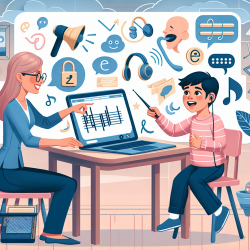
TinyEYE provides online therapy services to schools, connecting students with qualified clinicians through a secure telepractice platform. For articulation goals like lisps, online therapy can be highly effective because it supports:
- Consistent access to SLP services: Schools can reduce gaps caused by recruitment challenges, vacancies, or high caseloads.
- Engaging, interactive sessions: Digital tools can support drill practice, sound sorting, and structured conversation in a motivating format.
- Clear visuals for placement cues: Many students respond well to on-screen modeling, visual prompts, and immediate feedback.
- Collaboration with school teams: Teletherapists can coordinate with educators and support staff to reinforce carryover in real classroom contexts.
- Progress monitoring: Therapy is most effective when goals are measurable and progress is reviewed regularly—an approach that aligns well with school-based service delivery.
Most importantly, TinyEYE’s model helps schools maintain momentum. For a child working on /s/ and /z/, momentum matters: frequent, accurate practice builds new motor patterns and helps the student use clear speech automatically—without having to “think about it” all day.
When to Seek an Evaluation
If a student’s lisp is affecting intelligibility, confidence, or classroom participation, an SLP evaluation can clarify next steps. In school settings, the process may involve screening, teacher and family input, and targeted assessment to determine the right level of support.
If you’re an educator, consider referring when you notice persistent errors, avoidance of speaking, or peer impact. If you’re a parent or caregiver, consider asking for guidance if your child is frustrated, frequently misunderstood, or not improving over time.
For more information, please follow this link.