Why Speech Therapy Matters for Kids
As a Special Education Director, I spend a lot of time in conversations with families, principals, and service providers about one central goal: helping students communicate effectively so they can access learning, build relationships, and feel confident in their day-to-day lives. Speech therapy is often a key part of that support.
When people hear “speech therapy,” they sometimes think only about pronunciation. In reality, speech-language therapy can address a wide range of communication skills that affect classroom participation, literacy, social connections, and independence. Strong communication is foundational—when children can express what they know and understand what others are saying, they are better positioned to thrive academically and socially.
What Speech Therapy Can Support
Speech-language pathologists (SLPs) work with children on skills that fall into several broad areas. A child may need support in one area or a combination, and needs can change over time.
Speech sound production (articulation/phonology): Difficulty producing certain sounds (for example, /r/, /s/, /l/) or patterns of errors that make speech hard to understand.
Language development: Challenges with understanding language (receptive language), using language (expressive language), vocabulary, grammar, and sentence structure.
Social communication (pragmatics): Difficulty with conversational turn-taking, staying on topic, interpreting social cues, or using language appropriately in different settings.
Fluency: Stuttering or other disruptions in the flow of speech that affect communication comfort and participation.
Voice: Concerns about vocal quality, pitch, loudness, or vocal strain that may affect clarity and endurance.
Early communication and play skills: For younger children, therapy may focus on foundational interaction skills that support later language growth.
In school settings, therapy is closely tied to educational impact—how communication affects access to instruction, participation, and progress. In private therapy, goals can also include broader functional outcomes across home and community routines.
Common Signs a Child May Benefit from Speech Therapy
Families often ask, “How do I know if this is something to worry about?” While every child develops differently, there are common indicators that a speech-language evaluation could be helpful.
Speech is difficult for unfamiliar listeners to understand beyond what is typical for the child’s age.
The child avoids speaking in class, seems frustrated when trying to communicate, or frequently says “never mind.”
Difficulty following directions, answering questions, or retelling events in sequence.
Limited vocabulary compared to peers, or trouble forming sentences.
Challenges with social interaction: interrupting, missing cues, difficulty joining play or group work.
Stuttering that affects confidence, participation, or causes visible tension.
Teachers note concerns about language impacting reading comprehension, writing, or classroom discussion.
If a concern is showing up consistently across settings (home, school, community) or is affecting confidence and participation, it is worth exploring next steps. An evaluation can clarify whether therapy is needed and, just as importantly, what kind of support would be most effective.
What a High-Quality Speech Therapy Experience Looks Like
Whether therapy is provided in-person or online, strong services share a few key features. In my role overseeing programs and ensuring compliance, these are the elements I look for when evaluating service quality:
Individualized goals: Therapy targets should be specific, measurable, and meaningful for the child’s daily life and learning.
Evidence-informed methods: Activities and strategies should be grounded in research and adjusted based on progress.
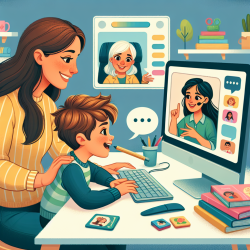
Family and caregiver involvement: Children make faster progress when practice is supported at home through realistic, manageable routines.
Collaboration with educators: When appropriate, therapy aligns with classroom expectations and helps students generalize skills.
Ongoing data and progress monitoring: Decisions about continuing, adjusting, or concluding therapy should be based on clear information.
Speech therapy should feel supportive and motivating—not overwhelming. A good plan meets the child where they are, builds confidence, and steadily increases independence.
Why Online Speech Therapy Is Becoming a Practical Solution
Across many districts, therapist staffing shortages are a persistent reality. Even when schools prioritize hiring, there may be limited local candidates, competing demands across buildings, and scheduling constraints that reduce service consistency. Families can experience similar barriers in the community: long waitlists, travel time, and limited appointment availability.
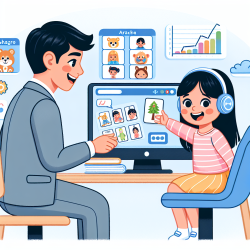
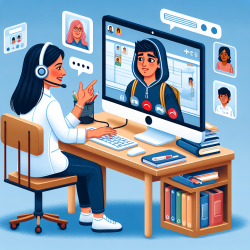
Online therapy (often called teletherapy) has become an important option because it can reduce access barriers while maintaining quality. When delivered by qualified clinicians using secure platforms, online speech therapy can be effective and engaging for many children.
Some benefits families and schools often notice include:
Improved access: Children can receive services even when local providers are limited.
Consistency: Fewer missed sessions due to travel or location constraints can support steady progress.
Flexible scheduling: Options that better align with school and family routines.
Comfort and confidence: Some students participate more readily in a familiar environment.
Online therapy is not a one-size-fits-all solution, and it is important to consider attention, sensory needs, and technology access. However, for many students, virtual therapy is a strong match—especially when services are designed specifically for children and include thoughtful clinician support.
How TinyEYE’s Private Speech Therapy Service Fits In
TinyEYE is known for providing online therapy services to schools, and that experience matters. School-based therapy requires strong systems: scheduling, documentation, progress reporting, and collaboration with educational teams. Those same strengths translate well into private services, where families want clear communication, professional expertise, and a plan that feels organized and achievable.
When families consider private speech therapy, they are often looking for one or more of the following:
Support while waiting for school-based services to begin
Additional practice to build momentum and confidence
Help that targets functional communication at home and in the community
Flexible access when local providers are hard to find
TinyEYE’s private speech therapy service can be a practical option for families who want convenient access to qualified support without the added barrier of travel. Virtual sessions can be structured, interactive, and goal-focused—while still feeling child-friendly and encouraging.
Helping Your Child Get the Most Out of Speech Therapy
One of the most effective ways to support progress is to make communication practice part of everyday routines. Therapy works best when skills are reinforced in small, consistent ways.
Ask your SLP for “home practice” that fits your schedule: Even 5–10 minutes a few times per week can help.
Build practice into daily life: Use mealtimes, car rides, or bedtime stories to target goals naturally.
Celebrate effort, not just accuracy: Confidence is a key ingredient in communication growth.
Share school information when relevant: Teacher input and classroom expectations can help shape meaningful goals.
Most importantly, keep communication positive. Children benefit when adults model patience, curiosity, and encouragement.
A Final Note on Timelines and Expectations
Progress in speech therapy depends on the child’s individual profile, the consistency of services, and how well skills generalize beyond sessions. Some children make rapid gains; others need longer-term support. In either case, a clear plan, regular progress updates, and strong collaboration help ensure therapy stays effective and aligned with the child’s needs.
For more information, please follow this link.