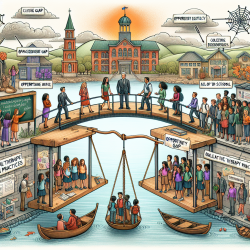
When people talk about “achievement gaps,” they often focus on what happens during the school day: classroom instruction, curriculum, and testing. But a major part of student learning happens outside the bell schedule—after school, on weekends, and during summer. That’s where the idea of a “6,000-hour learning gap” comes in.
In simple terms, students from higher-income families tend to have far more access to enriching learning experiences outside the classroom. Over time, those extra hours add up—creating a meaningful difference in skills, confidence, and academic progress by the time students reach middle school.
Why Expanded Learning Matters (Hint: Most Learning Time Isn’t in Class)
One of the most eye-opening facts in the research is this: students spend about 80% of their waking hours outside of the classroom. That means schools can do everything “right” during the day, and students can still experience very different learning realities depending on what happens after 3pm.
High-quality expanded learning—things like afterschool programs, enrichment clubs, tutoring, mentoring, and structured summer learning—has been associated with:
- Increased academic achievement
- Reduced absenteeism
- Decreases in undesirable student behavior
- Improved non-cognitive skills (such as self-management, persistence, and social skills)
Expanded learning doesn’t replace classroom teaching. Instead, it complements it by extending practice time, building real-world connections, and helping students stay engaged in positive routines.
How Income Shapes Opportunity After the Bell
Families don’t all have the same ability to provide enrichment. Research cited in the legislative priorities shows a striking difference in spending:
- Families in the top 20% of income spent close to $8,900 per child per year on enrichment activities.
- Families in the bottom 20% of income spent approximately $1,300 per child per year.
That gap isn’t just about money—it’s about access. Transportation, program fees, work schedules, and availability of local options all influence whether a student can participate.
By 6th grade, middle-income students have likely accumulated 6,000 more hours of learning than students born into poverty. That’s an enormous amount of additional time spent reading, practicing skills, exploring interests, receiving coaching, and building confidence.
“Where Is Your Student at 3pm?”
This is one of the most practical questions educators and policymakers can ask. Many affluent families can ensure students are supervised and engaged after school through sports, arts, academic clubs, and tutoring. But for many families, those options are limited or out of reach.
When afterschool opportunities are unavailable, students may face:
- Less structured time for homework support
- Fewer chances to build enrichment-based skills (music, STEM, art, leadership)
- Reduced access to mentoring and positive peer groups
- More barriers to consistent attendance and engagement
Expanded learning opportunities (often called ELOs) help fill that gap by providing safe, supportive environments where students can learn and grow holistically.
What Research Says About Afterschool Participation
The legislative materials highlight a key research finding: when underserved students participate more in afterschool programs, the achievement gap can narrow—especially in math.
As summarized in an ELOC report, researchers found that higher afterschool participation among low-income students was associated with narrower gaps in math achievement between low-income and high-income students. On the other hand, the gap tends to be wider for students who rarely participate in afterschool activities.
In other words, participation matters—and access drives participation.
2018 Legislative Priorities: What the Legislature Can Do
The Expanded Learning Opportunity Council (ELOC) outlined several recommendations to help address the opportunity gap and expand equitable access to high-quality programs. These priorities were positioned as a return on investment from the Legislature’s support from 2014–2018 and the charges of SB 6163.
1) Increase Support for Equitable, High-Quality Expanded Learning
The first priority is straightforward: increase support to school districts and community-based organizations so that expanded learning opportunities are available to all students, regardless of background or income.
This matters because quality programming takes real resources—trained staff, curriculum materials, safe facilities, transportation solutions, and consistent evaluation.
2) Create an Expanded Learning Office
The ELOC recommended creating an Expanded Learning Office to facilitate and expand high-quality programming statewide.
Why does an office matter? Because coordination matters. A dedicated office can help align funding, set consistent expectations, provide technical assistance, and support communities in building programs that meet local needs.
3) Add Expanded Learning to the Scope of the Department of Children, Youth, and Families
Expanded learning intersects with more than academics. It supports prevention, healthy development, and community connection.
The new Department of Children, Youth, and Families (DCYF) was designed to encourage strong families and keep kids on track for school and life success—while reducing involvement in juvenile justice and child welfare systems. Expanded learning can support that mission by keeping students engaged in productive, supervised, and enriching experiences across the day and year.
4) Extend the Mandate of the ELOC
The ELOC also recommended extending its mandate so it can continue serving in an advisory role to the Expanded Learning Office.
Advisory councils can be especially valuable when they include voices from across the system—education leaders, community organizations, families, and youth—so that policy decisions reflect real-world conditions.
Quality Matters: Washington State Quality Standards
Access alone isn’t enough. The ELOC emphasized quality through the adoption of Washington State Quality Standards in 2014. These standards were informed by stakeholders in Washington, nationally recognized best practices, and feedback from youth across the state.
The standards are divided into nine domains, each with guiding principles and specific strategies. The core idea is simple: quality programming requires the skills, knowledge, and tools to engage youth in ways that lead to positive outcomes.
How This Connects to Schools and Student Support Services
Expanded learning is often discussed as enrichment, but it also connects to student support systems. When students have consistent opportunities to practice communication, collaboration, self-regulation, and academic skills, schools often see benefits that show up in the classroom: better attendance, improved behavior, and stronger readiness to learn.
For school leaders, the big takeaway is that closing gaps isn’t only about adding more minutes to the school day. It’s about building a connected ecosystem—schools, families, community organizations, and state agencies—so students have meaningful learning time beyond the classroom.
A Practical Bottom Line
The 6,000-hour learning gap is a reminder that opportunity is cumulative. Small differences—an extra program here, a summer camp there, regular afterschool support—can compound over years into major differences in readiness and achievement.
Expanded learning opportunities offer a proven path to:
- Increase learning time in engaging, student-centered ways
- Support underserved students with access to enrichment
- Strengthen school-community partnerships
- Improve academic and social outcomes
And because students spend most of their time outside the classroom, these opportunities aren’t “extra.” For many students, they are essential.
For more information, please follow this link.