Across Manitoba, families and school teams are asking the same urgent question: “How long will it take for a student to receive speech-language or occupational therapy support?” The answer depends on where you live, which service pathway you use, and whether you are seeking intake, assessment, or ongoing treatment.
As a Special Education Director, I spend a lot of time in meetings with parents, principals, and clinicians discussing timelines, student needs, and what we can do right now while we wait. This post breaks down the 2024–2025 estimated wait times that have been shared for Manitoba and offers clear, practical options schools can consider—including TinyEYE Therapy Services as an online therapy option.
Why wait times matter for students
When therapy is delayed, students can experience compounding challenges in the classroom. That might look like:
- Increasing frustration with communication demands (speaking, understanding, social language)
- Difficulty accessing the curriculum due to fine-motor, sensory, or self-regulation needs
- Reduced confidence and participation, especially during group work and presentations
- More time spent by classroom teams trying to “fill the gap” without specialized support
Schools can and should provide supports within the school setting, but therapy services often play a key role in targeted skill-building, staff coaching, and progress monitoring. When services are delayed, we need a plan that is both educationally sound and realistic.
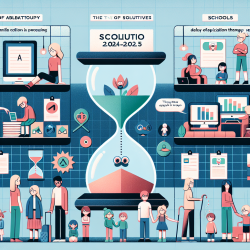
Manitoba wait times at a glance (2024–2025 estimates)
Based on the information provided, here is a plain-language summary of the current estimated wait times by pathway and region:
- WRHA Public Service (Intake) – Winnipeg: Less than 1 month (noted as a “No Waitlist” policy)
- WRHA Public Service (Treatment) – Winnipeg: Variable (episodic/consultative)
- Public Service (Rural) – Prairie Mountain / Southern: 6 to 12 months
- Private Assessment/Therapy – Winnipeg: Immediate to 1 month
Even within the same province, that range is significant. A student in Winnipeg may be able to access intake quickly, while a student in a rural region may wait 6–12 months for public services. And even when intake happens quickly, treatment timelines can still be “variable,” depending on service delivery models and capacity.
What “intake” versus “treatment” can mean
One area that often causes confusion for families is the difference between getting “in the system” and receiving ongoing therapy.
- Intake typically means initial contact, screening, triage, and determining eligibility or next steps.
- Treatment is the therapy itself. In some systems, treatment may be provided in an episodic model (short blocks of service) or consultative model (coaching caregivers/teams with less direct therapy).
Neither approach is inherently “good” or “bad.” The key is clarity: families and schools need to know what to expect, what the goals are, and what supports should be happening in the meantime.
Why rural wait times can be longer
In many districts, staffing shortages are not hypothetical—they are daily operational realities. Recruiting and retaining speech-language pathologists and occupational therapists can be especially difficult in rural and remote areas. This can lead to:
- Fewer clinicians covering larger geographic areas
- More travel time and fewer direct service hours
- Higher caseloads and limited flexibility for scheduling
- Increased reliance on consultative models out of necessity
From a district leadership perspective, we also have to ensure legal compliance and equitable access. That means we must keep working on long-term staffing strategies while also building short-term capacity so students are not left without support.
What schools can do while students are waiting
Even when a student is waiting for therapy, there are strong, practical steps schools can take immediately. These steps are most effective when they are documented, monitored, and adjusted based on student response.
1) Use classroom strategies that reduce barriers
- Provide visual schedules, step-by-step directions, and models
- Offer alternative ways to respond (oral, written, pointing, technology)
- Reduce copying demands and provide templates or guided notes
- Build predictable routines and teach transitions explicitly
2) Implement targeted school-based interventions
- Small-group language supports (vocabulary, narrative skills, comprehension)
- Fine-motor practice embedded in meaningful tasks (printing, cutting, organizing materials)
- Self-regulation supports (movement breaks, calm corners, sensory tools as appropriate)
3) Track what you try and what changes
Data does not need to be complicated. A simple tracking sheet can help teams answer:
- What strategy was used?
- How often was it used?
- What was the student response over 2–6 weeks?
- What should we continue, intensify, or stop?
4) Communicate clearly with families
When families are anxious about delays, transparency matters. Helpful communication includes:
- What the school is doing now
- What the referral pathway looks like and what “wait time” means in practice
- Who the family can contact for updates
- How the family can support skills at home (simple, doable actions)
An option to reduce delays: TinyEYE Therapy Services (online)
When in-person staffing is limited, online therapy can help districts maintain services and reduce wait times—especially for rural communities or hard-to-fill roles. TinyEYE Therapy Services is an online option that schools can use to support students through secure, school-based telepractice.
In my experience overseeing service delivery, online therapy can be particularly helpful when:
- A vacancy or leave creates an immediate service gap
- Caseloads spike and teams need additional capacity
- Schools need consistent scheduling without travel constraints
- Specialized expertise is needed and difficult to recruit locally
How online therapy can fit into school programming
Online therapy is not “one size fits all.” Strong implementation typically includes:
- Clear goals: aligned with student needs and school priorities
- Collaboration: regular communication with teachers and support staff
- Scheduling that works: minimizing instructional disruption
- Appropriate supervision/support: ensuring students can access sessions successfully
For many students, online sessions can feel engaging and structured, and they allow therapists to provide consistent service even when geography is a barrier.
Choosing a pathway: public, private, and school-based options
Families often ask whether they should wait for public services, pursue private services, or rely on school-based supports. The most realistic answer is: it depends on the student’s needs, the family’s capacity, and local availability.
- Public services may be more accessible financially, but wait times can be longer in some regions.
- Private services may be faster (as noted: immediate to 1 month in Winnipeg), but cost and scheduling can be barriers.
- School-based services focus on educational impact and access to learning, and can be strengthened through staffing solutions such as online therapy.
From a systems perspective, the goal is not to “pick one” and hope for the best. The goal is coordinated support so the student is making progress while longer-term services are being arranged.
Key takeaways
- Manitoba wait times vary significantly by region and pathway.
- Quick intake does not always mean quick or consistent treatment.
- Rural regions may experience longer delays due to staffing and service delivery constraints.
- Schools can implement meaningful supports immediately while students wait.
- TinyEYE Therapy Services is an online option that can help schools address staffing shortages and maintain timely therapy support.
For more information, please follow this link.