When Your Child Is Hard to Understand, It Can Feel Like You’re the Only One
Many families share the same concern: “My child is bright, social, and has so much to say—so why do people struggle to understand them compared to other kids?” If you’ve found yourself translating for your child at the playground, repeating their words to relatives, or noticing that teachers and peers ask “What?” more often than you’d expect, it’s natural to worry.
As a Special Education Director, I’ve sat in countless meetings with families who are trying to sort out what’s typical, what might be a speech sound concern, and what supports are available. The good news is that speech clarity challenges are common, they are often very treatable, and early support can make a meaningful difference in confidence, learning, and social connections.
First: What “Typical” Speech Clarity Often Looks Like
Children develop speech sounds over time. Some sound errors are expected at younger ages, and many resolve naturally. However, a helpful general guideline is how well an unfamiliar listener can understand your child.
By age 2: often understood about 50% of the time
By age 3: often understood about 75% of the time
By age 4: often understood about 90% of the time
By age 5: speech is typically understood nearly all the time in conversation
These are general benchmarks, not pass/fail rules. What matters most is whether your child is making steady progress and whether communication breakdowns are affecting participation at school, with friends, or at home.
7 Common Reasons a Child May Be Harder to Understand Than Peers
1) Speech Sound Errors (Articulation Differences)
Some children have difficulty producing specific sounds clearly (for example, “wabbit” for “rabbit” or a lisp). These can be developmental, but if errors persist beyond expected ages or significantly reduce clarity, therapy can help.
2) Phonological Patterns (Sound System Differences)
Other children may simplify whole groups of sounds in a patterned way, such as dropping final consonants (“ca” for “cat”) or substituting easier sounds (“tat” for “cat”). This can make speech much harder to understand, especially in longer sentences.
3) Fast Rate of Speech or Reduced Intelligibility in Conversation
Some children can say a sound correctly in isolation but become difficult to understand in real conversation. They may speak quickly, mumble, or reduce sounds when excited or tired. Therapy often targets carryover—using clear speech in everyday situations.
4) Hearing Differences (Including Temporary Hearing Loss)
Even mild or fluctuating hearing loss—sometimes related to frequent ear infections—can impact how children learn and monitor speech sounds. If you suspect hearing concerns, a hearing screening or audiology evaluation is an important step.
5) Oral-Motor and Structural Factors
Occasionally, factors such as reduced strength/coordination for speech movements, dental issues, or structural differences can influence clarity. A speech-language pathologist (SLP) can help determine whether these factors are contributing and what supports are appropriate.
6) Language Development Differences
Sometimes children are hard to understand not only because of speech sounds, but because of how they organize words and sentences. If a child’s grammar, vocabulary, or sentence structure is still developing, listeners may have difficulty following the message even when individual sounds are clear.
7) Confidence, Attention, and Communication Habits
When children have experienced repeated communication breakdowns, they may speak more quietly, avoid certain words, or rush through speech. This can create a cycle: less clarity leads to less confidence, which can lead to even less clarity. Support that is encouraging and skill-based can help break that cycle.
Signs It May Be Time to Seek Support
Families often ask, “Should we wait and see?” In schools, we balance developmental variation with the impact on access to learning and social participation. Consider reaching out for an SLP consultation if you notice any of the following:
Your child is frequently misunderstood by people outside the family
Your child becomes frustrated, shuts down, or avoids talking
Teachers or caregivers report difficulty understanding your child
Your child is being teased or is withdrawing socially
Speech clarity is affecting early literacy skills (sound awareness, spelling, reading)
Progress seems to have stalled over several months
Why Speech Clarity Matters Beyond “Being Understood”
Speech clarity is not just a “nice to have.” When children are consistently understood, they participate more, take more academic risks, and build stronger peer relationships. In my experience leading special education teams, we also see how speech sound development can connect to:
Early literacy: recognizing and manipulating sounds supports reading and spelling
Classroom participation: answering questions, giving presentations, and working in groups
Social connection: joining games, telling stories, negotiating, and repairing misunderstandings
Self-advocacy: asking for help, clarifying needs, and expressing emotions
How Private Therapy Can Help—Especially When Time and Access Are Challenges
Many families are motivated to act quickly, but they may run into real barriers: limited local providers, long waitlists, transportation issues, or scheduling conflicts with school and activities. Districts face similar challenges—especially with therapist staffing shortages—so families often appreciate options that are flexible and timely.
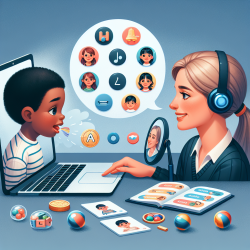
This is where TinyEYE Therapy Services can be a practical solution. TinyEYE provides private online therapy services that can support children who are hard to understand by targeting the specific skills that improve speech clarity and communication confidence.
What TinyEYE’s Private Online Therapy Can Offer
Convenient access from home: therapy sessions can fit into family schedules without travel time
Specialized support: an SLP can identify whether the concern is articulation, phonological patterns, language, or a combination
Goal-driven sessions: therapy focuses on measurable progress and functional communication
Family involvement: caregivers can learn strategies to support carryover between sessions
Engaging online tools: interactive activities can help keep children motivated and practicing
What You Can Do at Home Right Now (While You Explore Support)
You don’t need to wait for a formal plan to start helping your child communicate more clearly. Here are a few family-friendly strategies that are supportive (not corrective or stressful):
Model, don’t pressure: If your child says “I wan ju,” you can respond, “You want juice! Here’s your juice.”
Slow it down: Use a calm, slower speaking rate yourself—kids often match your pace.
Confirm the message: “I think you said you want the red car—did I get that right?” This reduces frustration and builds repair skills.
Pick one moment to practice: Short, positive practice (1–2 minutes) is often more effective than long drills.
Celebrate communication: Praise effort and success: “I understood you right away—nice clear words.”
A Final Thought for Families: You’re Not Overreacting
If your child is harder to understand than peers, it doesn’t mean you’ve done anything wrong—and it doesn’t mean something is “seriously wrong.” It means your child may benefit from targeted support to strengthen the skills that make speech clearer and communication easier.
With the right approach, many children make strong progress. And just as importantly, they often regain confidence in speaking up, joining in, and sharing what they know.
For more information, please follow this link.