If you’ve ever found yourself translating your child’s words for friends and family, you’re not alone. Three-year-olds are busy building language, learning new words daily, and experimenting with how to move their lips, tongue, and jaw to make clear speech sounds. Some “toddler talk” is completely typical at this age. At the same time, there are certain speech sounds many 3-year-olds can produce, and there are also signs that it may be time to seek support.
This guide breaks down which sounds are commonly expected by age 3, what kinds of speech patterns are still normal, what might be a red flag, and how TinyEYE’s private online speech therapy services can support families.
First, What Does “Should Have” Really Mean?
Speech sound development isn’t a pass/fail checklist. Children learn sounds at different rates, and they may use a sound correctly in one word but not another. Also, “having” a sound can mean different things:
- Can produce the sound in some words, even if not perfect or consistent
- Uses the sound in everyday speech with increasing accuracy
- Is understandable to familiar adults most of the time
At age 3, many children are understood by familiar listeners most of the time, but they may still be hard to understand for people who don’t know them well. That’s often developmentally appropriate—up to a point.
Speech Sounds Many 3-Year-Olds Can Say
By around age 3, many children can produce a set of “early developing” consonant sounds. You may hear these sounds clearly in everyday words like “mommy,” “baby,” “dog,” or “go.”
Commonly emerging or established sounds by age 3 often include:
- P as in “pop”
- B as in “ball”
- M as in “mom”
- N as in “no”
- W as in “we”
- H as in “hi”
- T as in “top”
- D as in “dog”
- K as in “cat”
- G as in “go”
- F as in “fun” (often emerging; may not be perfect yet)
- Y as in “yes”
Some children also begin using S and SH around this age, but these can still be developing. It’s also common for children to simplify more complex sounds or sound combinations.
What Speech Errors Are Still “Normal” at 3?
Many 3-year-olds make predictable patterns of errors called phonological processes. These are rule-based simplifications that help children talk before they can coordinate all the precise movements needed for adult speech.
Some common patterns you might still hear at age 3 include:
- Final consonant deletion: “ca” for “cat”
- Cluster reduction: “poon” for “spoon,” “tar” for “star”
- Fronting: “tat” for “cat,” “doe” for “go”
- Stopping: “tun” for “sun,” “doo” for “zoo”
- Gliding: “wabbit” for “rabbit,” “yewo” for “yellow”
Here’s the key: these patterns can be typical in toddlerhood, but they should gradually reduce over time. If they persist strongly, or if your child’s speech is very difficult to understand, it may be worth a closer look.
How Understandable Should a 3-Year-Old Be?
A helpful rule of thumb is that a child’s speech intelligibility increases with age. By age 3, many children are understood by familiar adults most of the time, and strangers some of the time. If even close family members frequently can’t understand your child, that can be a sign to seek support.
Consider these questions:
- Do you often need to “translate” your child’s speech?
- Does your child get frustrated when not understood?
- Do they avoid talking in certain situations?
- Are there many sounds missing from their speech?
If you answered yes to several, it may be time to consult a speech-language pathologist (SLP).
Speech Sounds Many Children Are Still Learning After Age 3
Some sounds are simply harder and often develop later. It’s common for 3-year-olds to still be working on:
- R (often later developing)
- L (often later developing)
- TH (as in “thumb” or “this”)
- CH and J (as in “chip,” “jump”)
- S, Z, SH (may be emerging but not consistent)
Also, many children are still learning how to produce longer words clearly and how to coordinate consonant clusters like “sp,” “tr,” or “sk.”
Red Flags: When to Consider Speech Therapy
As a special education-informed guideline, it’s not just about “one sound.” We look at how speech impacts participation: being understood, joining conversations, and feeling confident communicating.
You may want to seek an SLP evaluation if your 3-year-old:
- Is very hard to understand for familiar adults
- Uses only a few consonant sounds (speech seems limited to “m,” “b,” “d,” etc.)
- Rarely uses back sounds like K and G (or substitutes them consistently)
- Leaves off many ending sounds (“ca” for “cat” in most words)
- Shows frustration, tantrums, or withdrawal due to communication breakdowns
- Has a history of frequent ear infections or suspected hearing concerns
- Has feeding/oral-motor concerns (difficulty chewing, drooling beyond what’s typical)
- Is not making steady progress over several months
Early support can reduce frustration, strengthen clarity, and build confidence—especially before communication demands increase in preschool settings.
How TinyEYE’s Private Online Speech Therapy Can Help
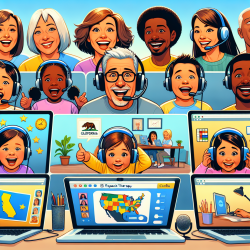
TinyEYE provides online therapy services to schools, and we also offer private speech therapy to support families who want convenient, professional help from home. For many caregivers, the biggest barriers to therapy are time, travel, and scheduling. Online therapy can remove those barriers while still providing high-quality, individualized care.
With TinyEYE’s private speech therapy service, families can expect:
- Professional support from qualified clinicians who understand child development and family-centered practice
- Individualized goals based on your child’s specific speech sound patterns and needs
- Engaging online sessions designed to keep young children motivated and participating
- Caregiver coaching so you know what to practice between sessions (without turning home into “school”)
- Flexible access that can fit busy family schedules
Speech therapy for a 3-year-old often focuses on building a strong foundation: helping your child hear sound differences, learn correct mouth movements, and practice target sounds in simple words and playful routines. A good plan also supports generalization—so skills show up in real life, not just during therapy time.
What You Can Do at Home Right Now (No Special Materials Needed)
If you’re waiting for an evaluation or simply want to support clearer speech, these strategies are a great start:
- Model, don’t demand: If your child says “tar” for “car,” you can respond, “Yes, car! The car is fast.”
- Slow down your own speech slightly to make sounds easier to notice.
- Use short, clear phrases during play: “Go car,” “Big dog,” “More bubbles.”
- Read repetitive books and emphasize key words (animal sounds, vehicle words, favorite characters).
- Choose 5–10 practice words tied to your child’s interests (dinosaurs, trucks, snacks) and repeat them naturally.
If your child becomes frustrated, prioritize connection over correction. Confidence and willingness to communicate matter just as much as accuracy.
The Bottom Line
Many 3-year-olds can say a range of early consonant sounds like p, b, m, n, t, d, k, g, w, and h, and they’re still learning more complex sounds and sound combinations. Some speech simplifications are typical at this age, but persistent patterns, low intelligibility, or frustration may signal the need for support.
When in doubt, getting professional input can bring clarity and peace of mind. Speech therapy isn’t only for “severe” concerns—it can also be a proactive way to help your child be understood, feel confident, and thrive socially and academically.
For more information, please follow this link.