It can feel alarming when a child avoids writing. Maybe homework turns into tears, your child “forgets” their pencil, or they’ll do anything to get out of a writing task. Many families wonder: is this just a phase, or is it a sign of something bigger?
Writing is one of the most complex tasks children do in school. It requires ideas, language, attention, memory, organization, fine motor skills, visual skills, posture, and endurance—all at the same time. When any part of that system feels too hard, avoidance is a very normal response.
So, should you worry? Not always. But you should pay attention. Writing avoidance is a clue, and clues help you decide what kind of support your child needs.
Why kids avoid writing (and why it’s not always about motivation)
Adults often interpret writing avoidance as laziness or defiance. In reality, many kids avoid writing because it is genuinely difficult, uncomfortable, or overwhelming. Avoidance is often a protective strategy: “If I don’t start, I can’t fail.”
Common reasons children avoid writing include:
- Handwriting is physically hard: weak hand muscles, poor pencil control, fatigue, or pain.
- It’s hard to think and write at the same time: your child may have great ideas but struggle to get them onto paper.
- Spelling and mechanics are exhausting: if every word is a battle, writing feels like running uphill.
- They can’t organize their thoughts: planning a beginning, middle, and end can be challenging.
- They worry about mistakes: perfectionism can shut writing down completely.
- Attention and working memory challenges: holding instructions in mind while writing can be tough.
- Past negative experiences: repeated corrections, low grades, or feeling “behind” can create anxiety.
When writing avoidance is typical
Some resistance is developmentally normal, especially during big transitions (starting kindergarten, moving from printing to cursive, or shifting from short sentences to paragraphs). You may see avoidance when:
- Your child is learning a new writing skill and needs time to build confidence.
- They are tired, hungry, or overstimulated after a long school day.
- The assignment is long, unclear, or not broken into manageable steps.
- They prefer hands-on or verbal learning and need variety.
If your child can write when supported, improves with practice, and doesn’t show significant distress, it may be a skill-building season rather than a red flag.
Signs you should pay closer attention
Writing avoidance becomes more concerning when it is persistent, intense, or impacts school performance and self-esteem. Consider reaching out for support if you notice several of these signs:
- Frequent meltdowns or anxiety when writing is expected.
- Complaints of hand pain, cramping, or extreme fatigue after short writing tasks.
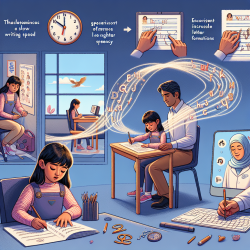
- Very slow writing speed compared to peers, even for simple tasks.
- Illegible handwriting that doesn’t improve with time and instruction.
- Difficulty copying from the board or a book.
- Odd pencil grasp that seems to limit control or endurance.
- Messy spacing and sizing (words run together, letters float, inconsistent size).
- Trouble getting ideas onto paper despite being able to explain them verbally.
- Avoidance that increases over time, not decreases.
- Falling grades because your child can’t show what they know in writing.
What could be behind the struggle?
There isn’t one single cause of writing avoidance. Often, it’s a combination of factors. Here are a few common areas that school teams and therapy providers look at:
1) Handwriting and fine motor skills
Handwriting requires strength, coordination, and motor planning. If forming letters takes a lot of effort, your child may avoid writing simply because it’s exhausting.
2) Visual-motor integration
This is the ability to coordinate what the eyes see with what the hands do. Challenges here can affect copying, spacing, alignment on the line, and letter formation.
3) Language and written expression
Some children struggle not with the pencil, but with turning thoughts into sentences and organizing ideas into a coherent paragraph. They may talk brilliantly but freeze when asked to write.
4) Attention, executive functioning, and working memory
Writing demands planning, sequencing, remembering instructions, and self-monitoring. If these skills are still developing, writing can feel like juggling too many balls at once.
5) Dysgraphia (a specific learning difficulty related to writing)
Dysgraphia is often associated with difficulty in handwriting, spelling, and/or written expression. A child with dysgraphia may know what they want to say but struggle to produce written work that matches their understanding.
If you suspect dysgraphia or another learning difference, it’s worth discussing with your school team. Identifying the “why” helps everyone choose the right supports.
What you can do at home (without turning your evenings into a battle)
You don’t need to become your child’s full-time writing coach. Small, consistent supports often help more than long, stressful sessions.
- Start with connection: acknowledge that writing feels hard. “I can see this is frustrating. Let’s make a plan together.”
- Reduce the load: shorten assignments when possible, or break them into chunks (two sentences, then a break).
- Offer choices: pen or pencil, sitting at a desk or standing at a counter, writing first or drawing first.
- Use “say it first” strategies: let your child tell you their sentence out loud before writing it.
- Try assistive tech: speech-to-text, typing, or word prediction tools can help children show what they know.
- Build hand strength through play: playdough, LEGO, clothespins, beading, and crafts support fine motor skills without the pressure of “practice.”
- Celebrate effort, not neatness: focus on progress and persistence to protect confidence.
How schools can help (and what to ask for)
If writing avoidance is affecting your child’s learning, you don’t have to figure it out alone. Schools have systems to support students, and families are an important part of that team.
Consider asking your child’s teacher or school team:
- How does my child’s writing compare to classroom expectations?
- Is the difficulty mostly handwriting, spelling, idea organization, or all of the above?
- What accommodations are available right now (without waiting for a formal plan)?
- Can we try reduced copying, graphic organizers, or alternative ways to show learning?
- Would an occupational therapy (OT) or speech-language assessment be appropriate?
Support may include classroom strategies, small-group interventions, accommodations, or therapy services. Occupational therapy can address handwriting mechanics, posture, grip, endurance, and visual-motor skills. Speech-language therapy can support sentence structure, vocabulary, narrative skills, and written expression. When the right supports are in place, many children become more willing to write because writing finally feels doable.
Why early support matters
Writing is tied to nearly every subject as children move through school. When writing is hard, students may participate less, avoid longer assignments, and start to believe they’re “not good at school.” The earlier we reduce the struggle and teach strategies, the more we protect confidence and keep learning on track.
At TinyEYE, we partner with schools to provide online therapy services that help students access the curriculum and build functional skills. When therapy is delivered in a school setting, it can be coordinated with classroom expectations and real academic tasks—so the support connects directly to what your child is being asked to do every day.
A simple takeaway
If your child avoids writing, it’s worth noticing—but it’s not a reason to panic. Avoidance is information. Look for patterns, watch for signs of distress, and reach out to your school team if the struggle is persistent. With the right supports, many children can make meaningful progress in writing and feel more confident showing what they know.
For more information, please follow this link.