Teachers everywhere can name at least one student whose behavior seems to “take over” the room—shutting down learning, straining relationships, and leaving adults feeling stuck between compassion and control. When a student has severe emotional and behavioral disorders (often shortened to EBD), the day can become a cycle of disruption, removal, and repair. The good news is that decades of school-based practice and research point to approaches that reduce crises and increase student success—without relying on punishment as the primary tool.
This post highlights key best practices drawn from a comprehensive Washington State resource developed through a collaboration among experienced educators and university partners. While every student is unique, the themes are consistent: prevention matters, relationships matter, and individualized planning matters.
Understanding EBD: Why Definitions (and Perceptions) Matter
One reason EBD can feel confusing in schools is that “how many students have EBD” depends on the definition used. Clinical definitions (often used in mental health settings) capture a larger group of students, including internalizing needs like anxiety and depression as well as externalizing needs like aggression or oppositional behavior. School-based definitions (used for special education eligibility) are typically narrower and identify a smaller percentage of students.
What this means in practice is important: many students with significant emotional or behavioral needs will be educated primarily in general education settings. They may not have a formal EBD label, but they still need effective supports.
Why Schools Need a Stronger Support System for Teachers
Educators frequently report that they were not adequately prepared to teach students with severe behavior challenges. When staff feel undertrained, they may default to reactive strategies—sending students out, escalating consequences, or using approaches that unintentionally increase power struggles.
At the same time, schools face a shortage of specialized staff and high burnout rates in roles serving students with intense needs. Best practice, therefore, is not simply “train the student.” It is “support the adults and the system,” so the student experiences consistent, skilled responses across the day.
Start with a Better Question: “What’s Driving the Behavior?”
Behavior is complex. It rarely has one cause. A helpful lens is developmental psychopathology, which emphasizes that behavior develops over time through an interaction of factors such as biology, learning history, family stressors, academic difficulties, peer relationships, and community context.
A practical way to apply this lens is to consider risk and resilience factors.
Risk factors may include chronic stress, trauma exposure, learning difficulties, peer rejection, poverty, or significant life events.
Resilience factors may include a caring adult relationship, strong intellectual functioning, an easygoing temperament, and supportive connections outside the family.
When teams look for both risk and resilience, they move from “What’s wrong with this student?” to “What does this student need, and what strengths can we build on?” That shift changes everything.
Best Practice #1: Proactive, Preventive Supports (Not Just Consequences)
Many programs for students with EBD have historically emphasized control and exclusion. Best practice reverses that pattern by building therapeutic learning environments—settings that reduce triggers, teach skills, and make success more likely.
Common proactive conditions that promote positive behavior include:
Clear, explicitly taught behavior expectations
Consistent, predictable responses to rule violations
An engaging curriculum with appropriate modifications
Strong teacher-student relationships and positive peer culture
Individualized supports for students with chronic needs
Best Practice #2: Positive Behavior Support (PBS) as a Schoolwide Framework
Positive Behavior Support (PBS) is a preventive approach grounded in behavioral science. Instead of asking, “How do we punish problem behavior?” PBS asks, “How do we teach and reinforce the behaviors we want to see?”
PBS is often organized into three levels:
Primary prevention: schoolwide expectations, consistent routines, strong instruction, and universal reinforcement systems.
Secondary prevention: targeted small-group supports for at-risk students (for example, problem-solving groups or coping skills instruction).
Tertiary prevention: intensive, individualized supports such as Functional Behavioral Assessment (FBA) and Behavior Intervention Plans (BIPs).
When PBS is implemented with fidelity, schools often see meaningful drops in office referrals and disruptions—because adults are responding consistently and students are learning replacement skills.
Best Practice #3: Comprehensive Classroom Management that Builds Belonging
Strong classroom management is not just rules and consequences. Comprehensive approaches emphasize instructional excellence, student involvement in norms, problem-solving, family collaboration, and a community of caring. Students with EBD are especially sensitive to rejection and power struggles; a classroom culture that communicates “You belong here” can reduce the need for attention-seeking or escape behaviors.
In practical terms, this includes:
Teaching routines the way you teach academics
Using more positive interactions than corrective ones (a common guideline is 4 positives to 1 correction)
Responding to misbehavior quickly, calmly, and consistently
Designing instruction so students experience competence, not constant failure
Best Practice #4: Re-ED Principles—Skill Building, Structure, and “Joy”
The Re-Education (Re-ED) model emphasizes the role of the teacher as a “teacher-counselor”: a steady, caring adult who is firm, hopeful, and skilled. Re-ED highlights structured environments, predictable routines, and the idea of “just manageable difficulty”—challenges that are hard enough to build growth but not so hard that they lead to defeat.
One of the most powerful Re-ED ideas for schools is that students need to experience competence and joy in daily life. For a student who expects failure, a successful academic moment can be genuinely therapeutic. This is a special education truth that is easy to forget during crisis-driven days: instruction is intervention.
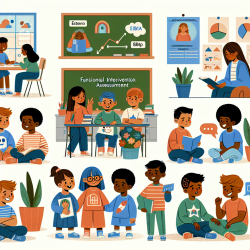
Best Practice #5: Use FBA and BIP for Students Who Need Intensive, Individualized Support
Even the best proactive systems will not meet every need. Some students require individualized planning based on the function of their behavior.
Functional Behavioral Assessment (FBA): The “Why” Behind the Behavior
An FBA is a structured process for understanding the relationship between behavior and the environment. It typically examines:
Setting events: distant factors that increase vulnerability (poor sleep, family conflict, medication changes, trauma reminders).
Antecedents: immediate triggers (a difficult task, a transition, peer teasing).
Consequences: what happens after the behavior that might maintain it (escape from work, adult attention, peer reactions).
The team then develops a summary statement, often in this form:
Given (setting event), when (antecedent) happens, the student does (behavior) in order to (function).
Behavior Intervention Plan (BIP): Teach Replacement Skills and Change the Conditions
A strong BIP does more than list consequences. It typically includes:
A clear definition of the target behavior
Prevention strategies (changes to tasks, environment, or routines)
Replacement skills to teach (communication, coping, requesting a break)
Reinforcement for desired behavior
A monitoring plan so the team can adjust based on data
Importantly, FBAs and BIPs are not just compliance paperwork. They are a way of thinking that helps teams respond with precision rather than emotion.
Where TinyEYE Fits: Strengthening the Team Around the Student
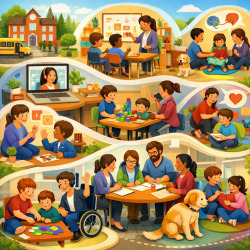
Students with severe emotional and behavioral needs do best when schools take a multidisciplinary approach. That can include educators, administrators, counselors, psychologists, and family members—each bringing part of the picture.
TinyEYE supports schools by providing online therapy services that can complement school-based interventions. When therapy services align with classroom strategies, teams can work toward shared goals such as:
Building coping and self-regulation skills
Improving functional communication
Supporting behavior plans with consistent language and strategies
Reducing escalation through early intervention and skills practice
When students experience the same expectations and supportive responses across settings, progress is more likely—and staff stress decreases.
A Practical Closing Checklist for Schools
Are expectations clear, taught, and practiced (not just posted)?
Is reinforcement frequent enough to compete with the payoff of problem behavior?
Do adults respond consistently, calmly, and predictably?
Are academic tasks matched to student skill level to reduce escape-driven behavior?
For persistent concerns, have we completed an FBA and built a function-based BIP?
Are we building resilience by strengthening relationships and student competence?
For more information, please follow this link.