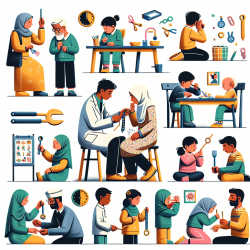

Developmental Coordination Disorder (DCD) is a neurodevelopmental condition that affects a child’s ability to learn and perform coordinated motor skills. In school settings, DCD can show up as persistent struggles with tasks that require timing, balance, bilateral coordination, motor planning, and fine motor control. Because so much of a student’s day depends on motor performance—writing, cutting, navigating the classroom, participating in physical education, managing fasteners, organizing materials—DCD can have a broad impact on learning, independence, and self-esteem.
Occupational therapy (OT) plays a central role in identifying functional barriers, building skills, and creating practical supports so students can participate meaningfully in school routines. When OT services are delivered in collaboration with educators and families, students with DCD can make measurable progress in both performance and confidence.
What Is Developmental Coordination Disorder?
DCD is characterized by motor coordination difficulties that are significantly below what would be expected for a child’s age and opportunities for learning. These challenges interfere with daily living skills and academic productivity. Importantly, DCD is not explained by an intellectual disability, visual impairment, or a neurological condition such as cerebral palsy. Many students with DCD are bright, motivated learners—yet they may be labeled as “careless,” “unmotivated,” or “not trying,” especially when their effort does not translate into smooth performance.
In practical terms, DCD often affects:
Motor planning (figuring out how to move the body to complete a task)
Coordination (timing and sequencing movements)
Balance and postural control (stability for sitting, standing, and moving)
Fine motor skills (hand strength, dexterity, precision)
Visual-motor integration (coordinating what the eyes see with what the hands do)
How DCD Can Look in the Classroom
DCD can be easy to miss early on, especially when a student is polite, quiet, and working hard. Teachers may notice that the student takes longer than peers, avoids certain tasks, or produces work that does not reflect their knowledge. The mismatch between cognitive ability and motor output is often a key clue.
Common school-based signs include:
Handwriting challenges: slow writing speed, inconsistent letter size, poor spacing, fatigue, frequent erasing, difficulty copying from the board
Tool use difficulties: trouble with scissors, rulers, glue sticks, manipulatives, or opening containers
Organization and materials management: messy desk or backpack, difficulty keeping track of papers, challenges with multi-step routines
Physical education and recess: avoiding games, difficulty catching/throwing, awkward running, trouble with team sports, increased risk of falls
Self-care at school: managing zippers, buttons, tying shoes, washing hands efficiently, opening lunch items
Classroom participation: reluctance to volunteer for board work, crafts, or group activities that highlight motor skills
Over time, repeated difficulty can lead to frustration, anxiety, and decreased willingness to try. Students may begin to believe they are “bad at school,” when the real barrier is motor coordination and the demands placed on their performance.
Why Occupational Therapy Matters for Students With DCD
Occupational therapy focuses on function—what a student needs and wants to do in daily life. In schools, OT is not just about improving motor skills in isolation. It is about helping students participate in academic tasks, routines, and peer activities with as much independence as possible.
OT practitioners consider:
The student: strengths, needs, sensory-motor profile, motivation, emotional factors
The task: complexity, steps, tools required, time demands
The environment: classroom setup, expectations, seating, schedule, peer supports
This “whole picture” approach is especially important for DCD, because a student’s performance can vary widely depending on fatigue, time pressure, and how a task is presented.
Occupational Therapy Assessment: Looking Beyond “Messy Handwriting”
When DCD is suspected, OT assessment typically explores how motor challenges affect school occupations (everyday school activities). A thorough OT evaluation may include observation, work samples, teacher and family input, and standardized or criterion-based measures as appropriate.
Areas often assessed include:
Handwriting speed and legibility under real classroom conditions
Fine motor precision and dexterity (for example, manipulating small objects)
Posture, core stability, and endurance for seated work
Bilateral coordination (using both sides of the body together)
Visual-motor integration and visual perceptual demands
Motor planning and ability to learn new movement sequences
Executive function demands connected to motor tasks (planning, organizing, initiating)
The goal is to identify the functional “pinch points” that make school harder than it needs to be—and then build a plan that supports access, progress, and participation.
OT Interventions That Help: Skill, Strategy, and Support
Effective OT intervention for DCD often blends three elements: building underlying skills, teaching compensatory strategies, and adjusting the environment. The right mix depends on the student’s age, the severity of impact, and the classroom expectations.
1) Building Functional Motor Skills
OT may target the specific motor components needed for school tasks, such as:
Hand strength and endurance for writing and tool use
Grip patterns and pencil control
Scissor skills and bilateral coordination for cutting
Postural control for stable seated work
Motor planning through structured practice of meaningful tasks
Importantly, practice is most effective when it is purposeful and connected to real classroom activities—not just repetitive drills.
2) Teaching Strategies That Reduce Effort and Increase Independence
Students with DCD benefit from explicit instruction in “how to do the task,” not just “do the task.” OT may teach strategies such as:
Breaking multi-step tasks into smaller, teachable chunks
Using visual checklists for routines (packing up, turning in work)
Learning consistent letter formation with structured cues
Self-monitoring tools (for example, quick checks for spacing and alignment)
Planning ahead for transitions and materials
3) Environmental and Classroom Accommodations
Accommodations are not “shortcuts.” For students with DCD, they are access tools that reduce unnecessary barriers and allow the student’s knowledge to show. Examples include:
Preferential seating for posture and visual access
Slant boards or adjusted paper positioning to support wrist and arm alignment
Pencil grips or adapted writing tools when appropriate
Extra time for written output or reduced copying demands
Access to technology (keyboarding, speech-to-text, word prediction) when handwriting limits productivity
Modified worksheets (less clutter, more space, fewer items per page)
OT can help teams choose accommodations that are practical, age-respectful, and aligned with curriculum expectations.
Social-Emotional Considerations: Protecting Confidence and Participation
One of the most overlooked aspects of DCD is the emotional load it can create. Students may experience embarrassment during handwriting, art, or gym activities. They may avoid participation to protect themselves from failure or peer attention. OT can support not only performance, but also self-advocacy and resilience.
Helpful supports include:
Private, strengths-based feedback that emphasizes progress and effort
Opportunities to demonstrate learning in multiple formats (oral responses, projects, technology)
Teaching the student simple scripts for self-advocacy (for example, requesting extra time or a different tool)
Collaborating with school staff to reduce public comparisons (such as timed copying contests)
How Online Occupational Therapy Can Support Schools
Schools often face challenges related to staffing, scheduling, and service continuity. Online OT can help address these barriers by providing consistent access to qualified occupational therapists, flexible scheduling options, and collaborative consultation with school teams.
In a well-structured online model, occupational therapists can:
Observe students in functional tasks via secure video sessions
Coach educators and support staff in real-time strategies
Provide guided practice for handwriting, motor planning, and self-care routines
Recommend classroom accommodations and track progress with measurable goals
Support carryover by sharing clear home and school strategies
For students with DCD, consistency matters. When strategies are aligned across settings and adults use the same language and expectations, students are more likely to generalize skills and feel successful.
Practical Next Steps for School Teams
If a student is struggling in ways that resemble DCD, early support can prevent a pattern of failure and avoidance. Consider these steps:
Document functional concerns: What tasks are hard? When? How does it affect participation and output?
Collect work samples: Compare classroom performance across different task types and times of day.
Consult with OT: An occupational therapist can help determine whether the concerns relate to coordination, motor planning, endurance, or environmental demands.
Implement targeted strategies: Use accommodations and explicit instruction while monitoring progress.
Partner with families: Share practical supports and ensure the student’s strengths are recognized at home and school.
With the right supports, students with DCD can thrive academically and socially. Occupational therapy helps translate potential into performance by reducing barriers, building skills, and creating environments where students can participate fully.
For more information, please follow this link.