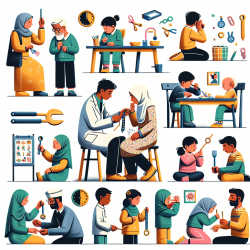
Some children seem to work twice as hard to do what others do automatically. They may struggle to keep up in gym class, avoid playground games, or dread tasks like handwriting, buttons, and zippers. Adults might describe them as “clumsy,” “careless,” or “unmotivated,” but often the child is trying their best. When coordination challenges persist and interfere with everyday life, one possible explanation is Developmental Coordination Disorder (DCD), sometimes also called dyspraxia.
As a school partner, TinyEYE supports students by connecting schools with online therapy services, including occupational therapy. Understanding what DCD can look like is a helpful first step toward meaningful support at school and at home.
What is Developmental Coordination Disorder (DCD)?
DCD is a neurodevelopmental condition that affects a child’s ability to plan, coordinate, and carry out motor tasks. It is not caused by laziness, low intelligence, or lack of effort. Children with DCD can be bright, creative, and highly motivated, but their bodies may not reliably do what their brains intend, especially when tasks require timing, balance, sequencing, or fine motor precision.
DCD can impact:
- Gross motor skills (large movements like running, jumping, climbing)
- Fine motor skills (small movements like writing, cutting, manipulating small objects)
- Motor planning (figuring out how to start and complete a movement sequence)
- Daily living skills (dressing, eating with utensils, grooming)
Common DCD Symptoms in Children
DCD symptoms can show up differently across children and across settings. A student may appear “fine” in one environment and struggle in another, especially when tasks are new, fast-paced, or involve multiple steps.
Gross motor and body coordination signs
- Frequent tripping, bumping into objects, or falling more than peers
- Difficulty learning to ride a bike, swim, or participate in team sports
- Trouble with balance tasks such as standing on one foot or walking on a line
- Awkward running pattern, difficulty changing directions, or moving smoothly in space
- Avoidance of playground games or physical education due to fear of failure
Fine motor and classroom task signs
- Messy handwriting, inconsistent letter sizing, or slow writing speed
- Difficulty with scissors, glue, rulers, or manipulating small classroom tools
- Problems opening containers, managing lunch items, or organizing materials
- Hand fatigue during writing or coloring tasks
- Difficulty with keyboarding that seems out of step with peers
Motor planning and multi-step task signs
- Trouble learning new movement sequences, even after repeated practice
- Difficulty imitating actions, following movement directions, or copying from the board
- Needs extra time to start tasks or appears unsure how to begin
- Struggles with tasks that require both sides of the body to work together, such as catching a ball or tying shoes
Daily living and independence signs
- Difficulty with buttons, zippers, snaps, shoelaces, or clothing orientation
- Challenges using utensils neatly or efficiently
- Messy grooming routines, such as brushing teeth or hair
- Needs more adult support than expected for age during routines
Emotional and social signs that can accompany DCD
DCD is primarily a motor-based condition, but the impact often reaches beyond movement. When a child experiences repeated difficulty, they may begin to expect failure. That can affect confidence, participation, and peer relationships.
- Frustration, tears, or shutdown during motor-heavy tasks
- Avoidance of sports, crafts, handwriting, or group games
- Low self-esteem, especially when compared to peers
- Social challenges if peers misinterpret coordination difficulties
How DCD Can Affect School Performance
In school, DCD can look like academic struggle, even when the student understands the content. When motor demands are high, performance may not reflect true ability.
Common school impacts include:
- Written output that is shorter, slower, or less organized due to handwriting effort
- Difficulty completing timed assignments, note-taking, or copying
- Challenges with art projects, geometry tools, science labs, and hands-on learning
- Disorganization with materials, desk, backpack, and transitions
- Increased fatigue, which can reduce attention and persistence later in the day
It is important to remember that a child with DCD may be working extremely hard just to meet the motor demands of the school day. That effort can leave less energy for problem-solving, comprehension, and self-regulation.
Where Occupational Therapy Fits In
Occupational therapy (OT) supports children in doing the “occupations” of childhood, including learning, play, self-care, and participation in school routines. For students with DCD symptoms, OT focuses on building functional skills, improving participation, and reducing barriers that make daily tasks feel overwhelming.
Occupational therapists look at the whole picture, including:
- The child’s strengths, needs, and learning style
- The task demands (what the activity requires)
- The environment (classroom setup, tools, expectations, time pressure)
- The child’s confidence and willingness to try
OT strategies that may help children with DCD
Every plan should be individualized, but common OT supports include:
- Skill-building through guided practice: Breaking tasks into teachable steps and practicing in a structured way.
- Motor planning support: Teaching “how to start,” using visual cues, modeling, and consistent routines.
- Handwriting and written output support: Improving grip, posture, endurance, spacing, and letter formation, while also considering alternatives when needed.
- Fine motor strengthening and coordination: Targeted activities for hand strength, dexterity, and bilateral coordination.
- Self-care coaching: Practicing dressing skills, fasteners, shoe-tying, utensil use, and organization strategies.
- Environmental adaptations: Adjusting tools and expectations so the child can show what they know.
- Confidence-building: Setting achievable goals, celebrating progress, and teaching self-advocacy.
Helpful Classroom Supports to Consider
When schools and families work together, small changes can make a big difference. The goal is not to “make it easier” in a way that lowers expectations. The goal is to remove unnecessary motor barriers so the student can access learning.
- Provide extra time for written tasks and transitions
- Reduce copying demands by offering printed notes or digital access
- Allow alternative ways to show learning, such as oral responses or typing
- Use clear visual schedules and step-by-step checklists
- Offer movement breaks to reduce fatigue and improve regulation
- Teach peers and staff respectful language, avoiding labels like “lazy” or “careless”
When to Seek an OT Evaluation
If coordination challenges are persistent, noticeable across settings, and interfering with school participation or daily routines, an occupational therapy evaluation can help clarify what is happening and what supports are most effective.
Consider seeking support if a child:
- Consistently struggles with handwriting, cutting, dressing, or sports compared to peers
- Avoids motor tasks or becomes distressed during them
- Needs unusually high levels of adult assistance for age
- Shows a gap between verbal understanding and written performance
- Is experiencing reduced confidence or participation due to motor challenges
How Online Occupational Therapy Can Support Schools
Online OT can be a practical way for schools to expand access to services, especially when staffing shortages or scheduling challenges make in-person support difficult. Through secure teletherapy, occupational therapists can provide:
- Individual or small group sessions focused on functional school goals
- Collaboration with educators to adapt tasks and classroom routines
- Coaching for families and school teams to support carryover
- Progress monitoring tied to meaningful outcomes
With the right planning, online OT can be highly engaging for students and effective for building skills that matter in real school routines.
A Final Word: Support the Child, Not the Label
Whether or not a child has a formal diagnosis, DCD-like symptoms deserve thoughtful attention. When we shift from “What’s wrong with this child?” to “What support helps this child participate?” we create space for growth. Occupational therapy offers practical strategies, compassionate coaching, and a pathway toward greater independence and confidence.
For more information, please follow this link.