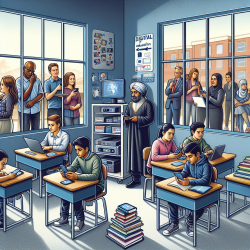

Why digital literacy is now a core student support issue
Schools are navigating a reality where digital tools are embedded in nearly every part of learning: research, collaboration, creativity, communication, and increasingly, student services. For children, being “good with technology” is not the same as being digitally literate. Many students can click, swipe, and stream, yet still struggle to evaluate information, protect privacy, manage online relationships, or use digital spaces in ways that support learning and well-being.
That gap matters. Digital literacy influences academic success, social-emotional development, participation, and safety. It also shapes long-term outcomes like employability and civic engagement. The UNICEF scoping work on children’s digital literacy highlights a major shift happening globally: moving from a narrow focus on technical skills toward a more holistic approach that includes critical thinking, culture, ethics, and children’s rights.
What “digital literacy” means for children (in plain language)
Digital literacy is often used as an umbrella term. Definitions range from “ability to use devices and software” to “capabilities needed to live, learn, and work in a digital society.” UNICEF’s proposed working definition is especially useful for schools because it is child-centered and balanced:
Digital literacy refers to the knowledge, skills and attitudes that allow children to flourish and thrive in an increasingly global digital world, being both safe and empowered, in ways that are appropriate to their age and local cultures and contexts.
For school teams, that definition is a helpful north star because it signals three priorities:
More than operational skills: digital literacy includes critical evaluation, communication, collaboration, creation, and ethical participation.
Safety plus empowerment: protecting students from harm matters, but so does ensuring they can participate meaningfully online.
Age and context matter: what’s appropriate for a 7-year-old differs from what’s appropriate for a 15-year-old, and communities vary in language, culture, and access.
The big shift: from “risk and restriction” to “rights and participation”
Historically, many child-focused digital initiatives were built around a risk and safety paradigm: block harmful content, warn students, and limit exposure. Safety remains essential, but research increasingly suggests that children’s online participation can bring significant benefits—learning, connection, creativity, and civic engagement—when paired with the right skills and supports.
The key insight for schools is not “more screen time is good” or “the internet is dangerous.” It’s that students need guided opportunities to build competence and judgment. Overly restrictive approaches can unintentionally reduce learning opportunities, especially for students who rely on school for access, support, and safe practice.
What influences a child’s digital literacy (and why schools can’t do it alone)
UNICEF’s review emphasizes that digital literacy grows through a combination of environment, relationships, and learning design—not simply device access. Four interconnected factors stand out:
1) Social environment and infrastructure
Connectivity, device availability, and the presence of relevant content in local languages all shape what students can do online. Even when devices exist, limited bandwidth or outdated infrastructure can reduce learning to basic tasks rather than richer activities like collaboration, content creation, or multimedia projects.
2) Family context and digital mediation
Parents and caregivers influence how children interpret online risks and opportunities. In many contexts, families want to help but may lack confidence or knowledge. Schools can play a powerful role by offering practical guidance that is non-judgmental and culturally responsive.
3) School context and teacher capacity
Teacher readiness is repeatedly identified as a major barrier. Digital literacy is not a one-time assembly topic; it’s a set of competencies that develop through instruction, modeling, feedback, and practice. When teachers are supported to integrate digital tools into learning (not just use them), students’ digital skills improve.
4) Private sector influence
Technology companies shape the platforms students use and can support digital literacy initiatives. At the same time, UNICEF notes that governments sometimes adopt frameworks promoted by commercial actors, especially where public frameworks are limited. For schools, this reinforces the need to choose frameworks and tools that align with educational goals, child development, and student rights—not just product ecosystems.
Why “digital natives” is a myth schools should retire
A consistent finding across research is that skill inequalities exist among children just as they do among adults. Frequent use does not automatically build critical evaluation, privacy skills, or the ability to collaborate productively online. Students may be highly fluent in entertainment and social apps yet still struggle with:
judging credibility and misinformation
understanding data privacy and digital reputation
communicating respectfully and effectively in group spaces
using digital tools to plan, create, revise, and reflect
This is especially important for equity. If schools assume students “already know,” the students who need instruction most are the ones most likely to be left behind.
Frameworks schools can use: two practical options that align with global thinking
One of the most actionable parts of UNICEF’s work is its focus on competence frameworks—structured ways to define what students should know and be able to do. Rather than creating a new framework, UNICEF recommends adapting strong existing ones.
Option A: DigComp (European Commission)
DigComp is widely used and well-documented. It organizes digital competence into five areas with 21 competencies, and it includes proficiency levels that can help schools define progression over time. While originally designed for all-age citizens, it can be adapted for children and aligns well with many school-based digital learning goals.
Why it works for schools:
Clear structure and progression: supports curriculum planning and assessment.
Broad coverage: includes information/data literacy, communication/collaboration, content creation, safety, and problem solving.
Implementation support exists: many examples and guides are available due to broad adoption.
Option B: Digital Kids Asia-Pacific (UNESCO Bangkok)
This framework was designed specifically for children and includes a strong rights-based, child-centered orientation. It includes domains such as digital safety and resilience, participation and agency, emotional intelligence, and creativity—areas that map well to whole-child approaches in schools.
Why it works for schools:
Child-specific by design: easier to align with developmental stages.
Balances safety and opportunity: not just “avoid harm,” but “build agency.”
Strong fit for diverse contexts: especially relevant where access and equity issues are central.
What schools struggle with most (and what to prioritize first)
Across UNICEF country office insights, several barriers show up repeatedly. Translated into a school lens, the most common obstacles are:
Teacher capacity and confidence: educators may not have training, time, or support to teach digital literacy explicitly.
Connectivity and infrastructure gaps: inconsistent access makes it difficult to implement equitable programming.
Limited shared understanding among decision-makers: digital literacy can be reduced to “computer class” rather than embedded across learning and student well-being.
Digital literacy not embedded into curriculum: when it’s not assessed or planned, it becomes optional and inconsistent.
Limited local-language and culturally relevant content: students learn best when examples reflect their lives.
If a district is deciding where to start, the most leverage often comes from building a shared definition and a common framework, then investing in teacher training that connects digital literacy to everyday instruction.
A practical “integrated approach” schools can borrow
UNICEF proposes that frameworks should not be used as stand-alone checklists. Instead, they should sit inside a cycle that helps schools adapt to local realities and measure progress. A school-friendly version looks like this:
Diagnose the context: What access do students have? What languages are spoken? What are the biggest online risks locally? What are the current staff capabilities?
Select/adapt a framework: Use DigComp for detailed competency mapping, or Digital Kids Asia-Pacific for a child-centered citizenship approach.
Operationalize into curriculum: Translate competencies into grade-level outcomes, lesson routines, and practice opportunities across subjects.
Implement with multiple stakeholders: include educators, families, and where appropriate, community partners and responsible private sector support.
Assess impact holistically: measure not only technical skills, but also critical thinking, safety behaviors, collaboration quality, and student well-being indicators.
Where TinyEYE fits: digital literacy as a foundation for effective online support
As schools expand online and hybrid services—including therapy and specialized supports—digital literacy becomes part of service quality. When students can navigate platforms confidently, communicate appropriately online, and understand basic privacy and safety expectations, they are better positioned to engage in online therapy sessions and benefit from them.
For school leaders, this creates an important connection: investing in digital literacy is not only an academic initiative. It supports access, engagement, and outcomes across student services, including teletherapy. It also helps schools build consistent expectations for digital behavior and communication—reducing friction for students, families, educators, and clinicians.
For more information, please follow this link.