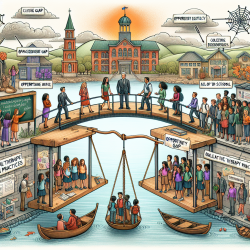
As a Special Education Director, I spend a lot of time in the space where leadership expectations meet real-world constraints: staffing shortages, complex student needs, and the urgency to show measurable progress. Washington State’s Student Growth Rubrics help bring clarity to that work by focusing attention on what matters most—actual student achievement—while still recognizing that strong systems and consistent implementation are what make growth possible.
In this post, I’ll break down Student Growth Criteria 3, 5, and 8 in clear, practical terms and share how districts and school leaders can use “multiple student data elements” to tell a coherent story of growth. I’ll also highlight how service delivery models—including online therapy services like those provided by TinyEYE—can support schools in building capacity and documenting progress, especially when in-person staffing is difficult.
Why these rubrics matter: They focus on outcomes, not intentions
One of the most important notes in the WA State guidance is that the student growth rubric rows are designed to focus on actual student achievement rather than principal actions. That distinction matters. It keeps our conversations grounded in evidence and helps teams avoid “activity traps” where we do a lot, but can’t show impact.
Across Criteria 3, 5, and 8, the progression from Unsatisfactory to Distinguished is essentially a progression from:
- No academic growth
- Minimal academic growth
- Measurable academic growth
- Significant or consistent academic growth (often across multiple indicators and over time)
The rubrics push us to ask: What changed for students? How do we know? And for whom did it change?
Student Growth Criterion 3: School improvement planning that produces measurable growth
Criterion 3 is about “leading the development, implementation and evaluation of a data-driven plan for increasing student achievement, including the use of multiple student data elements.” The student growth focus for SG 3 is broad: evidence of student growth resulting from the school improvement planning process for all or most students in the school.
What the levels look like in practice
- Unsatisfactory (1): The school improvement planning process results in no improvement in student academic growth.
- Basic (2): The process results in minimal improvement.
- Proficient (3): The process results in measurable improvement.
- Distinguished (4): The process results in significant improvement.
What “multiple student data elements” can include
To demonstrate SG 3 credibly, leaders typically need more than one data point. Depending on grade level and context, multiple measures may include:
- Universal screening data (reading, math, behavior)
- Progress monitoring data (weekly/biweekly trend lines)
- State or district benchmark assessments
- Course pass rates and credit attainment
- Attendance patterns and chronic absenteeism
- Discipline data (especially when tied to instructional access)
- Special education indicators (IEP goal progress, reevaluation data)
- Related service data that connects to access and performance (e.g., communication, participation, functional skills tied to academics)
A leadership move that strengthens SG 3 evidence
In my experience, the strongest SG 3 narratives connect the plan to a small set of measurable goals, then show implementation fidelity and student outcomes over time. If the plan is working, we should see movement in the data that aligns with the plan’s priorities.
When staffing shortages interfere with implementation (for example, unfilled SLP or OT positions), growth can stall—not because students can’t grow, but because the system can’t consistently deliver supports. This is where online therapy services can stabilize service delivery and protect the integrity of the school improvement plan. Consistency matters when you are trying to show measurable or significant improvement.
Student Growth Criterion 5: Evidence of growth for students of selected teachers
Criterion 5 centers on “monitoring, assisting, and evaluating effective instruction and assessment practices.” The student growth component (SG 5) is narrower than SG 3: it looks at the student achievement of a subset of teachers that a principal identifies.
What the levels look like
- Unsatisfactory (1): Multiple measures of student achievement of selected teachers show no academic growth.
- Basic (2): Multiple measures show minimal academic growth.
- Proficient (3): Multiple measures show measurable academic growth.
- Distinguished (4): Multiple measures show significant academic growth.
How to choose the “selected teachers” thoughtfully
SG 5 is an opportunity to focus on a strategic slice of the system. For example:
- A grade level team implementing a new literacy routine
- Teachers receiving targeted coaching
- New teachers or teachers in a high-need content area
- Teams serving students with intensive needs (e.g., self-contained or inclusion teams)
The key is alignment: the selected teachers should connect to a clear instructional focus, and the measures should be consistent enough to compare growth over time.
Where related services fit into SG 5
Although SG 5 is often framed around classroom instruction, related services can be a meaningful lever—especially when a student’s access to instruction depends on communication, sensory regulation, or functional participation. When TinyEYE or other teletherapy providers collaborate with teachers (within appropriate roles and boundaries), the school can reduce barriers that block students from benefiting from instruction and assessments.
In practical terms, that can support measurable growth by improving:
- Student engagement and participation in core instruction
- Communication access (expressive/receptive language supports)
- Consistency of intervention minutes when staffing is tight
- Carryover strategies teachers can implement between sessions
Student Growth Criterion 8: Closing the achievement gap with evidence across subgroups
Criterion 8 is about “demonstrating a commitment to closing the achievement gap.” SG 8 explicitly focuses on subsets of the student population identified for the purpose of closing achievement gaps between them and the student population as a whole.
What the levels look like
- Unsatisfactory (1): Multiple sources/data points show no evidence of growth toward district learning goals; achievement gaps are growing between student subgroups.
- Basic (2): Multiple sources/data points show minimum evidence of growth toward district learning goals for identified subgroups.
- Proficient (3): Multiple sources/data points show improving student growth toward district learning goals; average achievement improves and each identified subgroup improves.
- Distinguished (4): Multiple sources/data points show consistent growth toward district learning goals; there is a consistent record of improved student achievement on multiple indicators with identified subgroups.
What makes SG 8 different from SG 3
SG 3 asks, “Did the school improve overall?” SG 8 asks, “Did we improve outcomes for students who have historically been underserved, and did we reduce gaps?” That requires disaggregated data and a commitment to monitoring subgroup progress frequently enough to adjust supports.
Strong SG 8 evidence is both disaggregated and multi-indicator
Because the rubric references “multiple sources or data points,” leaders should consider building an SG 8 dashboard that includes:
- Academic growth measures (screeners, benchmarks, state assessment where applicable)
- Opportunity-to-learn indicators (attendance, course access, discipline)
- Program/service access indicators (intervention participation, IEP service delivery consistency)
- Progress monitoring for targeted interventions
From a special education lens, it is also important to ensure that subgroup analysis is nuanced. For example, “students with disabilities” is not a monolith; meaningful analysis often requires looking at patterns by service setting, intensity of need, or specific skill domains.
Putting it all together: A simple planning frame leaders can use
If you are trying to align leadership work to SG 3, SG 5, and SG 8 without creating three separate initiatives, I recommend a single coherent cycle:
- Identify goals: One schoolwide goal (SG 3), one targeted instructional focus with selected teachers (SG 5), and one or two priority subgroups with gap-focused goals (SG 8).
- Choose multiple measures: Select at least two to three data sources per goal (achievement + progress monitoring + an access indicator).
- Implement consistently: Protect time, staffing, and schedules. When shortages exist, consider teletherapy or contracted supports to maintain continuity.
- Monitor and adjust: Review data on a predictable cadence (monthly is often realistic) and document adjustments.
- Summarize evidence: At year’s end, present a clear “claim-evidence-reasoning” story: what improved, how we know, and what we will refine next.
A final note from the field
In leadership meetings with families, I often hear a version of the same hope: “I just want my child to make progress and feel supported.” The student growth rubrics give us a shared language to define progress and a shared expectation to prove it with evidence. When we combine that clarity with practical supports—strong instruction, targeted interventions, and reliable therapy services even when staffing is hard—we put ourselves in the best position to deliver measurable, meaningful gains for students.
For more information, please follow this link.