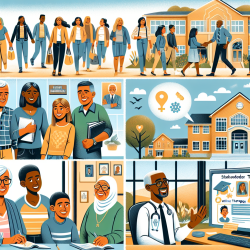
Public school leaders make high-stakes decisions in an environment where emotions run high and information is often incomplete. Topics like curriculum, assessments, school safety, student services, and funding can quickly become “hot-button” issues—especially when families and community members feel decisions are made behind closed doors.
Research highlighted in the School Community Journal points to a core tension: districts often rely on internal expertise (administrators, legal counsel, and specialists) to make decisions efficiently, but avoiding public deliberation can unintentionally increase suspicion and conflict. When people don’t understand the constraints schools operate under—or don’t know who to ask—misinformation fills the gap.
For school communities, the cost of disengagement is real. When trust erodes, districts can face louder opposition, reduced volunteerism, and weaker support for critical funding initiatives. Conversely, when schools invest in authentic engagement, they can strengthen buy-in, generate better solutions, and build a more resilient community culture.
A promising approach: stakeholder training programs
A mixed methods study by Poynton, Kirkland, and Makela (2018) examined five school district stakeholder training programs—four in Colorado and one in Illinois—designed to increase trust and engagement. These programs didn’t just ask families to “get involved.” They taught participants how the district works and created structured opportunities to build relationships with district leaders.
Data came from trainee surveys (67), trainee interviews (21), and superintendent interviews (5). The study assessed impact across five domains:
Knowledge (understanding district operations)
Relationships (trust and connection with leaders)
Willingness (openness to engage in school/district activities)
Efficacy (confidence in deliberation and problem-solving)
Action (real behaviors taken after the training)
What the training looked like in practice
Across districts, the training model shared several common design elements that made it accessible and repeatable:
Structure: Eight sessions, about 2.5 hours each, typically monthly across the school year
Topics: Budget/school finance, curriculum, governance, assessment, state and federal laws, technology, safety and security, and often special education/student services
Presenters: Relevant district leaders (e.g., assessment leaders presenting on assessment)
Superintendent presence: Superintendents attended sessions and provided regular updates
Facilitation: Often led by a parent liaison or communications leader, with Q&A built in
Access supports: Childcare and, in some districts, live translation via headsets
Recruitment: Announcements at school events, district social media, flyers, and most effectively, word of mouth
In other words, these programs treated engagement as a skill-building process—not a one-time town hall.
Key findings: what changed for participants
1) Knowledge increased—especially around school finance
One of the strongest findings was growth in operational understanding. Overall, 88% of participants agreed or strongly agreed the training improved their knowledge.
In interviews, school finance repeatedly emerged as an “eye-opener.” Participants described shifting from assumptions like “schools have enough money” to a clearer understanding of funding constraints, restricted dollars, and how budgeting decisions are made. Importantly, this wasn’t just trivia—it changed how people interpreted news, rumors, and district decisions.
2) Relationships improved—and trust became more personal
Relationships were a central goal of the programs, and 67% of participants agreed or strongly agreed their relationships with district leaders improved.
A consistent theme was that simply knowing the superintendent and key administrators—seeing them show up, answer hard questions candidly, and remain accessible—made participants feel more confident and less intimidated. Many reported that they now knew who to contact for specific issues and felt comfortable doing so.
3) Willingness to engage rose
After the training, 63% of participants agreed or strongly agreed they were more willing to be involved. Interviews reinforced this: participants described being more open to attending meetings, volunteering, and having conversations about district issues with neighbors and other parents.
Notably, willingness often extended beyond school walls. Participants described sharing information through community networks and social media to broaden understanding and reduce confusion.
4) Efficacy strengthened: people felt more capable of productive disagreement
Efficacy results were also strong: 88% agreed or strongly agreed the training increased their efficacy.
This domain matters because school district challenges often require tradeoffs. Participants reported a greater appreciation for diverse viewpoints and more confidence engaging in difficult conversations. Some trainings included explicit instruction on deliberative problem solving (including discussion of “wicked problems”), helping participants see disagreement as something to navigate rather than avoid.
5) Action followed: participants did more, not just learned more
The study also tracked concrete actions taken after the program. Participants reported completing 313 total actions across 10 action items, with an overall “yes” rate of 53% across those items.
Actions included:
Sharing district-related information with PTOs and other groups
Posting or writing about education issues on social media
Communicating with superintendents or board members
Volunteering at school or district events
Supporting education-related initiatives and campaigns
In some cases, pursuing leadership roles (including school board involvement)
This is a critical insight for districts: engagement deepens when people leave with both understanding and a clear sense of how to participate constructively.
What superintendents noticed: four themes that matter
Superintendents described impacts that went beyond individual participants. Four themes emerged from their interviews:
Trust building
Superintendents emphasized that trust grows through proactive, ongoing engagement—not crisis communications. Several described how bringing skeptical stakeholders “inside” the system transformed critics into informed champions because they finally understood the constraints, tradeoffs, and intentions behind decisions.
Advocacy building
Many leaders saw the program as a way to “tell the district story” accurately and build a long-term cadre of informed ambassadors. Over time, 20–25 trained participants per year can become hundreds of community members who can correct misinformation, support initiatives, and advocate for public education more broadly.
Sharing power
A major shift described by superintendents was moving away from “circle the wagons” leadership toward authentic collaboration. This requires leaders who are willing to let go of perceived control, listen seriously, and incorporate feedback in meaningful ways.
Community engagement and community building
Leaders highlighted the importance of two-way (and eventually multi-way) communication. Some districts broadened participation beyond parents to include retirees, community leaders, and other residents—strengthening the idea that public schools are a community asset, not just a service for families with children.
What this means for school leaders today—and where TinyEYE fits
At TinyEYE, we work with schools every day to expand access to student support through online therapy services. While the study focuses on stakeholder training programs, its lessons apply directly to any district initiative that requires community understanding and trust—especially services that touch student well-being, special education, and equitable access.
When schools introduce or expand supports like speech-language therapy, occupational therapy, or mental health services, the same engagement dynamics show up:
Families want clarity on how services work and how decisions are made.
Staff want aligned communication so they aren’t managing confusion alone.
Communities need transparent information to avoid myths and assumptions.
Stakeholder training models demonstrate a practical truth: trust grows when districts invest in operational transparency and relationship-building at the same time. For student support services, that can mean clear explanations of referral pathways, eligibility, service delivery models (including online), privacy practices, and how progress is monitored—paired with real opportunities to ask questions and build relationships with the people delivering and overseeing services.
A simple blueprint districts can adapt
Based on the study’s findings, districts aiming to strengthen trust and engagement can start with a few high-leverage moves:
Teach the system: Offer plain-language learning sessions on “how the district works,” including finance and student services.
Make leaders visible: Consistent superintendent and leadership presence signals seriousness and accountability.
Design for access: Childcare, translation, and varied meeting times reduce participation barriers.
Build deliberation skills: Help stakeholders practice productive disagreement and shared problem-solving.
Create pathways to action: Give participants clear next steps for volunteering, committees, feedback loops, and advocacy.
For more information, please follow this link.