As a Special Education Director, I spend a lot of time in the space between big goals and real-life constraints: staffing shortages, growing student needs, compliance timelines, and families who deserve clear answers. That’s why I pay close attention when a report doesn’t just describe what’s “ideal,” but highlights what’s actually working in schools right now.
The Texas Education Agency’s March 2024 guide, Best Practices in Action: Success Strategies from High-Performing Charter School Campuses, does exactly that. It pulls together findings from research, a statewide principal survey, and site visits to high-performing campuses across Texas. While the study focused on charter campuses, the practices are flexible enough to fit traditional districts too.
Below are 10 best-practice moves that showed up consistently—written in a practical, easy-to-use way. I’ll also connect a few of them to a reality many of us are facing: how to keep student supports strong when related service staffing (speech, OT, counseling, etc.) is stretched thin. That’s where partners like TinyEYE’s online therapy services can help schools sustain momentum without lowering expectations.
1) Build a mission-centered campus (and use it daily)
High-performing campuses don’t treat the mission as a poster in the lobby. They use it as a decision-making tool. The mission reflects community needs and aspirations—often emphasizing rigorous academics, whole-child development, and future readiness (college, career, leadership, STEM, fine arts, and more).
- Hire staff who genuinely align with the mission.
- Use the mission to prioritize initiatives (and to say “no” to distractions).
- Make the mission visible in routines, language, and student experiences.
In special education, a mission-centered approach matters because it helps teams stay anchored to the idea that all students belong and can achieve—especially when service delivery gets complicated.
2) Invest in strong leadership that is visible and responsive
The report is clear: principals and leadership teams set the tone. Strong leaders are the “face” of the campus, but they also protect instruction by managing operations well.
- They are present at drop-off/pick-up and in hallways.
- They keep an open-door policy for staff concerns.
- They communicate regularly with families and community partners.
- They build leadership teams so teachers can focus on teaching.
From a compliance standpoint, strong leadership also reduces risk: timelines get met, systems are consistent, and staff know what to do when challenges arise.
3) Communicate with families in ways that fit the community
One of the strongest themes across high-performing campuses is intentional, accessible family communication. There is no one-size-fits-all platform—some communities prefer paper newsletters and face-to-face events; others respond best to text, email, and social media.
- Use a predictable calendar families can rely on.
- Have emergency communication systems ready (text/phone/email).
- Offer both virtual and in-person opportunities for Q&A.
- Create ways for families to give input (coffee with the principal, surveys, suggestion boxes).
For students receiving special education services, clear communication is more than “good customer service”—it’s a trust-builder. When families understand the plan and the progress, teams solve problems faster.
4) Create connections inside and outside the campus
High-performing campuses strengthen learning by building relationships—both within the school and with outside partners.
- Partner with colleges/universities for dual credit, tutors, or student teachers.
- Work with businesses and nonprofits for mentorships, service learning, and resources.
- Build internal collaboration so staff can “wear many hats” without burning out.
Schools also create “small communities” within larger campuses (teams, tribes, family groups, buddy systems). This supports belonging and improves engagement—especially important for students who struggle socially or behaviorally.
5) Recruit and retain strong instructional staff (even during shortages)
The report directly acknowledges what we’re all living: educator shortages are real, and specialized certifications are harder to find. High-performing campuses respond by being strategic and realistic.
- Prioritize hiring teachers who are passionate and mission-aligned.
- Use word-of-mouth recruiting through current staff.
- When hiring less experienced teachers, provide intensive coaching quickly.
- Use mentorship to accelerate growth and improve retention.
This mirrors what many districts are doing with related services too. When in-person therapist recruitment is difficult, schools increasingly stabilize service delivery through teletherapy models—so IEP services remain consistent while hiring continues.
6) Respect teacher professionalism and autonomy
Teachers in high-performing campuses report that they can be their “best teacher self.” That’s not accidental—it’s built through structures that allow teachers to adjust instruction and solve problems collaboratively.
- Give experienced teachers flexibility to differentiate.
- Use grade-level/subject teams to solve scheduling and instructional challenges.
- Create teacher leadership roles (PD, curriculum work, mentoring).
- Ask for teacher input on campus-wide decisions that impact classrooms.
Autonomy doesn’t mean inconsistency. The best campuses balance shared systems (like behavior expectations) with professional flexibility in instruction.
7) Use evidence-based curricula and evidence-based instruction
High-performing campuses make it easier to teach well by ensuring teachers have strong materials and clear instructional practices.
- Adopt evidence-based curricula that reduce “reinventing the wheel.”
- Teach bell-to-bell and maximize learning time.
- Use proven routines like review, chunking, and “I do, We do, You do.”
- Use formative and summative data to adjust instruction.
For special education teams, evidence-based instruction is also a defensible practice. When instruction is strong and documented, it supports both student outcomes and compliance expectations.
8) Set high academic expectations for all students—and provide supports to match
The campuses in the study share a core belief: all students can succeed. But high expectations only work when students have access to the tools to meet them.
- Use small-group instruction and differentiation.
- Keep class sizes manageable when possible.
- Offer tutoring before/after school.
- Communicate “what success looks like” early to families and students.
This is where service delivery matters. When students need speech-language support, OT, counseling, or behavior supports to access instruction, those services become part of the “tools” that make high expectations realistic.
9) Implement a campus-wide behavior system that is consistent and positive
Post-pandemic behavior needs are higher, and high-performing campuses don’t leave behavior to chance. They build clear expectations, consistent consequences, and positive reinforcement.
- Use a shared code of conduct, handbook, or creed.
- Ensure consistent implementation across classrooms and staff.
- Reinforce positive behavior (tickets/points/praise/recognition).
- Provide administrative support so teachers can keep teaching.
In my experience, consistency is also one of the best safeguards against disproportionate discipline outcomes—because expectations and responses are clearer and less subjective.
10) Teach non-academic skills and create a well-rounded experience
High-performing campuses don’t focus on academics alone. They intentionally build leadership, character, teamwork, communication, and a growth mindset.
- Integrate real-world applications into learning.
- Recognize character traits and leadership behaviors.
- Offer clubs, service learning, and student-led activities.
- Use community partnerships to expand opportunities when budgets are tight.
For many students with disabilities, these non-academic skills are not “extra”—they are essential for postsecondary success. They also align well with transition planning and functional outcomes.
Where TinyEYE fits into the “best practices in action” conversation
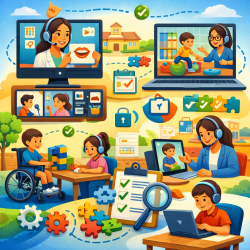
Even the strongest campus systems can wobble when staffing gaps persist—especially in specialized roles. Online therapy services can support continuity by helping schools:
- Maintain IEP service minutes with greater consistency.
- Reduce scheduling bottlenecks across campuses.
- Support students in rural or high-need areas where vacancies are hardest to fill.
- Keep teams focused on instruction while related services remain accessible.
When teletherapy is implemented thoughtfully (with clear documentation, collaboration with campus teams, and family communication), it can reinforce the same themes this report highlights: strong systems, consistent support, and high expectations for every learner.
For more information, please follow this link.