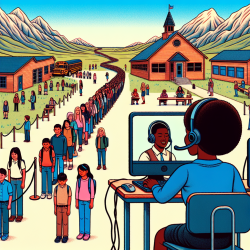

Across the country, special education leaders are navigating a familiar tension: our obligation to deliver high-quality, legally compliant related services has not changed, but the workforce landscape has. Speech-language pathologists, occupational therapists, physical therapists, and school psychologists are increasingly difficult to recruit and retain—especially in rural areas, high-need urban settings, and specialized programs. As a Special Education Director, I spend a significant portion of my time problem-solving around service delivery, compensatory services, and how to support building teams who are doing their best under real constraints.
One of the most practical tools districts can add to their continuum of supports is online therapy (teletherapy). When implemented thoughtfully, online therapy can stabilize service delivery, reduce missed minutes, and improve access—without compromising student outcomes or compliance. TinyEYE is one provider in this space, offering online therapy services designed specifically for school environments. The key is not simply “going virtual,” but building a system that is instructionally aligned, IEP-driven, and operationally sustainable.
Why online therapy is increasingly part of the district toolkit
Staffing shortages are no longer episodic; in many regions they are structural. Districts are competing with hospitals, private clinics, and contract agencies, while also managing increased caseload complexity and documentation demands. When vacancies persist, the impact shows up quickly:
- IEP minutes are missed or delivered inconsistently
- Service providers are spread across multiple buildings, increasing travel time and reducing direct service time
- Teams struggle to schedule sessions around instruction, testing windows, and student behavior needs
- Families experience frustration and diminished trust when services are delayed
Online therapy can mitigate these challenges by expanding the candidate pool beyond commuting distance, improving schedule efficiency, and providing a reliable service option when in-person hiring is not feasible. Most importantly, it can help districts meet their obligation to implement IEPs as written.
Compliance considerations: aligning teletherapy with IDEA and state requirements
Compliance is not a separate initiative—it is the framework within which we operate. Whether services are delivered in person or online, districts remain responsible for ensuring that:
- Services are provided in accordance with the IEP (frequency, duration, setting, and provider type)
- Progress is monitored and reported as described in the IEP
- Parents receive meaningful participation opportunities
- Confidentiality and student records protections are maintained
- Providers meet licensure and credentialing requirements for the state and role
When considering online therapy, I advise districts to confirm several operational details before implementation:
- Licensure and credentialing: Verify that teletherapists hold appropriate state licensure and any required education credentials for school practice.
- Supervision structures: Clarify supervision requirements for assistants or interns, if applicable, and ensure they can be met remotely.
- Documentation expectations: Align session notes, attendance logs, and progress monitoring tools with district standards.
- IEP team integration: Ensure online providers can participate in IEP meetings, consultation, and collaboration time.
- Platform security: Confirm secure systems and clear protocols for privacy, especially when services occur on campus.
Many districts also benefit from collaborating with legal counsel or a compliance coordinator to ensure contracts and service models align with state guidance. A helpful reference point is the U.S. Department of Education’s IDEA resources, which districts can review here: https://sites.ed.gov/idea/.
Student-centered implementation: what “good” online therapy looks like
Online therapy is most effective when it is treated as a service delivery method—not a separate program. The same principles of effective related services apply:
- IEP-driven goals: Sessions target the student’s IEP goals with clear instructional intent.
- Appropriate service model: Individual, small group, consultative, or classroom-based approaches are selected based on student need.
- Data-informed decisions: Providers collect ongoing data and adjust interventions accordingly.
- Generalization and carryover: Skills are supported across settings through collaboration with teachers and families.
In practice, strong online therapy programs also plan for the “in-the-room” supports students may need. Many schools assign a trained facilitator or paraprofessional to help students log in, manage materials, and transition appropriately. This role is not about delivering therapy; it is about ensuring students can access therapy efficiently and safely during the school day.
Operational planning: scheduling, space, and collaboration
From an administrative perspective, the success of online therapy often hinges on logistics. Districts that see the best results typically establish clear procedures in three areas:
1) Scheduling that protects instruction and service minutes
- Create building-level schedules that minimize repeated pull-out from the same core instructional block
- Coordinate with special education case managers to avoid conflicts with specialized instruction
- Build in time for make-up sessions when students are absent
2) A consistent therapy space and technology routine
- Identify a quiet, predictable location for sessions (speech room, conference space, designated corner of a resource room)
- Ensure reliable internet, appropriate devices, and headsets as needed
- Establish a simple troubleshooting protocol so sessions are not lost to avoidable tech issues
3) Collaboration that mirrors in-person practice
- Schedule regular consultation between online therapists and teachers
- Include online therapists in relevant problem-solving meetings (MTSS, behavior support planning, IEP reviews)
- Align therapy strategies with classroom routines and curriculum vocabulary
When online providers are integrated into the school team, the service feels less like an “outside add-on” and more like a coherent part of the student’s educational program.
Addressing parent questions with transparency and partnership
Families may have understandable questions about online therapy. In parent meetings, I find it helpful to lead with clarity and reassurance:
- “Will my child still receive the minutes on the IEP?” Yes—services are scheduled and documented the same way, and the district remains responsible for implementation.
- “Is online therapy effective?” For many students, yes—particularly when sessions are structured, engaging, and supported by school staff as needed.
- “What about privacy?” Sessions occur through secure platforms with district-approved procedures, and student information is protected.
- “Can I participate or observe?” Districts can outline observation procedures consistent with policy, and providers can share strategies for home carryover when appropriate.
It is also important to acknowledge that online therapy is not the right fit for every student in every circumstance. Students with significant sensory needs, intensive physical prompting requirements, or complex behavioral profiles may require a more individualized plan. The IEP team should always make determinations based on student needs, not staffing convenience.
Using online therapy to stabilize services and reduce compensatory risk
From a risk management standpoint, persistent vacancies can lead to missed services, parent complaints, and compensatory education considerations. Online therapy can help districts reduce those risks by:
- Filling vacancies faster than traditional hiring timelines
- Reducing travel time and increasing direct service minutes
- Providing continuity when staff take leave or positions turn over mid-year
- Supporting hard-to-staff specialty areas (for example, bilingual service needs or specific expertise)
That said, districts should still monitor service delivery closely. I recommend routine internal audits—monthly or quarterly—reviewing:
- Delivered minutes versus IEP minutes
- Student progress toward goals
- Session attendance patterns and barriers
- Provider caseloads and scheduling efficiency
This is not about “checking boxes.” It is about ensuring students are benefiting and teams have the information they need to adjust supports promptly.
What to look for in an online therapy partner
Not all teletherapy models are built for schools. When districts evaluate a provider such as TinyEYE, I encourage leaders to ask specific questions that reflect school realities:
- How are clinicians recruited, vetted, and supported?
- What is the process for matching clinicians to student needs (age, disability profile, bilingual needs, specialized expertise)?
- How does the provider support IEP-aligned documentation and progress reporting?
- What is the plan for collaboration with teachers and case managers?
- How are missed sessions handled and made up?
- What training is offered for school-based facilitators and building staff?
A strong partner will welcome these questions and provide clear, operational answers—not just marketing language.
Conclusion: online therapy as a strategic, student-first solution
Online therapy is not a replacement for strong in-person programming. It is, however, an increasingly essential strategy for districts committed to delivering related services consistently, ethically, and in compliance with IDEA. When implemented with careful planning, team integration, and transparent communication with families, online therapy can expand access, stabilize staffing, and keep the focus where it belongs: on student growth and meaningful participation in school.
As special education leaders, our work is ultimately about building systems that can withstand workforce fluctuations while still honoring each student’s individualized plan. Online therapy—implemented well—can be one of those systems.