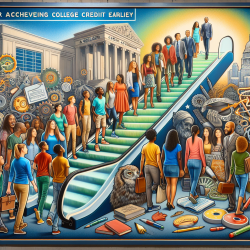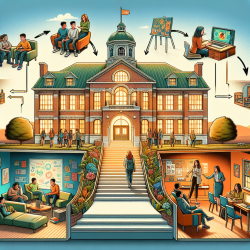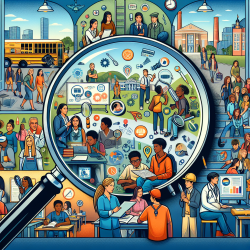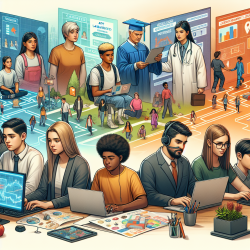
As a Special Education Director, I spend a lot of time thinking about what “readiness” truly means. Not just readiness for the next grade level or the next assessment window, but readiness for life after high school—college, careers, and civic participation. A Center for American Progress (CAP) brief by Laura Jimenez makes a compelling case that the United States has not prepared all students for the workforce of the future, and that the consequences are not evenly distributed. Black, Latinx, and Indigenous students and workers disproportionately experience higher dropout rates, remediation, underemployment, and unemployment—alongside a widening wealth gap and lower civic participation.
Those outcomes are not inevitable. They are signals—data points that tell us our systems need to change. CAP identifies three systemic gaps in education that hinder students’ long-term outcomes:
- Limited early exposure to career options, particularly in grades K-8
- Insufficient holistic preparation for college, careers, and civic life across academic and socioemotional factors
- Accountability systems that are not oriented around career and civic outcomes (and still focus too narrowly on test scores)
From a district leadership perspective, this framework is useful because it doesn’t place the burden on a single program, a single school, or a single department. It calls for a cross-systems approach—education, higher education, workforce development, and community partnerships working together—so that students experience coherent pathways to “good jobs” and meaningful civic engagement.
Why “workforce readiness” is also a special education issue
In special education, we often talk about postsecondary transition planning as if it begins at age 14 or 16. Legally, that may be when formal transition requirements intensify, but developmentally and practically, students start forming beliefs about themselves and their future much earlier. CAP points to research indicating that students’ perceptions of industries can form as young as age 10 and remain relatively stable by age 14. That matters—because once a student believes “that’s not for people like me,” it can take years of intentional experiences to undo that message.
For students with disabilities, early exposure and skill-building are even more critical. Many of our students require explicit instruction, repeated practice, and supported opportunities to generalize skills across settings. If career awareness and “future planning” only begins in high school, we are often trying to build a bridge after the river has already changed course.
Gap 1: Early career exposure (K-8) must be intentional and equitable
CAP argues that most schools lack strategies and resources to expose students to careers and industries—especially in early grades. When students don’t receive structured guidance, factors outside of school (such as socioeconomic status, gender, and immigrant status) can exert a stronger influence on aspirations and outcomes than academic performance.
In practice, early career exposure does not mean pushing children into narrow tracks. It means helping students connect learning to the real world and broadening what they believe is possible. In districts where employer networks are limited—or where transportation and staffing constraints make field experiences difficult—this gap can widen quickly.
District actions that can make early exposure real:
- Embed career awareness into existing curriculum (career-related reading passages, math problems tied to real jobs, classroom “career days”)
- Use virtual career talks and job-site tours to reduce barriers for rural or under-resourced schools
- Include families early, recognizing that parental expectations strongly shape student choices
- Partner with local employers and community organizations to provide mentoring, hands-on learning, and authentic problem-solving projects
From my seat, this is also where related services can be powerful. Speech-language pathologists, occupational therapists, and mental health providers support foundational communication, self-regulation, executive functioning, and social interaction—skills that directly affect career exploration and participation. When therapist staffing shortages exist (and they do, nationwide), districts may struggle to provide consistent services that help students access these opportunities.
Gap 2: Holistic readiness requires more than academics
CAP describes a broad set of readiness dimensions: academic mastery, technical training (including cross-cutting skills like computer literacy), and 21st-century skills such as critical thinking and collaboration. Many states reference these in definitions of college and career readiness, but CAP notes what is often missing: equitable systems to develop these skills across all students and ways to measure attainment.
We also have to acknowledge how quickly work is changing. CAP highlights that technology and the digital divide are reshaping opportunity, and that workers in certain roles—often disproportionately Black and Latinx workers—face higher risk of job disruption due to automation. If we want students to access “good jobs,” we must build the skills that allow them to adapt as industries evolve.
In schools, “holistic readiness” becomes real when we deliberately teach and reinforce:
- Communication skills (expressive/receptive language, pragmatic language, self-advocacy)
- Executive functioning (planning, organizing, task initiation, persistence)
- Social-emotional competencies (self-regulation, coping strategies, collaboration)
- Digital literacy and responsible technology use
- Problem-solving and critical thinking across content areas
This is also where online therapy services can be a practical lever for districts. When we cannot recruit enough in-person therapists—or when caseloads are too high to deliver consistent service—students lose access to the very supports that build these transferable skills. High-quality online therapy can help districts stabilize service delivery, reduce missed minutes, and support equitable access across schools.
Gap 3: Accountability must reflect the outcomes we actually value
CAP’s third gap is the one that often drives the other two: accountability systems. When accountability focuses primarily on reading and writing test scores, it incentivizes schools to narrow instruction and prioritize what is measured. CAP notes that test scores account for more than half of current school accountability systems, even though they cannot capture the full range of skills and experiences students need for life and work.
In district leadership meetings, I often say: “What we measure shapes what we do.” If we want schools to build pathways to good jobs and civic participation, we need accountability indicators that reflect those goals and encourage sustained collaboration between education and workforce systems—plus employer involvement.
Examples of accountability measures that better align to real readiness might include:
- Student access to career exploration experiences beginning in elementary and middle school
- Participation in work-based learning, mentoring, or career-connected projects
- Completion of coherent course pathways that keep postsecondary options open
- Indicators of student engagement and belonging (particularly for historically marginalized groups)
- Postsecondary enrollment, credential attainment, and employment outcomes—disaggregated for equity
- Civic readiness measures such as community participation opportunities and civic learning experiences
For students with disabilities, accountability must also include whether schools are delivering high-quality transition planning and services that lead to meaningful postsecondary outcomes—not simply compliance paperwork. Strong systems ask: Are students graduating with the skills, supports, and experiences to thrive?
A cross-systems approach: Schools can’t do this alone
CAP emphasizes that schools alone cannot instill the complex set of skills students need. Preparing students for the future requires partnerships with employers, community organizations, higher education, and workforce development. It also requires consensus on what “good jobs” look like—jobs with stability, benefits, advancement opportunities, purpose, and protection from risk.
In my experience, the most effective district efforts share three characteristics:
- They start early and build over time (not a one-time high school event)
- They include families as partners, not afterthoughts
- They align supports—academic, behavioral, and therapeutic—so students can access opportunities
When we connect early career exposure, holistic skill development, and meaningful accountability, we create a system where more students—especially those historically underserved—can envision a future and build a realistic plan to reach it.
For more information, please follow this link.