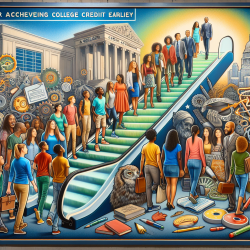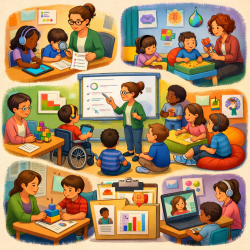
Across the country, districts are being asked to do something that sounds simple but is operationally complex: blur the lines between high school, postsecondary education, and the workforce—without compromising equity, access, or legal compliance. The Unlocking Career Success initiative and its related toolkit and playbooks offer a clear structure for doing just that.
From my seat as a Special Education Director, I read these playbooks with two lenses: (1) what’s feasible in a school calendar with staffing shortages and competing mandates, and (2) what protects access for students who have historically been left out—especially students with disabilities, English learners, and highly mobile youth. The good news is that the toolkit is not just aspirational; it’s organized into practical “moves” for different stakeholder groups (business and industry, educators, principals, superintendents, workforce boards, community-based organizations, and families).
Below are key insights schools can use immediately, with special attention to what matters for inclusive implementation.
What the Toolkit Is Really Saying: Focus on the “Four Keys”
Across the playbooks, the same four levers show up repeatedly. These are the “Four Keys to Unlocking Career Success,” and they are a helpful way to audit your current system:
Work-based learning (WBL): job shadowing, workplace tours, internships, cooperative education, youth apprenticeships, and registered apprenticeship.
Workforce credentials: industry-recognized credentials that have labor market value and ideally stack into further education.
Dual or concurrent enrollment: college credit in high school (academic and technical), aligned to a program of study and transferable when possible.
Career advising and navigation: structured planning, student goal-setting, and ongoing coaching so students can choose and persist.
When districts struggle, it’s often because one key is built in isolation. For example, we may add credentials but not align them to employer demand, or we may offer WBL but lack transportation or coaching supports that make participation realistic for students with IEPs.
Business and Industry Playbook: Three Steps Schools Can Ask Employers to Take
The Business and Industry Playbook is especially actionable because it breaks employer engagement into three steps that schools can translate into partnership requests.
Step 1: Signal Labor Needs (and Translate Them for Students)
Employers often have labor needs, but schools need that information in “education language.” The toolkit recommends that employers share both quantitative and qualitative labor market information (LMI), including past and future trends and direct employer input.
District action steps:
Ask your local chamber, business roundtable, or workforce board to present regional high-wage, high-demand roles to counselors, CTE teams, and special education transition staff.
Build LMI review into existing routines like your Perkins Comprehensive Local Needs Assessment (CLNA) and annual program review cycles.
Request “plain language” skill descriptions that can be embedded into course outcomes and IEP transition goals.
Step 2: Support Work-Based Learning (Including Registered Apprenticeship)
Work-based learning is where students connect identity, motivation, and real skill practice. The playbook highlights a continuum—from career expos and mock interviews to paid internships and youth apprenticeships. It also elevates registered apprenticeship as the premier earn-and-learn model.
District action steps:
Start with low-lift options (career day, mock interviews, workplace tours) and build toward internships and apprenticeships.
Use intermediaries when possible. The toolkit includes examples where an intermediary becomes the “employer of record,” reducing liability and onboarding barriers for businesses.
Ensure WBL is accessible. If a placement is not accessible for a student with a disability, it is not a high-quality placement—no matter how impressive the employer name is.
Step 3: Strengthen Alignment Between School and Work
Alignment means employers help shape curriculum, validate credentials, and create real hiring pathways—not just one-time events. The toolkit also highlights educator externships as a powerful way to keep instruction current with industry change.
District action steps:
Formalize advisory structures for pathways (including special education representation) so accessibility is built in from the start.
Invite employers to co-design “problem-based learning” challenges that can be used in academic classes and CTE.
Promote educator externships as professional learning, especially in fast-changing fields like AI, cybersecurity, healthcare, and advanced manufacturing.
Equity Is Not a Side Note: Special Populations Playbooks Matter
The toolkit explicitly includes playbooks for supporting adult learners, English learners, highly mobile youth, military-connected youth, and individuals with disabilities. That matters because career-connected learning can unintentionally become “opt-in for the already resourced” unless districts design supports on purpose.
Supporting Individuals with Disabilities: Practical Compliance Meets Opportunity
For students with disabilities, career-connected learning is not an “extra.” It is directly aligned with the purpose of IDEA: preparing students for further education, employment, and independent living. The Individuals with Disabilities playbook reinforces that schools can leverage multiple funding and service systems, including vocational rehabilitation (VR) and WIOA partnerships.
Implementation considerations I emphasize with teams:
IEP transition planning must connect to real options. If a student’s plan lists “employment” but the district has no accessible WBL or credential pathways, the plan is not meaningful.
Accommodations must travel into WBL settings. That includes communication supports, job coaching, assistive technology, and predictable routines—planned in collaboration with families and employers.
Pre-ETS and VR partnerships can expand capacity. Many districts underuse VR collaboration that could support exploration, counseling, and workplace readiness activities.
Supporting English Learners and Highly Mobile Youth: Access Is a Systems Design Issue
The English Learner playbook highlights that multilingualism is an asset and that Title III supports can be braided to remove barriers to participation in CTE, dual enrollment, and WBL. The Highly Mobile Youth playbook emphasizes stability, credit accrual, and flexible pathways so students don’t lose momentum when they move.
District action steps:
Audit master schedules to ensure EL services do not systematically block access to pathways.
Use asset mapping to identify community supports (transportation, childcare for adult learners, mentoring programs, translation services).
Review data by subgroup: who is in pathways, who completes credentials, who gets WBL hours, and who is left out.
Where Online Therapy Services Fit into Career-Connected Learning
Career pathways succeed when students can show up, communicate, regulate, and persist. That is where related services can be a quiet but decisive factor—especially in districts experiencing therapist shortages.
As a district leader, I see three practical connections between online therapy (like TinyEYE’s services) and Unlocking Career Success implementation:
Access and continuity: Teletherapy can reduce missed service minutes due to vacancies and help stabilize support during staff turnover—important for students building workplace readiness skills.
Functional communication and employability skills: Speech-language services often align naturally to workplace communication, self-advocacy, and social pragmatics—skills that matter in interviews, internships, and apprenticeships.
Scheduling flexibility: When students participate in WBL or dual enrollment, online service delivery can help districts maintain services without forcing students to choose between therapy and career experiences.
In other words, related services are not separate from career readiness—they are often the bridge that makes participation possible.
A Simple Starting Point: A 60-Day District “Playbook Sprint”
If your district wants to move from interest to implementation, consider a short, structured sprint:
Weeks 1–2: Convene a cross-functional team (CTE, counseling, special education, EL, admin, community partners). Choose one pathway to strengthen.
Weeks 3–4: Review LMI and identify 1–2 credentials and 2–3 WBL options that align to local demand.
Weeks 5–6: Identify barriers for special populations (transportation, schedule conflicts, language access, accommodations, staffing). Assign owners.
Weeks 7–8: Launch one pilot WBL activity (mock interviews, workplace tour, or short internship cohort) and collect student feedback.
This approach keeps the work manageable and builds momentum while honoring the toolkit’s emphasis on alignment and equity.
For more information, please follow this link.