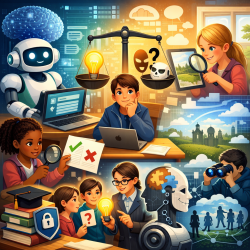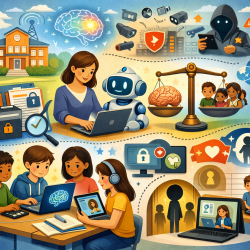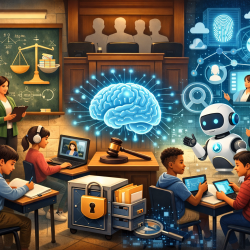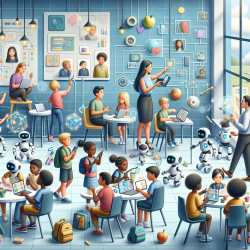
Generative AI did not arrive in schools the way most educational technology does. It was not piloted, procured, or rolled out with a multi-year plan. It simply showed up—on student devices, in teacher workflows, and in the broader culture—and districts have been working to respond in real time. As one educator described it, we are “building the plane while we fly it.”
As a Special Education Director, I feel that urgency in a very practical way. We are already navigating staffing shortages in related services, rising mental health needs, and the day-to-day complexity of ensuring legal compliance for students with disabilities. AI can feel like “one more thing.” Yet it is also true that AI is now part of the learning ecosystem, and ignoring it can create confusion, inequity, and avoidable risk.
This post draws on themes highlighted in A Guide to AI in Schools: Perspectives for the Perplexed (Smith, Dukes, Sheldon, Nnamani, Esteves, & Reich, 2025) and translates them into practical considerations for school leaders and teams—especially those supporting students with IEPs and 504 Plans.
Why AI feels different: It is an “arrival technology”
Many technologies in schools are adopted through deliberate choices: committees, contracts, training, and gradual implementation. Generative AI is different. Students and staff started using it before most districts had shared language, guidance, or guardrails. That creates immediate questions:
- What counts as cheating or inappropriate support?
- How do we protect student privacy when prompts can include identifying information?
- How do we ensure students with disabilities are supported rather than excluded?
- How do we avoid creating a new layer of “chaos” in classrooms?
The guidebook’s core message is one I strongly agree with: we cannot pretend we have final answers. But we can create shared understanding, reduce harm, and build a process for ongoing revision.
Start with ethics: the questions are not optional
In leadership meetings and parent conversations, I often hear the same concern: “Is this safe?” The guidebook highlights that educators consistently raise ethical issues first—before instructional innovation. That is appropriate. A district can be excited about new tools and still be responsible enough to ask hard questions.
Key ethical principles frequently raised include:
- Transparency: Do students and families know when AI is being used? Do staff disclose AI assistance appropriately?
- Justice and fairness: Are tools biased? Do they reinforce stereotypes or disadvantage multilingual learners or students with disabilities?
- Non-maleficence: What harms could result—from misinformation to inappropriate “advice” to emotional overreliance on chatbots?
- Responsibility: If something goes wrong, who is accountable—vendor, district, staff member, student?
- Privacy: Where does the data go? How long is it stored? Can it be sold or repurposed?
- Pedagogical appropriateness: Does the tool support research-based teaching and learning, or does it undermine it?
For Special Education teams, privacy is not theoretical. Under FERPA and other protections, we must be extremely cautious about entering personally identifiable information into any AI system. Even seemingly “small” details can become identifying when combined.
AI and student learning: both promise and risk
The guidebook is clear: research is still limited and results are mixed. That aligns with what we see in schools. AI can help students get unstuck, generate examples, or rephrase confusing text. It can also short-circuit productive struggle and make it harder for teachers to assess what a student truly knows.
From a student-support perspective, I see several high-impact considerations:
- Skill development: If AI does the reading, writing, or problem-solving, students may not build the foundational skills we are responsible for teaching.
- Assessment validity: When AI completes work, grades can become less meaningful and intervention decisions can become less accurate.
- Attention and screen time: Many educators worry that AI adds to an already screen-saturated school day.
- Misinformation: AI can generate confident but incorrect explanations. Students need explicit instruction in verification.
At the same time, there is a real equity argument: AI can function like a widely accessible tutor, offering explanations in multiple ways and at multiple levels—if used carefully and safely.
AI and teachers: time saved, time spent
District leaders often hear that AI will “save time.” The guidebook notes that teacher experiences vary: sometimes AI improves productivity, sometimes it does not, and sometimes it adds work—especially around academic integrity monitoring.
In practice, teachers report using AI for:
- Drafting lesson ideas and outlines (then revising for relevance and quality)
- Creating rubrics and checklists
- Generating differentiated materials (with careful review)
- Drafting sensitive communications (followed by human editing)
But there are also real costs:
- Time spent investigating suspected AI misuse
- Strain on teacher-student relationships when classrooms feel “policed”
- Pressure to keep up with rapidly changing tools
As leaders, we should avoid framing AI as a cure for burnout. Burnout is usually a workload, staffing, and systems issue. AI may help with certain tasks, but it cannot replace adequate staffing, manageable caseloads, and strong instructional support.
Policy development: treat it as a living document, not a forever decision
One of the most practical recommendations in the guidebook is to label policies by year (for example, “2025–2026 AI Guidance”) and commit to revisiting them. This reduces fear and makes it easier to adapt as tools and evidence evolve.
Effective policy processes tend to include:
- Cross-functional teams: general education, special education, IT, administrators, counselors, and librarians
- Student and parent input: including feedback on clarity and real-world usability
- Shared vocabulary: so “AI,” “plagiarism,” “brainstorming,” and “editing support” mean the same thing across classrooms
- Room for skepticism: the guidebook highlights the value of an “AI skeptic” on the team to surface blind spots
One approach described is “no until yes”—a cautious default where uses are prohibited until the school community agrees they are appropriate and safe.
Special education lens: access, accommodations, and unintended discrimination
AI policy conversations can unintentionally collide with disability rights. For example, a push toward handwritten work to prevent AI misuse may conflict with IEP accommodations such as keyboarding, speech-to-text, or assistive technology. We cannot solve academic integrity by violating legal access requirements.
Key questions I recommend districts ask explicitly:
- How will AI guidance protect accommodations and assistive technology access?
- Will AI bans disproportionately impact students who rely on tools for communication, language access, or written expression?
- Are we using AI detectors in ways that create false positives for multilingual learners or students with disabilities?
- Do staff understand that “probability” tools are not proof?
In other words, equity is not just about who gets to use AI. It is also about who gets accused, who gets restricted, and who loses access to legitimate supports.
Practical next steps for districts (including TinyEYE partner districts)
TinyEYE supports schools through online therapy services, and that work sits at the intersection of student needs, confidentiality, and effective service delivery. Whether you are considering AI for instruction, operations, or student support, the same leadership stance applies: be clear, be cautious with data, and be consistent.
Here is a practical sequence that many districts can implement without waiting for “perfect” answers:
- Establish an AI working group with representation from special education, IT, curriculum, and student services.
- Create a one-page “what we mean by AI” explainer for staff and families, including examples of permitted and not-permitted uses.
- Adopt a vetting process for tools (privacy, accessibility, educational alignment, age requirements, support).
- Publish classroom-level guidance that helps teachers clarify when AI is allowed for brainstorming, editing, feedback, or not at all.
- Build AI literacy in small doses: short modules, department discussions, and case studies rather than one large, overwhelming PD.
- Plan for revision: set a review date, collect feedback, and update guidance as evidence and tools change.
Most importantly, communicate that we are learning together. Students, families, and staff tend to tolerate ambiguity better when they see a thoughtful process and consistent values.
For more information, please follow this link.