At TinyEYE, we work alongside schools every day to support children’s communication and learning. One message comes through consistently: strong early literacy is not built by a single program or a single “best method.” It is built through a coherent set of experiences that develop children’s language, thinking, motivation, and skills over time.
This post draws key insights from NCCA Research Report No. 15, Literacy in Early Childhood and Primary Education (3–8 years) (Kennedy, Dunphy, Dwyer, Hayes, McPhillips, Marsh, O’Connor, Shiel, 2012). The report synthesizes international research and offers practical implications for early years classrooms and schools. Below are the most actionable takeaways for educators and school leaders.
1) Start with a broad definition of literacy
The report emphasizes that literacy should be understood across the lifespan and across multiple dimensions: cognitive, social, cultural, creative, and affective. Importantly, literacy is not limited to printed text. It includes oral language, writing, digital media, and multimodal communication (images, gesture, sound, and more).
Why this matters in schools: when literacy is defined too narrowly, instruction can become overly focused on isolated skills. A broader definition keeps the focus on meaning, communication, and participation in learning communities.
2) Emergent literacy begins early and grows through play, talk, and print
For ages 3–8, the concept of emergent literacy is central. Children do not suddenly “become ready” for literacy; rather, they develop the skills, knowledge, and attitudes that lead into conventional reading and writing. The report highlights that emergent literacy grows through:
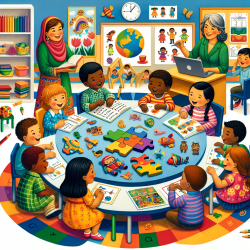
- Play and hands-on experience (children explore symbols, roles, and narratives)
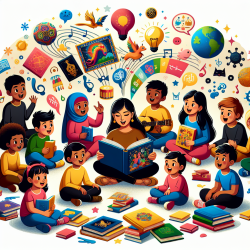
- Shared book reading and discussion (especially dialogic, interactive reading)
- Early writing and drawing as meaning-making (not just handwriting practice)
- Rich oral language interactions that extend vocabulary and thinking
In special education terms, this is a powerful reminder: many children who struggle later benefit from earlier, richer language and literacy experiences that are meaningful, motivating, and socially supported.
3) Balance “constrained” and “unconstrained” skills
A key contribution of the report is the distinction between:
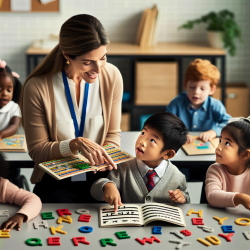
- Constrained skills: phonological awareness, phonics, spelling patterns, grammar, punctuation (skills that can be mastered and then contribute less over time)
- Unconstrained skills: oral language, vocabulary, comprehension, writing composition (skills that continue developing across the lifespan)
Schools sometimes over-emphasize constrained skills because they are easier to teach and test. The report cautions that children, especially those in disadvantaged contexts, can end up receiving instruction that is heavy on basic skills and light on meaning, discussion, and extended writing. The result can be short-term gains without long-term literacy growth.
4) Use a research-based balanced literacy framework
The report supports a balanced literacy framework that embeds essential skills within authentic reading and writing experiences. In practice, that means classrooms include multiple, complementary contexts:
- Read-alouds across genres (to build vocabulary, comprehension, and love of reading)
- Shared reading (to build concepts of print, fluency, and participation)
- Guided reading with flexible grouping (to target instructional needs)
- Independent reading of self-selected texts (to build volume, identity, and stamina)
- Shared and interactive writing (to model composition and conventions)
- Writing workshop (to develop voice, craft, and the writing process)
For many learners, including those receiving speech-language or occupational therapy supports, this framework creates repeated opportunities to practice language and literacy skills in meaningful contexts rather than in isolation.
5) Oral language is not “extra” to literacy: it is foundational
The report repeatedly returns to the tight relationship between oral language and literacy. Oral language supports early literacy in at least two ways:
- As a foundation for decoding and comprehension (phonological awareness, vocabulary, syntax)
- As a context for learning (discussion, reasoning, questioning, explaining, retelling)
One especially important insight is developmental: early oral language predicts many early reading skills, but its strongest effects on higher-level comprehension may become most visible later (often around fourth class and beyond), when texts become more complex. That is a compelling reason to invest early in academic vocabulary, narrative skills, and extended discourse.
6) Vocabulary and academic language need intentional teaching
The report highlights significant differences in children’s vocabulary development, particularly linked to socioeconomic factors. Children who enter school with smaller vocabularies are at risk for later comprehension challenges, especially as texts become more informational and concept-heavy.
Effective early vocabulary instruction is not simply “word of the day.” It includes:
- Repeated exposure to new words in meaningful contexts
- Explicit teaching plus opportunities to use words in talk, play, and writing
- Building conceptual categories (not just labels)
- Purposeful use of informational texts to build knowledge and language
7) Inclusion: good teaching for all, with intensified adaptations for some
The report takes a clear stance aligned with inclusive education research: the principles of good literacy teaching apply to all children, including those with special educational needs. However, some learners require a greater degree of adaptation, such as:
- More practice to mastery and more examples of a concept
- More explicit instruction and error-reduced learning opportunities
- Multi-sensory approaches (visual, auditory, kinaesthetic, tactile)
- Targeted goals supported through a tiered assessment approach and, where needed, an IEP
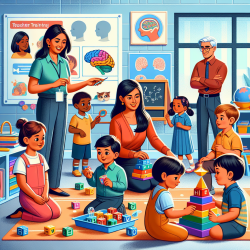
This is where coordinated school supports matter. When classroom instruction, learning support, and therapy services are aligned, children experience fewer fragmented interventions and more consistent progress.
8) EAL learners: build oral language toward academic proficiency
For children learning English as an additional language (EAL), the report emphasizes the difference between:
- BICS (basic interpersonal communication skills)
- CALP (cognitive academic language proficiency), which takes longer to develop
Assessment and instruction must be careful and fair. The report notes international evidence that EAL learners can be over-referred to special education when language-based tests are used without appropriate supports. Effective practice includes intensive oral language development, careful assessment (ideally with bilingual support when needed), and strong classroom-based supports before referral.
9) Assessment: prioritize formative, authentic observation in the early years
For ages 3–8, the report recommends that most assessment should be formative and embedded in real literacy activity. Useful tools include:
- Observation during play, book reading, and writing
- Conversations and conferences with children
- Children’s drawings and writing samples
- Running records and miscue analysis
- Oral retellings and comprehension discussions
- Writing portfolios
Summative tools (including standardized measures) can be helpful, but they must be interpreted cautiously and supplemented with classroom evidence to understand the “why” behind a score.
10) Digital literacies belong in early literacy, not on the sidelines
Children’s literacy lives include screens, multimodal texts, and opportunities to create as well as consume. The report highlights the importance of continuity between home and school by embedding digital literacies into classroom practice. This can include:
- Multimodal text creation (photos, audio, simple animations)
- Digital storytelling and e-books as supplements to adult read-aloud
- Guided, purposeful use of online communication tools where appropriate
For many children, digital tools can reduce barriers (for example, supporting access to text, offering alternative ways to demonstrate understanding, and increasing engagement).
What this means for schools partnering with TinyEYE
When schools invest in early literacy, they are also investing in children’s language, self-efficacy, and long-term academic access. Online therapy services can support this work best when they connect to classroom routines and school goals, such as:
- Strengthening oral language foundations that support reading comprehension and writing
- Supporting phonological awareness and vocabulary development within meaningful contexts
- Collaborating with educators on targeted, measurable goals aligned to classroom instruction
- Helping teams interpret assessment data to plan next instructional steps
Ultimately, the report’s strongest message is both practical and hopeful: literacy growth is accelerated when children experience a coherent, motivating, meaning-rich approach that builds skills and thinking together.
For more information, please follow this link.