Why this research matters right now
As a district Special Education Director, I spend a lot of time in the space between what research recommends and what schools can realistically deliver—especially when we’re navigating therapist staffing shortages, increased student needs, and heightened accountability for literacy outcomes. The NCCA-commissioned report Literacy in Early Childhood and Primary Education (3–8 years) (Kennedy, Dunphy, Dwyer, Hayes, McPhillips, Marsh, O’Connor, Shiel, 2012) is one of those rare resources that bridges theory, classroom practice, and system-level implications.
It doesn’t argue for a single “best program.” Instead, it clarifies what literacy actually is for young children, what the evidence says about how it develops, and what effective instruction and assessment look like across diverse learners—including students with disabilities and multilingual learners.
First, redefine “literacy” (it’s bigger than decoding)
The report pushes us to adopt a broad, lifespan view of literacy—“womb to tomb.” For ages 3–8, that matters because literacy is not just reading words on a page. The report emphasizes that strong definitions of literacy include:
- cognitive dimensions (thinking, problem-solving, comprehension)
- affective dimensions (motivation, engagement, self-efficacy)
- socio-cultural dimensions (language, identity, community practices)
- creative and aesthetic dimensions (imagination, voice, response to text)
- multiple modes and formats (spoken language, print, broadcast, digital media)
That framing aligns with modern assessment definitions (PISA, PIRLS, PIACC) that treat reading as an active meaning-making process—not passive “word calling.” It also aligns with early childhood frameworks like Aistear, which explicitly includes non-linguistic communication systems (images, art, sound, gesture, even play) as part of literacy development.
The “emergent literacy” truth schools can’t ignore
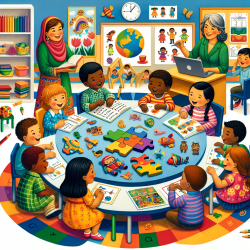
For ages 3–8, emergent literacy is foundational. The report defines emergent literacy as the skills, knowledge, and attitudes that come before conventional reading and writing. Critically, it highlights that emergent literacy develops through play and hands-on experiences where children interact with print and meaning in authentic ways.
In practical terms, this means that when a preschooler “writes” a grocery list in dramatic play, or a kindergartener draws and dictates a story, they are not “off task.” They are building the symbolic and language systems that later support decoding, spelling, composition, and comprehension.
What actually develops in early literacy (and why it’s not linear)
The report synthesizes research on key components of literacy development. For school leaders and IEP teams, this matters because it helps us distinguish between what should be mastered early and what continues to grow for years.
Constrained vs. unconstrained skills
A major takeaway is the distinction between:
- Constrained skills: phonological awareness, phonics, spelling patterns, grammar/punctuation. These can be mastered and then contribute less over time.
- Unconstrained skills: oral language, vocabulary, comprehension, writing composition. These keep developing across the lifespan and drive long-term academic success.
In many schools—particularly those serving students with greater needs—there is a predictable risk: instruction over-focuses on constrained skills because they are easier to teach, easier to test, and feel “measurable.” The report is clear: constrained skills matter, but they must be taught alongside meaning-making, language, and higher-order thinking from the start.
The biggest lever: oral language and vocabulary
If I had to pick one system-level implication from this research, it’s this: oral language is not “extra.” It is infrastructure.
The report explains that oral language supports literacy in two ways:
- As a skill base: phonological awareness and language comprehension are predictive of later reading outcomes.
- As a learning context: discussion, reasoning, and teacher-child interaction are how children learn to use comprehension strategies and academic language.
Vocabulary is singled out as a core component of language proficiency and a major equity issue. The research cited in the report notes substantial vocabulary gaps by age 3 associated with socioeconomic factors. That gap doesn’t close on its own—and “incidental exposure” is not enough. Young children need repeated exposure to words in meaningful contexts, with adults who expand, model, and invite children into extended talk.
Balanced literacy: not a slogan, a structure
The report strongly supports a research-based balanced literacy framework—one that embeds skills instruction inside authentic reading and writing experiences. In classrooms serving 3–8 year-olds, that means intentional use of:
- teacher read-alouds across genres (including informational text)
- shared reading and shared writing
- guided reading and small-group instruction informed by assessment
- independent reading of self-selected texts
- writing workshop and process writing (drafting, revising, publishing)
- play-based and multimodal literacy experiences (especially in early years)
From a leadership standpoint, balanced literacy also implies protected instructional time. The report references models where effective schools allocate substantial time to literacy (often 90 minutes or more) and use that time strategically—not just for worksheets or isolated drills.
Equity and inclusion: what changes for students with SEN and multilingual learners
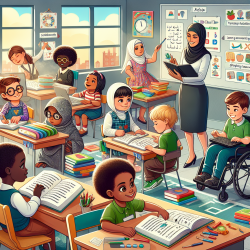
The report’s message is both reassuring and challenging: the principles of good teaching are essentially the same for all children, but some students require more intensity, more scaffolding, and more systematic practice.
Students with special educational needs
For students with more significant learning needs (for example, severe dyslexic difficulties), the report highlights the need for “high density” teaching: more examples, more practice to mastery, and in some cases multi-sensory instruction. It also references the importance of tiered approaches to assessment and instruction, up to and including IEP target-setting.
English as an additional language (EAL)
The report cautions districts to be vigilant about disproportionate representation of multilingual learners in special education, especially when language-based tests are used without bilingual supports. It emphasizes building oral language toward academic proficiency (CALP), not just conversational language (BICS), and recommends intensive before-, during-, and after-reading supports for comprehension.
Assessment: what to measure (and how to stay developmentally appropriate)
Assessment is treated as essential, but the report stresses that early assessment should be primarily formative and embedded in authentic literacy contexts.
Key areas to assess in early childhood and primary settings include:
- oral language and narrative skills
- concepts about print
- motivation and engagement (dispositions)
- alphabet knowledge and phonological awareness
- fluency and comprehension
- spelling and writing development
Importantly, the report highlights tools beyond standardized tests, such as observations, conferences, running records, retellings, writing portfolios, and structured rubrics. For districts, this is where professional learning communities matter: teams need shared expectations and calibration so teacher judgments are reliable and instructionally useful.
Where TinyEYE fits in: protecting access when staffing is tight
Many districts are facing real-world constraints: speech-language pathologist shortages, increasing caseload complexity, and the legal requirement to deliver services aligned to IEPs. In that environment, online therapy can be a practical way to maintain continuity of services—especially for oral language development, which this report identifies as a cornerstone of literacy growth.
When schools can’t staff consistently, the risk isn’t just missed therapy minutes. The risk is that children lose momentum in the very language skills that support later comprehension, writing, and academic success. Service delivery models that stabilize access—while coordinating with classroom instruction and progress monitoring—help districts stay compliant and focused on outcomes.
What I would ask school teams to do next
- Audit your early literacy block: Are you teaching constrained skills and unconstrained skills every week?
- Protect oral language time: Build structured discussion, retell, and vocabulary routines into daily instruction.
- Use assessment to drive grouping: Keep groups flexible, dynamic, and responsive to data.
- Strengthen inclusion: Increase intensity and scaffolds without narrowing instruction to drills-only.
- Plan for continuity: Align home, preschool, and early primary expectations—especially around play, talk, and text exposure.
For more information, please follow this link.