
When schools talk about “improving literacy,” the conversation often collapses into one narrow question: “Which reading program should we buy?”
But the evidence base behind early literacy (ages 3–8) tells a different story. Literacy isn’t a single skill. It’s a developmental, social, cognitive, and emotional process—one that grows through play, talk, print, writing, and increasingly, digital media. The most practical takeaway from NCCA Research Report No. 15 (Kennedy, Dunphy, Dwyer, Hayes, McPhillips, Marsh, O’Connor, Shiel) is that schools get the best outcomes when they treat literacy as an ecosystem, not a worksheet.
Below are the key insights schools can use immediately—especially school leaders, classroom teachers, and support teams who are trying to serve diverse learners, including students with language delays, students learning English as an additional language (EAL), and students with special education needs.
1) Literacy is bigger than “learning to read”
The report emphasizes broad definitions of literacy used internationally (PISA, PIRLS, PIACC) and nationally. Literacy is about constructing meaning, using texts for real purposes, and participating fully in society. That includes:
Reading and writing (of course)
Oral language (listening and speaking)
Critical thinking (reflection, critique, empathy)
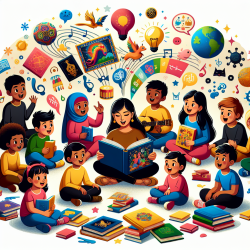
Multimodal communication (images, gesture, sound, drama)
Digital literacy (screen-based texts, media, online communication)
For ages 3–8, this matters because children are in the “emergent literacy” phase: they’re building the skills, knowledge, and attitudes that become conventional reading and writing. That development happens through play and hands-on experiences—not only through formal instruction.
2) Emergent literacy thrives when play and language are taken seriously
A major theme is the shift away from older “readiness” models toward developmental and socio-cultural views. In practical terms, that means children don’t need to “wait” until they’re ready; they need rich experiences that grow readiness.
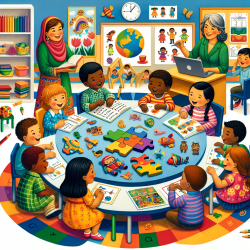
Play is not a break from literacy—it can be a pathway into it. Make-believe play supports:
Symbolic thinking (using one thing to represent another)
Vocabulary growth (especially in role-play scenarios)
Narrative skills (sequencing, character motives, cause/effect)
Self-regulation (following roles and rules)
For schools, the implication is clear: early literacy planning should intentionally include play-based contexts, storybook discussion, and opportunities for children to represent meaning through drawing and early writing.
3) The “big unlock” skills: phonological awareness, but also vocabulary
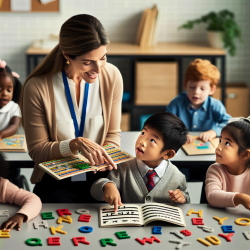
The research strongly supports phonological awareness as a critical early component of literacy development. Children benefit when educators build awareness of sound patterns in language—rhymes, syllables, onset-rime, and phonemic awareness—especially when instruction is explicit and developmentally appropriate.
But the report is equally clear: vocabulary and oral language are not “extras.” Vocabulary knowledge is central to language proficiency and later reading comprehension. The evidence highlights major vocabulary gaps that can emerge early—particularly for children in disadvantaged contexts—making early vocabulary instruction and rich talk essential.
In other words, schools need both:
Constrained skills (learned to mastery, like phonics, spelling patterns, punctuation)
Unconstrained skills (grow over a lifetime, like oral language, vocabulary, comprehension, writing composition)
If instruction over-focuses on constrained skills without meaning-based language experiences, students—especially those who struggle—can fall behind in comprehension and academic language even if they can “do the phonics.”
4) Balanced literacy isn’t “either/or”—it’s “both/and”
The report argues there is no single best method for teaching literacy. Instead, schools should embed key skills within a research-based balanced literacy framework that includes meaningful reading and writing experiences.
Examples of reading contexts in a balanced framework include:
Teacher read-alouds across genres
Shared reading and guided reading
Reading workshops and independent reading
Opportunities for discussion about texts (building a community of readers)
And writing contexts include:
Play-based and emergent writing
Shared and interactive writing
Writing workshops (process approach)
Attention to handwriting and spelling as supports for composing
The key is not just variety—it’s coherence, assessment-informed grouping, and enough time for literacy instruction to be meaningful and motivating.
5) Motivation and self-efficacy are not “soft”—they predict achievement
The report reviews motivation and engagement research and highlights a practical truth schools see every day: students who believe “I can do this” persist longer, take more risks, and read and write more.
Engagement includes:
Behavioral engagement (effort and persistence)
Emotional engagement (interest, belonging vs. anxiety, boredom)
Cognitive engagement (goal-setting, strategy use, self-regulation)
Social engagement (learning with and through others)
For early literacy, this means classroom design matters: choice of texts, authentic purposes for reading and writing, collaborative discussion, and “optimal challenge” can all influence outcomes.
6) Inclusion works best when support is intensive, targeted, and connected to classroom instruction
The report highlights that principles of good teaching apply to all children, but some learners need greater intensity and adaptation. For example, students with significant learning needs may require:
More practice to mastery
More examples and clearer modelling
More error-free learning opportunities
Multi-sensory approaches (visual, auditory, kinaesthetic, tactile)
It also emphasizes a structured approach to assessment and planning (including IEPs where appropriate), and warns against fragmented experiences—like frequent withdrawal without strong alignment to classroom learning.
7) EAL learners need oral language development for academic success
With increasing linguistic diversity in schools, the report stresses that conversational fluency (BICS) is not the same as cognitive academic language proficiency (CALP). CALP takes longer and is essential for literacy and learning across the curriculum.
Effective supports include:
Rich oral language interactions in the language of instruction
Before-, during-, and after-reading activities to build comprehension
Careful assessment practices (avoiding misidentification as special education needs due to language-based testing)
Collaborative, site-based supports that reduce unnecessary referrals
8) Assessment should be mostly formative in the early years—and done in real contexts
The report provides a clear message: in preschool and early primary, assessment should primarily support learning, not just label performance.
Useful early literacy assessment approaches include:
Observation during authentic activities (play, book reading, early writing)
Conversations and conferences with children
Children’s drawings and writing samples
Running records and miscue analysis (as reading develops)
Oral retelling and comprehension questioning
Writing portfolios
Summative tools (including standardized tests) can help, but they should be interpreted carefully and used alongside classroom evidence—especially for young children, EAL learners, and students whose performance varies by context.
9) Digital literacies are already part of children’s lives—schools need continuity
The report recognizes that children are active users of technology and can be creative producers of texts (“produsers”). Digital literacy isn’t just typing; it includes navigating multimodal texts, creating media, and understanding how communication works across platforms.
The implication for schools is not “more screen time,” but better alignment: embed digital literacies thoughtfully so there’s continuity between home and school literacy practices.
What this means for schools (and how TinyEYE fits into the picture)
For school systems, the research points to a practical synthesis: early literacy success comes from coordinated work across oral language, reading, writing, motivation, and assessment—delivered through inclusive, evidence-based instruction.
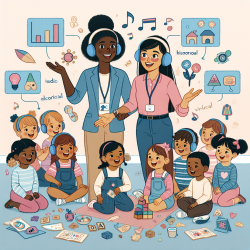
For many students, especially those with language delays or complex communication needs, progress depends on early, consistent intervention and close collaboration with educators. That’s where TinyEYE’s online therapy services can support schools: by helping teams strengthen oral language foundations, reduce barriers to participation, and align therapy goals with classroom literacy instruction.
For more information, please follow this link.