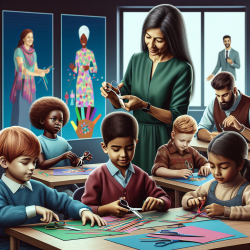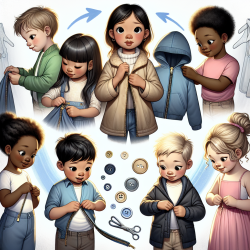
Buttons and zippers seem like small details in a school day—until a child is stuck in the bathroom, late to recess, or feeling embarrassed in the hallway. For many students, managing clothing fasteners is not a simple “try harder” moment. It is a real skill that relies on coordination, strength, planning, and confidence.
As a provider of online therapy services to schools, TinyEYE often supports teams who notice these struggles showing up in ways that affect independence, participation, and self-esteem. The good news: buttoning and zipping are teachable skills, and progress is very possible with the right supports.
Why buttons and zippers can be so hard
Fasteners require multiple skills working together at the same time. When one piece is shaky, the whole task can feel impossible.
Fine motor strength and control: Small finger movements, pinch strength, and endurance are needed to grasp, push, pull, and stabilize fabric.
Bilateral coordination: One hand holds the clothing steady while the other hand manipulates the button or zipper pull.
Hand-eye coordination: The child must look, align, and adjust while their hands move in precise ways.
Motor planning: Sequencing the steps (line up, pinch, push through, pull, reset) can be challenging, especially for students who struggle with learning new movement patterns.
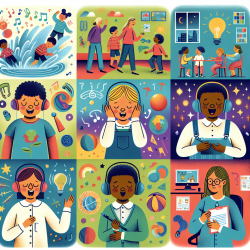
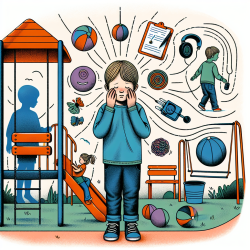
Sensory processing differences: Some children dislike the feeling of stiff fabric, tight waistbands, scratchy seams, or the pressure of clothing around the body. Stress can reduce coordination quickly.
Attention and frustration tolerance: If a child has experienced repeated failure, they may avoid trying, rush, or melt down—especially during transitions when adults are busy and time is tight.
Signs a student may need support
Regularly asks for help with coats, pants, or toileting fasteners beyond what is typical for their age
Avoids jackets or clothing with buttons/zippers
Becomes upset, shuts down, or acts out during dressing routines
Takes significantly longer than peers and misses learning or social time
Uses “workarounds” (holding pants up, leaving coat open) even in cold weather
Practical strategies that help at school and at home
Support should be respectful, consistent, and focused on independence. These ideas can be used by educators, families, and therapy teams.
Teach when there is no rush: Practice during calm times, not during the doorway scramble before recess.
Break the task into steps: Teach “start the zipper,” “pull up,” and “check” as separate mini-skills.
Use stable positioning: Sitting can improve control. For zippers, resting hands on the lap or a table can reduce wobble.
Start with bigger targets: Begin with large buttons, button boards, or jackets with sturdy zipper pulls before moving to small, slippery fasteners.
Try adaptive tools: Zipper pull tabs, key rings on zipper pulls, or clothing with larger buttons can reduce frustration while skills build.
Build hand strength through play: Theraputty, clothespins, tweezers games, LEGO, and lacing activities strengthen the same muscles used for fasteners.
Use clear language and visuals: A simple picture sequence can help students remember the steps without constant adult prompting.
Celebrate effort, not speed: Confidence matters. “You kept trying and got it started” is often more motivating than “Hurry up.”
How therapy support can make a difference
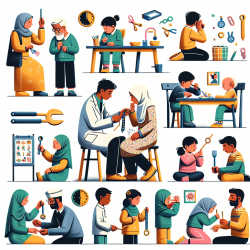
If buttoning and zipping difficulties are persistent, an occupational therapy perspective can help identify the “why” behind the struggle and create a plan that fits the student’s day. In school settings, therapy support may include skill-building practice, classroom strategies, adaptive recommendations, and collaboration with families so progress generalizes beyond one environment.
When we treat fasteners as functional life skills—not just “getting dressed”—we help students protect their dignity, increase independence, and participate more fully in school routines.
For more information, please follow this link.