W-sitting is a common sitting position in young children where the knees are bent in front of the body and the feet are positioned out to the sides, forming a “W” shape when viewed from above. Many children naturally move in and out of this position while playing on the floor, especially during preschool and early elementary years.
Because W-sitting is so frequently seen in classrooms, therapy rooms, and at home, it often raises questions from educators and caregivers. Is it harmful? Should adults stop it immediately? Does it mean a child needs therapy?
The most helpful approach is to understand why children choose W-sitting, what patterns might be worth monitoring, and what practical alternatives can be encouraged in school and home routines.
Why Do Children W-Sit?
Children often choose W-sitting because it feels stable. The wide base of support created by the legs can make it easier to stay upright while focusing on play, puzzles, or fine motor tasks. For some children, it can be a “default” position that requires less effort than other sitting postures.
Common reasons children may prefer W-sitting include:
- Increased stability: The position can reduce the need for core muscle engagement to maintain balance.
- Developing trunk strength: Some children are still building the core strength needed for upright sitting with legs crossed or on a small chair.
- Balance challenges: W-sitting can feel safer for children who struggle with equilibrium reactions.
- Joint flexibility: Some children naturally have more hip and leg internal rotation, making W-sitting comfortable and easy to access.
- Habit and convenience: If a child frequently plays on the floor, they may repeatedly settle into the same position without realizing it.
Is W-Sitting Always a Problem?
Not necessarily. Occasional W-sitting, especially in toddlers and preschoolers who also use a variety of other positions, is often part of typical development. Many children naturally reduce W-sitting as their strength, coordination, and postural control mature.
Concerns tend to increase when W-sitting is:
- Frequent and prolonged (a child uses it as their primary floor sitting position)
- Hard to change (the child resists or struggles to sit in other ways)
- Paired with other movement concerns (frequent falls, clumsiness, fatigue, or avoidance of playground activities)
- Associated with discomfort (complaints of pain in hips, knees, or legs)
Potential Concerns Linked to Persistent W-Sitting
When W-sitting becomes a child’s main way of sitting, it may contribute to or reflect underlying challenges. It can also limit opportunities to develop certain foundational movement skills that support classroom participation.
1) Reduced Core Strength and Postural Control
Because W-sitting provides a wide, stable base, a child may rely less on their trunk muscles to stay upright. Over time, this can reduce practice opportunities for core activation, which supports:
- upright posture at a desk
- endurance for seated learning tasks
- efficient fine motor control for handwriting and cutting
2) Limited Trunk Rotation and Crossing Midline
In W-sitting, the hips and legs are positioned in a way that can discourage trunk rotation. Trunk rotation is important for:
- reaching across the body smoothly
- developing bilateral coordination
- supporting skills like dressing, sports, and efficient writing posture
3) Hip and Lower Extremity Stress Patterns
Some professionals raise concerns that persistent W-sitting may place stress on hips, knees, and ankles, particularly in children with certain orthopedic or neuromuscular profiles. While not every child who W-sits will develop orthopedic issues, it can be a factor to monitor, especially if a child already has alignment concerns.
4) Motor Planning and Balance Considerations
Sometimes W-sitting is less about flexibility and more about stability needs. If a child is using W-sitting to compensate for balance challenges, it may be a clue that they would benefit from targeted support to build strength, coordination, and confidence in movement.
What Educators and Caregivers Can Watch For
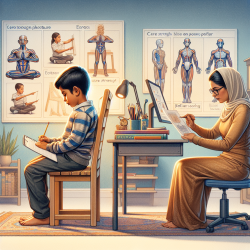
In schools, W-sitting often shows up during circle time, centers, library time, or floor-based learning. Rather than focusing on the position alone, it helps to look at the bigger picture of the child’s movement patterns.
Consider noting:
- How often the child chooses W-sitting compared to other positions
- Whether the child can easily shift to alternatives when prompted
- Whether the child appears fatigued in upright sitting or slumps at the desk
- Whether the child avoids activities requiring balance, climbing, or coordinated movement
- Whether there are concerns about gait, toe walking, in-toeing, or frequent tripping
Practical Alternatives to Encourage in the Classroom
Many children respond best to simple, consistent cues and appealing options. The goal is not to shame a child for W-sitting, but to expand their “movement toolbox” with comfortable alternatives.
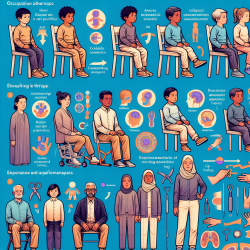
Helpful sitting options
- Criss-cross sitting: Legs crossed in front, often used for circle time.
- Long sitting: Legs straight out in front (can be paired with a slight bend if needed).
- Side sitting: Legs folded to one side, alternating sides to promote symmetry.
- Half-kneeling: One knee down, one foot forward, useful during play at low surfaces.
- Small chair or stool: When appropriate, a stable seat can support attention and posture.
Simple cueing strategies
- Use neutral prompts like “Let’s fix our legs” or “Choose criss-cross or legs out front.”
- Offer a visual choice chart with pictures of sitting options.
- Build position changes into routines, such as switching sitting style between activities.
- Praise flexibility and effort: “Nice job changing your position.”
When to Consider an OT or PT Consultation
If W-sitting is persistent and paired with functional concerns, a consultation can help identify what is driving the pattern and what supports may help. Occupational therapists (OTs) and physical therapists (PTs) may look at strength, balance, joint mobility, motor coordination, and how posture impacts classroom participation.
It may be time to ask for additional input if:
- a child primarily W-sits and struggles to maintain other positions
- there are frequent reports of fatigue, discomfort, or avoidance of movement tasks
- teachers notice difficulty with posture, endurance, or fine motor output
- there are broader developmental or motor milestone concerns
How Online Therapy Can Support Schools
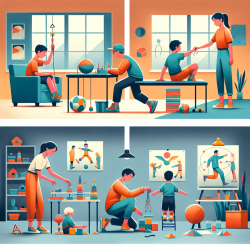
Schools often need practical, scalable strategies to support students across environments, including classrooms, gyms, and therapy spaces. Online therapy services can help teams collaborate, provide targeted interventions, and share easy-to-implement supports with educators and families.
For example, an online OT may:
- observe functional sitting patterns during school routines
- recommend classroom-friendly seating and movement options
- create simple visual supports and cueing plans for staff
- provide strength and coordination activities that fit naturally into the school day
- partner with families to promote consistency between school and home
Key Takeaways
- W-sitting is common in young children and is not automatically a cause for alarm.
- Persistent W-sitting can sometimes reflect needs related to core strength, balance, coordination, or mobility.
- The focus should be on encouraging a variety of sitting positions, not on punishment or constant correction.
- If W-sitting is frequent and paired with other functional concerns, an OT or PT consultation can provide clarity and support.
For more information, please follow this link.