Why “Time-to-Care” Is Now the Most Valuable Part of Pediatric Speech Therapy
In 2025, access to pediatric speech-language pathology (SLP) services in the United States has hit a critical inflection point. The market is no longer defined only by clinical quality or specialty expertise—it’s increasingly defined by one thing: how quickly a child can start therapy.
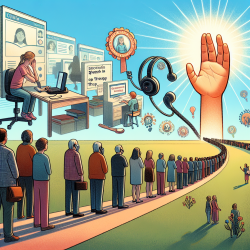
New market research on pediatric speech therapy access shows a stark split between private-pay models and insurance-dependent infrastructure. In plain terms, some families can begin services almost immediately if they can pay out of pocket, while others face delays long enough to stretch beyond key developmental windows.
For schools, this isn’t just a health care issue—it’s an educational access issue. When outside therapy is delayed, schools often become the default provider, the coordinator, and the safety net. That reality is changing how districts think about staffing, service delivery, and partnerships.
The 2025 Reality: A Two-Tier System of Access
The report’s central finding is that the U.S. pediatric speech therapy market has become a “two-tier” system:
- Tier 1: Premium private-pay access where “immediate availability” is sometimes possible, and “no waitlists” is used as a selling point.
- Tier 2: Insurance-dependent access where families relying on Medicaid or commercial insurance may wait 12–24 months in hospital outpatient programs and other high-volume settings.
This gap is more than an inconvenience. In pediatric therapy, timing matters. Parents, educators, and clinicians all understand that early intervention and consistent support can influence communication skills, academic progress, and social participation. When delays extend for months—or even years—families often look for alternatives, and schools feel the downstream impact.
What’s Driving the Wait Times? Supply, Demand, and a Market Under Strain
Wait times are not rising because families suddenly became more interested in speech therapy. They’re rising because multiple forces are converging at once.
1) Demand Keeps Rising
The report highlights several demand drivers that continue to intensify in 2025:
- Increased diagnosis rates for developmental delays and autism spectrum disorder (ASD).
- Post-pandemic communication concerns, including pragmatic language needs and speech/language delays observed by families and schools.
- Greater awareness and advocacy, as parents push for evaluations and services earlier than in past years.
2) The Workforce Isn’t Keeping Up
On the supply side, the profession is experiencing significant strain. According to ASHA’s 2024–2025 supply and demand reporting referenced in the research, nearly 45% of SLP health care survey respondents reported funded, unfilled positions at their facilities. When positions are funded but unfilled, the result is predictable: clinics cap caseloads, and waitlists grow.
3) The School-to-Clinic Pipeline Is Under Pressure
The report notes that about 53% of SLPs work in educational settings, yet migration toward private practice is accelerating due to burnout and unmanageable caseloads in schools. Ironically, this shift doesn’t solve access problems. Demand for private services—often to supplement or replace school-based therapy—appears to be growing faster than the workforce can expand.
4) Reimbursement Pressures Are Reshaping the Market
Another major factor is reimbursement. Pediatric therapy reimbursement rates (including common billing such as CPT 92507) have largely stagnated, pushing many providers to exit insurance networks. That creates a structural incentive:
- Providers can often sustain their practice more easily with private-pay rates.
- Insurance-based models become high-volume bottlenecks with longer delays.
The outcome is a market where “availability” becomes a premium feature rather than a baseline expectation.
“Availability” Has Become a Marketing Weapon (and a Commodity)
One of the most important insights for anyone watching this market—school leaders included—is how providers position themselves in response to the access gap.
Private clinics increasingly advertise “No Waitlists” and “Immediate Openings,” effectively turning speed into a competitive advantage. The report describes this as the “weaponization” of availability: parents are understandably anxious about missed developmental windows, and clinics respond by making fast access part of the product.
Meanwhile, hospital outpatient centers and insurance-based clinics often operate as high-volume systems with long queues. Even when clinical care is excellent, the delay itself becomes the barrier.
Regional Snapshot: The West Shows the Extremes
The Western United States illustrates how uneven access can be from state to state and region to region.
- Coastal hubs (such as California and Washington) show extreme saturation and long waits in public-sector pathways, which fuels a robust private-pay market.
- Interior Western states (including Nevada, Idaho, Montana, Wyoming, New Mexico, and Arizona) face fundamental workforce shortages, making access difficult even for families who are actively seeking care.
In these shortage-driven markets, the report notes that teletherapy is often not just a convenience—it becomes a practical necessity to fill service gaps.
What This Means for Schools: The Access Crisis Becomes an Education Challenge
When community-based therapy is delayed, schools often see the impact in real time:
- More referrals as educators notice speech and language needs that aren’t being addressed elsewhere.
- Higher service expectations placed on school teams when families can’t access outside providers.
- Increased coordination demands as schools communicate with families, physicians, and any available providers.
This is why many districts are rethinking how they ensure continuity of services—especially when vacancies, caseloads, and recruitment challenges make traditional staffing models harder to sustain.
How Online Therapy Helps Districts Compete on “Time-to-Care”
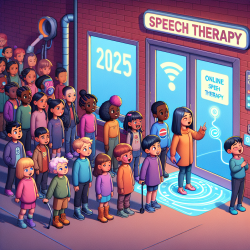
In a market where time-to-care is the key commodity, schools have an opportunity to improve access by expanding service delivery options. Online therapy can help districts:
- Reduce service gaps caused by unfilled positions or mid-year turnover.
- Increase flexibility in scheduling and service delivery across multiple schools.
- Support hard-to-staff regions where local clinician supply is limited.
- Stabilize caseload coverage when in-person recruitment is slow or unsuccessful.
For districts, the strategic question is shifting from “Can we hire?” to “How do we ensure students receive timely services?” In 2025, that shift matters because delayed access doesn’t just affect families—it affects learning outcomes, classroom participation, and student confidence.
The Bottom Line: Access Is the New Differentiator
The 2025 pediatric speech therapy market is being reshaped by workforce shortages, reimbursement constraints, and rising demand. The result is a fragmented access landscape where some families get immediate help and others wait months—or years.
For schools, the implications are clear: when outside systems can’t deliver timely care, districts must plan for continuity, scalability, and speed. In many regions—especially across the West—teletherapy is becoming one of the most practical tools available to close the access gap and protect students’ time-to-care.
For more information, please follow this link.