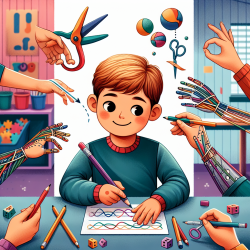

Why Letter Formation Matters in School
Letter formation—the ability to write letters with accurate shapes, sizes, and strokes—is a foundational academic skill. When letter formation becomes effortful, students may spend so much mental energy on how to write that they have less capacity left for what they want to say. Over time, persistent handwriting challenges can affect written expression, classroom participation, and confidence.
In school settings, letter formation is not only about neatness. It is closely connected to early literacy (letter recognition and sound-symbol mapping), written output, and the student’s ability to keep pace with classroom demands. The good news: letter formation is teachable, and consistent, structured practice can produce meaningful improvement.
Common Signs a Child Needs Letter Formation Support
Children develop at different rates, but certain patterns suggest that targeted instruction or therapeutic support may be helpful. Educators and caregivers often notice:
- Frequent letter reversals beyond the expected developmental window (for example, persistent b/d confusion)
- Inconsistent letter size (very large letters mixed with tiny letters) or difficulty staying on the line
- Starting letters from unusual points (e.g., building letters “bottom-up” when instruction emphasizes “top-down”)
- Excessive pressure (very dark writing, hand fatigue) or very light pressure (faint, hard-to-see writing)
- Slow writing speed that limits classroom productivity
- Avoidance of writing tasks, frustration, or reduced confidence
These signs do not automatically indicate a disability; they often reflect gaps in instruction, limited practice, or underlying skill areas that need strengthening.
Build the Foundation First: Readiness Skills That Support Handwriting
Strong letter formation depends on more than knowing what a letter looks like. Several underlying skills influence a child’s ability to form letters efficiently and consistently.
Posture and Stability
Stable posture supports controlled hand movements. A child who is slouched, perched on their knees, or constantly shifting may have difficulty using their hands with precision.
- Feet supported (on the floor or a footrest)
- Hips and knees at roughly 90 degrees
- Table height that allows forearms to rest comfortably
Hand Strength and Fine Motor Control
Letter formation requires small, coordinated movements of the fingers and hand. If a child tires quickly, grips too tightly, or avoids coloring and drawing, fine motor strengthening may be beneficial.
- Short “hand warm-ups” (e.g., squeezing putty, clothespin games, finger taps)
- Activities that promote precision (beading, building small blocks, lacing cards)
Visual-Motor Integration
This is the ability to coordinate what the eyes see with what the hands do. Children may know the letter name but struggle to reproduce the shape on paper.
- Copying simple shapes before letters (lines, circles, crosses, squares)
- Tracing with decreasing support (bold lines to thinner lines)
Motor Planning
Motor planning helps children remember and execute the sequence of strokes needed for each letter. Students with motor planning challenges may form the same letter differently each time.
- Use consistent verbal cues (e.g., “start at the top, pull down, jump back up”)
- Teach one formation pattern at a time and revisit frequently
High-Impact Teaching Principles for Letter Formation
Whether instruction happens in the classroom, small groups, or therapy sessions, several evidence-informed principles tend to improve outcomes.
1) Teach Stroke Sequences Explicitly
Children benefit from direct instruction on where to start and how to move. Clear language and consistent routines reduce guesswork.
- Model the letter while describing the strokes
- Have the child “air write” the letter with a large arm movement first
- Move to writing on paper only after the movement pattern is understood
2) Use Multisensory Practice
Multisensory instruction can strengthen learning by engaging touch, movement, and vision together. This is especially helpful for students who struggle with traditional pencil-and-paper practice.
- Write letters in sand, shaving cream, or on textured surfaces
- Use a finger to trace letters on a card while saying the stroke cues aloud
- Form letters with small manipulatives (e.g., sticks, clay) to reinforce shape
3) Focus on a Few Letters at a Time
Practicing too many letters in one sitting can reduce quality and increase frustration. A smaller set allows for repetition and mastery.
- Choose letters with similar stroke patterns (e.g., c, a, d, g)
- Set a brief daily practice routine (5–10 minutes) rather than long weekly sessions
4) Prioritize Legibility Before Speed
When students rush, they often revert to inefficient patterns. Build accuracy and consistency first; speed typically improves as movements become more automatic.
- Use a simple checklist: correct start, correct direction, correct size
- Celebrate “best effort” samples, not just fastest completion
Practical Classroom Strategies That Support Many Learners
Teachers often need approaches that are effective, time-efficient, and easy to implement across a classroom. The strategies below can support a wide range of learners, including those receiving additional services.
Provide Strong Visual Models
- Display alphabet strips at student eye level
- Use models that show starting points and stroke direction
- Keep letter models consistent across materials when possible
Use Paper Supports Strategically
- Highlight the writing line or use raised-line paper for tactile feedback
- Offer wider-lined paper temporarily for students who need more spacing
- Use boxes or grids for size control when appropriate
Embed Short, Predictable Practice
Consistency matters more than intensity. Consider a brief routine that includes:
- 1 minute of hand warm-up
- 2 minutes of teacher modeling and air writing
- 3–5 minutes of guided practice with feedback
Give Feedback That Is Specific and Actionable
Rather than “make it neater,” try feedback that points to one change the student can make immediately.
- “Start at the top.”
- “Keep it on the line.”
- “Make the tall letters tall and the short letters short.”
Common Letter Formation Challenges and Targeted Fixes
Reversals (b/d, p/q)
- Teach with consistent language and visuals (e.g., “b has the belly in front”)
- Practice discrimination: identify the correct letter among similar options
- Reduce cognitive load: focus on one confusing pair at a time
Inconsistent Size and Spacing
- Use visual cues (highlighted midline, sky/grass lines, or size categories)
- Practice with “tall, small, and tail” letter groups
- Provide a finger-spacing strategy or a simple spacer tool
Difficulty with Curves and Diagonals
- Practice prewriting shapes that match letter strokes (circles, slants)
- Use larger writing surfaces first (whiteboard easel, chart paper)
- Move from gross motor to fine motor: big strokes to small strokes
When to Consider Additional Support
If a student shows persistent difficulty despite consistent instruction and practice, it may be time to consult school-based support services. Occupational therapy can help identify underlying skill needs and recommend targeted strategies, accommodations, or assistive tools.
In many school systems, access to specialized support is challenged by staffing shortages and growing caseloads. Online therapy services can help schools expand capacity while maintaining continuity of care and collaboration with educators and families. For example, TinyEYE partners with schools to provide online therapy services, supporting students through structured intervention and practical strategies that can be carried over into the classroom and home routines.
How Families Can Help at Home (Without Turning It Into a Battle)
Home practice is most effective when it is brief, positive, and routine-based. The goal is steady progress, not perfection.
- Keep practice short (5 minutes) and stop before frustration escalates
- Use fun formats: chalk, whiteboards, gel pens, or writing letters in a game
- Reinforce correct habits: starting point and direction matter more than decorative style
- Notice effort: praise specific improvements (“You kept that letter on the line.”)
If writing is consistently stressful, consider shifting temporarily to prewriting activities (tracing shapes, copying patterns, strengthening games) and reintroducing letter practice with more support.
Key Takeaways
- Letter formation is a teachable skill that supports literacy and written expression.
- Strong foundations—posture, fine motor control, visual-motor skills, and motor planning—make handwriting easier.
- Brief, consistent, multisensory practice with explicit stroke cues is often more effective than long worksheets.
- When difficulties persist, school-based therapy support can help identify the “why” and target intervention efficiently.
For more information, please follow this link.