Why EdTech Professional Development Still Matters (Even After COVID)
Technology is now embedded in the daily reality of K–12 schooling. The rapid shift during COVID accelerated adoption, but adoption is not the same as effective integration. Many districts now have devices, platforms, and connectivity in place—yet educators still report uneven preparation for using technology in ways that measurably improve student learning.
A 2024 research article in the Journal of Digital Educational Technology (“Quality EdTech professional development for K12 classroom practice” by Morris & Pryor) examines a familiar but unresolved problem: schools often have EdTech frameworks and high expectations, but teachers experience a disconnect between theory and what actually works in the classroom. The authors argue that well-integrated, high-quality, teacher-designed professional development (PD) is essential for shifting mindsets and improving classroom practice.
The Study in Brief: What the Researchers Investigated
Morris and Pryor explored the relationship between three factors:
Quality of EdTech application by teachers (how educators integrate technology into daily lessons)
Quality of EdTech application by students (how educators design student technology use, including collaboration)
Quantity of EdTech PD (hours provided by districts and hours educators sought independently)
The study surveyed 73 current K–12 teachers (primarily in smaller rural districts within a university service area). Participants reported their perceived proficiency with instructional technology and described their PD experiences, including whether PD modeled technology integration.
Three Practical Themes Schools Should Not Ignore
The findings reinforced three themes that are highly actionable for district leaders, principals, instructional coaches, and any provider supporting school-based services (including telepractice partners like TinyEYE):
1) The Quality of Teacher EdTech Use Matters
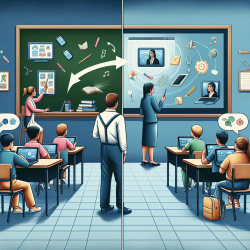
Many educators reported they were “adequate” or “strong” at integrating technology into daily lessons. That sounds promising—until you ask what “integration” actually looks like. The research notes that technology can easily become presentation-driven (for example, slides or teacher-led demonstrations) rather than learning-driven.
In other words, it is possible for teachers to feel proficient while still using EdTech in ways that do not meaningfully change student learning conditions. This is one reason frameworks such as SAMR, TPACK, the Technology Integration Matrix (TIM), the Triple E Framework, and the Four Shifts Protocol continue to be relevant: they help educators distinguish between “using technology” and “using technology well.”
2) The Quality of Student EdTech Use Matters Even More
A key insight from the study is that teacher comfort does not automatically translate into student-centered design. Only a small portion of educators reported strong proficiency in designing opportunities for students to collaborate using technology.
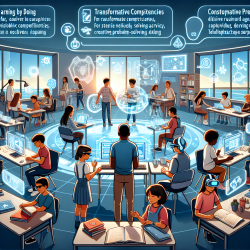
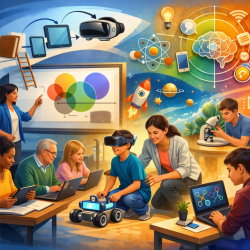
This matters because the strongest claims about EdTech’s value typically depend on students doing more than consuming content. Student use of technology can support:
Collaboration (co-creating, peer feedback, shared problem solving)
Creation (building artifacts, demonstrating understanding in multiple formats)
Digital literacy (responsible searching, curating, and sharing information)
Engagement tied to deeper learning rather than passive attention
For schools, this is a design challenge: PD must help teachers plan what students will do with the tool, not simply how the teacher will operate the tool.
3) Quality PD Matters More Than Quantity
Districts invest heavily in PD, and the study’s participants reported a wide range of EdTech PD hours (including some reporting none). However, one of the most important takeaways is that more hours did not automatically correlate with higher perceived proficiency—and in some cases, correlations were unexpectedly negative.
The authors interpret this as a warning sign: PD may be happening, but it may not be structured in ways that build confidence, transfer to classroom practice, or support sustained implementation. This aligns with long-standing concerns that PD can feel disconnected from daily teaching, minimally engaging, and under-supported by leadership.
What “Quality EdTech PD” Looks Like in Real Schools
Across the literature summarized in the article, effective PD tends to share common design features. For district leaders, these features can function as a practical checklist.
High-impact PD is more likely when it includes:
Modeling: educators experience the strategy as learners, not just hear about it
Curriculum connection: the PD is tied to what teachers actually teach (not generic tool demos)
Active learning: teachers build, test, revise, and reflect (rather than passively watch)
Repeated cycles over time: learning, implementation, feedback, and refinement
Relevance and immediate application: adult learners are motivated by what they can use now
Support during implementation: coaching, troubleshooting, and administrative backing
Teacher voice and co-design: educators help author and shape PD
Why This Matters to TinyEYE and School-Based Online Therapy
TinyEYE provides online therapy services to schools—work that depends on effective technology use, consistent routines, and staff confidence. While the Morris & Pryor study focuses on classroom EdTech, the implications extend to related school services that rely on digital delivery.
When schools adopt telepractice or other digital supports, the success factors look familiar:
Implementation is a people challenge, not just a platform challenge. Devices and broadband help, but educators and support staff need clarity, modeling, and practice.
Student experience must be designed. Engagement improves when students have an active role, clear expectations, and developmentally appropriate digital routines.
Ongoing support beats one-time training. Confidence and self-efficacy build over time, especially when staff can troubleshoot in context.
For example, if a school is implementing online speech-language or occupational therapy supports, “quality integration” might include classroom-friendly schedules, staff understanding of how to set students up for success, and simple workflows that reduce friction. This mirrors the article’s central point: quality practice depends on quality professional learning and support structures.
Actionable Takeaways for District and School Leaders
If your district is aiming for meaningful technology integration (in instruction and student services), the study suggests several practical moves.
Measure PD by transfer, not attendance. Track what changes in classroom/student practice after PD cycles.
Shift PD outcomes toward student use. Ask: “What will students do with this tool to collaborate, create, or demonstrate learning?”
Prioritize modeling that matches your vision. If you want transformative learning, avoid PD that only models presentation tools.
Build teacher co-design into PD planning. Teacher-designed PD is more likely to be relevant and trusted.
Plan for sustained support. Coaching, peer collaboration, and administrator reinforcement increase the odds of implementation.
Closing Reflection: Bridging the Theory-to-Practice Gap
Morris and Pryor’s research underscores a central reality in K–12 improvement efforts: frameworks and tools are valuable, but they do not implement themselves. Teachers need professional learning that respects how adults learn, connects directly to classroom demands, and emphasizes student-centered technology use. When PD is high quality, it can help educators move from simply “using tech” to designing learning experiences where technology genuinely expands what students can do.
For more information, please follow this link.