
Districts are investing heavily in educational technology (EdTech). Teachers and students are using more digital tools than ever. Yet many school leaders still hear the same concern: “We have the tools, but implementation is inconsistent.”
Recent research published in the Journal of Digital Educational Technology (Morris & Pryor, 2024) helps explain why. The study explored how educators learn about EdTech and how that learning translates into classroom practice. The headline insight is both simple and uncomfortable: the quantity of professional development (PD) hours doesn’t automatically lead to better EdTech integration.
In other words, adding another training day may not move the needle—unless the PD is designed in a way that changes what teachers and students actually do with technology.
The Research in Plain English: What the Study Looked At
Morris and Pryor (2024) surveyed 73 current K-12 educators to examine the relationship between:
Teacher EdTech application quality (how well teachers integrate technology into lessons)
Student EdTech application quality (how well teachers design learning where students use technology meaningfully, including collaboration)
EdTech PD quantity (how many hours teachers received from districts and how many they sought on their own)
The study also explored whether PD actually modeled technology integration—meaning teachers experienced EdTech the way students might, not just heard about it in a slide deck.
Key Finding #1: Teacher Use of EdTech Is Not the Same as Student Use
One of the most actionable takeaways is the gap between “teacher uses technology” and “students use technology.” The researchers found that many educators felt reasonably proficient at integrating technology into daily lessons, but far fewer felt strong at designing opportunities for students to collaborate using technology.
This distinction matters because student outcomes improve when technology supports active learning—students creating, collaborating, and engaging—rather than passively consuming content.
What this looks like in real classrooms
Teacher-centered EdTech: projecting notes, using presentation software, assigning digital worksheets
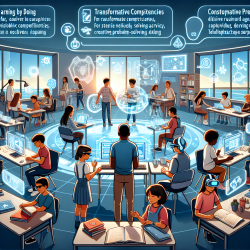
Student-centered EdTech: students collaborating on shared products, discussing and revising work, using tools to demonstrate thinking, creating media, or engaging in structured practice with feedback
If PD focuses mostly on tools teachers operate, schools may see “technology use” rise without seeing “learning impact” rise.
Key Finding #2: Many Teachers Feel Expected to Learn New Tech Without Formal Training
The study also found broad agreement with the statement that schools/districts expect educators to learn new technology without formal training. That perception is important because it shapes teacher confidence and willingness to experiment.
Even in schools where devices and connectivity are improving, implementation can stall if educators feel the burden is on them to figure it out alone—especially when time is limited and support is inconsistent.
Key Finding #3 (The Twist): More PD Hours Sometimes Correlated With Lower Confidence
Some of the most surprising results were the negative correlations found between PD hours and teachers’ perceived proficiency in certain EdTech practices—particularly designing student collaboration with technology.
The study does not claim PD causes lower proficiency. Instead, it signals a likely reality many districts recognize: not all PD is equally effective. If PD is disconnected from classroom realities, overly tool-focused, or lacks follow-through, more hours can translate into more frustration rather than more skill.
What might be happening behind the numbers
PD is “event-based” instead of “cycle-based” (one-and-done sessions without coaching, practice, or reflection)
PD models shallow use (tools demonstrated without showing how they change learning tasks)
PD isn’t aligned to curriculum and student needs (teachers can’t immediately apply it)
Teachers who feel less confident seek more PD (which can create a correlation that looks negative)
So What Does “Quality EdTech PD” Actually Mean?
Morris and Pryor’s discussion aligns with broader research: effective PD is relevant, sustained, modeled, and supported over time. It should help teachers shift from being “consumers” of tech to designers of learning experiences where students use tech intentionally.
Based on the themes highlighted in the article, quality EdTech PD should prioritize:
Quality of teacher application: not just knowing a tool, but choosing it for a learning purpose
Quality of student application: designing tasks where students use technology to engage, collaborate, and learn deeply
Quality of PD design: modeling, active learning, relevance, and sustained support
A Practical Playbook for District Leaders: 6 Moves That Improve EdTech PD Fast
If you’re a district leader, principal, instructional coach, or special services administrator, here are concrete ways to apply the study’s insights.
1) Start with the learning outcome, not the tool
Ask: “What do we want students to do differently?” Then select EdTech that supports that goal (engagement, feedback, collaboration, accessibility, practice, communication).
2) Require “student-use evidence” in PD plans
When a tool is introduced, PD should include at least one example of:
a student task
a collaboration structure
a simple rubric or success criteria
how student work will be assessed or discussed
3) Model technology the way you want teachers to teach
If PD is delivered as a lecture about engagement, it sends the wrong message. Teachers should experience the strategy as learners—polls, collaborative boards, short creation tasks, and feedback loops.
4) Build PD into short cycles (learn, try, reflect, revise)
Instead of a single workshop, run a 3–6 week cycle:
Introduce a strategy
Teachers try it in a real lesson
Share student work samples
Reflect and adjust
5) Protect time for implementation support
The study reinforces a common barrier: training without support doesn’t stick. Coaching, office hours, peer walkthroughs, and “just-in-time” help are often what converts PD into practice.
6) Don’t ignore the human side: confidence, workload, and self-efficacy
Teacher self-efficacy changes slowly. If your PD approach unintentionally signals “keep up or fall behind,” adoption will suffer. Normalize gradual growth and celebrate small classroom wins.
Where TinyEYE Fits: EdTech, Student Support, and Real Implementation
TinyEYE provides online therapy services to schools, and that work intersects with EdTech implementation in a very practical way: schools aren’t just adopting technology for instruction—they’re using it to expand access to services, support diverse learners, and reduce barriers.
When schools implement digital services (including teletherapy), the same PD lessons apply:
Quality matters more than quantity (a clear workflow beats a long training)
Modeling matters (staff need to experience the platform as users)
Student experience matters (engagement, accessibility, and consistency drive outcomes)
For special education and student services teams, “technology integration” isn’t abstract—it affects scheduling, documentation, family communication, and the student’s comfort and progress. High-quality PD should reflect those realities, not just tool features.
The Bottom Line
This research adds a valuable reality check for K-12 leaders: EdTech success is not guaranteed by buying devices or increasing PD hours. What changes outcomes is how technology is used—especially by students—and whether PD is designed to be modeled, relevant, and sustained.
When districts treat PD as an ongoing learning design process (not an event), educators are more likely to build confidence, integrate technology intentionally, and create student-centered learning experiences that justify the investment.
For more information, please follow this link.