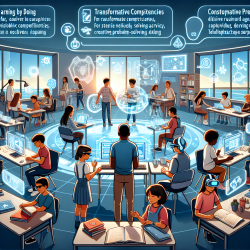

Competency education has moved from a “future idea” to a real-world strategy districts are using right now to address a problem educators have wrestled with for decades: students can pass classes and still have gaps in learning. The traditional time-based model (seat time, semesters, credits) can certify exposure to content—but it doesn’t reliably certify mastery.
In contrast, competency education is designed to make learning visible, measurable, and actionable. It shifts the system from sorting students to supporting them. And as more districts adopt personalized, competency-based approaches, school leaders are discovering something important: implementation isn’t a single program—it’s a multi-year transformation of culture, leadership, instruction, assessment, and support systems.
This post summarizes key insights from local leaders featured in Chris Sturgis’ 2015 issue brief, Implementing Competency Education in K–12 Systems: Insights from Local Leaders, and translates them into practical takeaways for district and school teams.
What competency education actually is (in plain language)
Competency education is often summarized as: learning is constant, time is the variable. But that phrase can oversimplify the model. The working definition highlighted in the issue brief includes five essential elements:
- Students advance upon demonstrated mastery (progress depends on learning, not time spent).
- Competencies are explicit, measurable, and transferable (students know what they’re aiming for).
- Assessment is meaningful and a positive learning experience (feedback helps learning, not just ranking).
- Students receive timely, differentiated support (help shows up when it’s needed, not after failure).
- Learning outcomes emphasize application and creation of knowledge alongside skills and dispositions.
The big shift is accountability. In a competency-based system, accountability for learning is built into daily practice through transparency, frequent feedback loops, and calibrated expectations of proficiency—not left to end-of-year tests or course averages.
Why districts turn to competency education
Leaders described multiple forces pushing districts toward change: the demand for postsecondary readiness, a global economy, demographic shifts, and persistent inequities. But the most consistent “why” is simpler: districts realize that the traditional system has design flaws that limit improvement.
Even strong curriculum adoptions and instructional initiatives can only create marginal gains if students keep moving forward with unfinished learning. Competency education is appealing because it makes it possible to:
- Identify gaps early and respond quickly.
- Personalize learning without lowering expectations.
- Increase student motivation through clarity and ownership.
- Build a culture where mistakes are part of learning, not a permanent label.
The four stages leaders use to implement competency education
The issue brief proposes four stages of implementation. Most districts interviewed recommended planning for at least five years to move through the first three stages in a sustainable way.
Stage 1: Ramping up for transformation
This stage is about leadership and culture before systems and tools. Three recurring moves show up across districts:
- Investing in shared leadership rather than top-down management.
- Building a shared journey of inquiry through study, site visits, and structured dialogue.
- Creating shared vision and shared ownership with educators, students, and the community.
Leaders emphasized that competency education is “second order change”—a shift in beliefs and relationships, not just procedures. That’s why distributed leadership matters: no superintendent or principal can anticipate every implication of redesigning grading, pacing, assessment, schedules, and supports.
Stage 2: Designing the infrastructure for learning
Once a district has a shared purpose, it has to rebuild the learning infrastructure. The brief highlights several design priorities:
- Student agency: students need transparency, habits of learning, voice, and choice to own their progress.
- A clear pedagogical approach: districts must align beliefs about motivation, engagement, instruction, and assessment.
- An instruction and assessment (I&A) model: a common language of learning targets, proficiency, and evidence.
- Policies and operating procedures for personalization: pacing, supports, leveling, and communication systems.
- Empowering teachers: strong PLCs, calibration practices, and aligned professional learning.
One of the most practical insights here is the role of transparency. When learning targets and proficiency criteria are explicit, students can self-monitor, teachers can personalize more effectively, and families can understand what progress actually means.
Stage 3: Transitioning to a competency-based system
This is the “build the plane while flying it” period. Leaders described high energy paired with real strain: teachers are teaching students while simultaneously building new rubrics, new grading practices, and new support routines.
Key transition realities include:
- Rollout strategy varies: some districts start in elementary, others in high school, others with summer school or specific content areas.
- Teachers need preparation for personalized classrooms: without structures (SOPs, clear routines, feedback cycles), “self-paced” can turn into “stalled.”
- Parent conversations must be planned: leveling (academic level vs. grade level) requires clarity, empathy, and consistent messaging.
- Mid-course corrections are normal: grading scales, pacing policies, and schedules often need revision after real use.
Leaders also warned about the “implementation dip”—a period where confusion rises and results can temporarily drop. Districts that stay the course do two things well: they keep the shared purpose visible, and they keep communication with stakeholders continuous.
Stage 4: Embracing continuous improvement and innovation
Competency education generates richer data than traditional grading systems, which creates the conditions for continuous improvement. Leaders described moving from compliance-driven management to improvement-driven management—using data to identify variation, diagnose root causes, and test better approaches.
Over time, districts expand what they track beyond academics to include habits of learning and broader graduate competencies. The goal becomes a balanced picture of student growth, not a narrow focus on a few tested subjects.
What this means for student support services (and where TinyEYE fits)
Competency-based systems make one expectation unavoidable: timely, differentiated support. If students advance upon mastery, schools need support structures that respond quickly when progress slows—academically, behaviorally, socially, or emotionally.
For many districts, this is where service delivery models must evolve. Personalized learning environments often require:
- Faster identification of needs (not waiting for end-of-term failure).
- More flexible scheduling so students can access help without losing core instruction.
- Clear documentation of goals and progress aligned to transparent learning expectations.
- Collaboration routines that connect educators, specialists, and families around evidence of growth.
TinyEYE’s online therapy services can support this shift by helping schools expand access to specialized services (such as speech-language therapy and occupational therapy) in ways that align with competency education’s emphasis on responsiveness and progress monitoring. In a mastery-based environment, related services aren’t just “extra support”—they can be a critical part of ensuring students have what they need to demonstrate proficiency and build the habits of learning that drive long-term success.
Implementation takeaways leaders repeat again and again
If you only remember a few practical lessons from the field, make them these:
- Start with purpose, not a program. Community engagement and shared vision aren’t optional; they’re sustainability.
- Build shared leadership early. Top-down decision-making undermines empowerment and slows problem-solving.
- Transparency is the engine. Clear learning targets, rubrics, and calibrated proficiency enable agency and personalization.
- Support systems must be immediate. “Not yet proficient” only works when students can get timely help.
- Expect iteration. Rubrics, grading, schedules, and pacing policies will need refinement after real classroom use.
For more information, please follow this link.