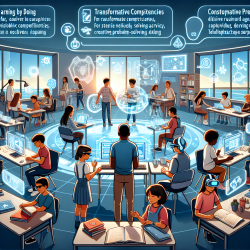
Schools are being asked to do something that sounds impossible: prepare students for jobs that don’t exist yet, technologies that haven’t been invented, and problems we can’t fully predict. That’s the core idea behind the OECD’s The Future of Education and Skills: Education 2030 work.
The OECD message is clear and refreshingly human: the goal isn’t only academic achievement or employability. It’s helping young people build the knowledge, skills, attitudes, and values they need to live meaningful lives—and contribute to the well-being of others and the planet.
For school leaders and educators, this raises a practical question: what does “future-ready” actually look like in day-to-day schooling?
The Big Picture: A World That’s Changing Fast
The OECD highlights three broad forces reshaping students’ futures:
- Environmental pressures such as climate change and resource depletion, requiring adaptation and urgent action.
- Economic disruption driven by scientific innovation, artificial intelligence, global value chains, and growing concerns about cybersecurity and privacy.
- Social change including migration, urbanization, widening inequality, and increasing cultural diversity—alongside polarization and declining trust in institutions.
These aren’t abstract trends. They show up in classrooms as anxiety, attention challenges, social conflict, uneven access to opportunity, and growing needs for mental health and learning supports.
A Shift in the “Why” of Education: Well-Being
A key OECD point is that progress can’t be measured only by income, test scores, or credentials. Well-being includes:
- Health (physical and mental)
- Safety and security
- Social connections and belonging
- Civic engagement
- Life satisfaction
- Environmental quality
This matters because students learn best when they feel safe, supported, and connected. In other words, well-being isn’t a “nice-to-have.” It’s a foundation for learning.
Learner Agency: The Skill That Powers All Other Skills
The OECD emphasizes learner agency: a student’s ability to set goals, reflect, make choices, and take action to shape their life and learning. Agency includes responsibility—not just freedom. It’s the mindset of “I can influence outcomes, and I’m accountable for my choices.”
Just as important is co-agency, the idea that agency grows through relationships. Students don’t develop agency alone; it is strengthened through supportive interactions with teachers, peers, families, and communities.
For schools, this is a powerful reminder: the learning environment is not just curriculum and instruction. It’s also the network of relationships surrounding the student.
What Learner Agency Looks Like in Real School Life
- A student can explain what they’re working on and why it matters.
- A student can ask for help and use feedback without shutting down.
- A student can manage frustration, recover from mistakes, and try again.
- A student can collaborate with others who think differently.
These are learnable abilities—but they often require intentional support, especially for students facing speech-language challenges, social communication difficulties, anxiety, or self-regulation needs.
The “Learning Compass”: A Simple Way to Think About Direction
The OECD describes a “learning compass” to show how students navigate life. You can think of it like a guidance system: students need a sense of direction (purpose), the tools to move forward (skills and knowledge), and the ability to adjust course when conditions change (reflection and self-regulation).
That last piece—adjusting course—is where many students struggle, and where school-based supports can make a measurable difference.
Transformative Competencies: Three Abilities That Help Students Shape the Future
The OECD identifies three “transformative competencies” that help students become positive change agents. These competencies go beyond memorizing content; they require students to mobilize knowledge, skills, attitudes, and values in real situations.
1) Creating New Value
This is about creativity and innovation—developing new ideas, solutions, products, services, and even new ways of living and working. The OECD notes that innovation increasingly comes from collaboration, not isolated genius.
- Creativity and curiosity
- Open-mindedness
- Adaptability
- Collaboration
2) Reconciling Tensions and Dilemmas
Students will face trade-offs: equity vs. freedom, autonomy vs. community, innovation vs. continuity, efficiency vs. democratic process. The OECD argues students need to become systems thinkers—able to see interconnections and avoid simplistic “either/or” conclusions.
- Perspective-taking
- Conflict resolution
- Critical thinking
- Empathy and respect for diversity
3) Taking Responsibility
This competency supports the other two. It includes ethical thinking, accountability, and self-regulation—considering consequences and acting with integrity. The OECD also notes adolescence is a period of major brain plasticity, making it a key window for developing self-regulation and responsibility.
- Self-control and self-efficacy
- Problem-solving
- Adaptability
- Ethical reflection
The Action Cycle: Reflection, Anticipation, Action
To make these competencies real, the OECD highlights a repeating learning process:
- Reflection: stepping back, questioning assumptions, considering other perspectives.
- Anticipation: thinking ahead, predicting consequences, planning for future needs.
- Action: taking responsible steps, learning from results, and adjusting.
This cycle is a practical lens for educators: if a student is stuck, ask which part of the cycle needs support. Do they need help reflecting on what happened? Planning what to do next? Or taking the first step?
Curriculum and School Design: The OECD’s Practical Warnings
The OECD also calls out challenges that many schools will recognize immediately:
- Curriculum overload that leaves little time for deep learning, sleep, friendships, and physical activity.
- Reform time lags between decisions and real classroom impact.
- Quality matters: content must be engaging and meaningful to support deep understanding.
- Equity must be protected: innovation should benefit all students, not only a select few.
- Alignment is essential: curriculum, instruction, and assessment must point in the same direction.
What This Means for Schools Right Now (And Where TinyEYE Fits)
If Education 2030 is about agency, well-being, and future-ready competencies, then student support services are not “extra.” They are part of the learning ecosystem.
TinyEYE provides online therapy services to schools, supporting students where needs often show up first: communication, confidence, self-regulation, and access to consistent help. In an environment where schools face staffing shortages, rising needs, and tight schedules, teletherapy can help districts protect learning time while expanding support.
How Online Therapy Supports Education 2030 Priorities
- Equity and access: students can receive services even when local specialists are hard to recruit.
- Continuity: consistent sessions support progress, especially for developmental goals that require repetition and reinforcement.
- Personalized learning environments: therapy goals can align with classroom expectations and student interests.
- Co-agency: collaboration among therapists, educators, and families strengthens the relationships that drive student growth.
- Well-being: communication skills and self-regulation supports reduce frustration and help students participate more fully in school life.
A Simple “Education 2030” Checklist for School Leaders
If you want a quick way to translate the OECD vision into action, start here:
- Are we protecting quality learning time, not just adding more time?
- Do students have structured opportunities to build self-regulation and resilience?
- Are we teaching students how to collaborate across differences?
- Do we measure success in ways that include well-being and belonging?
- Do our support services (including therapy) reduce barriers so students can engage as capable learners?
Closing Thought: Future-Ready Is Human-Ready
The OECD’s Education 2030 message is optimistic: the future is uncertain, but students can be prepared to navigate it. That preparation isn’t only about new content or new technology. It’s about building confident, capable young people who can reflect, anticipate, act responsibly, and contribute to a shared future.
When schools invest in student agency, well-being, and supportive learning ecosystems—including accessible therapy services—they aren’t just responding to today’s needs. They are building tomorrow’s capacity.
For more information, please follow this link.