Personalized learning is one of those education buzzwords that can mean ten different things in ten different meetings. Some people picture adaptive software. Others think of student choice boards, flexible pacing, or one-on-one conferencing. And for school teams trying to support diverse learners (including students receiving related services like speech-language therapy or occupational therapy), the big question is often practical:
What does personalized learning actually look like in a blended environment, and what helps educators feel ready to do it well?
A 2019 study in the Journal of Online Learning Research explored this question by looking at preservice teachers (future K–12 teachers) who took a short, one-credit course designed to introduce blended teaching and personalized learning. Even though the course was brief, the findings offer surprisingly useful insights for today’s school leaders, educators, and service providers working in blended and online settings.
First, a quick “plain English” definition
The study highlights an important point: blended learning and personalized learning are related, but they are not the same thing.
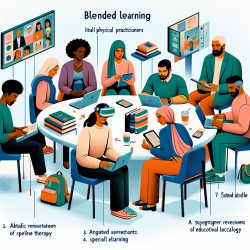
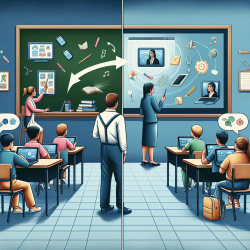
Blended learning is the strategic combination of online and in-person learning.
Personalization is when students get some control over customizing the goals, time, place, pace, and/or path of their learning experience.
This distinction matters because a classroom (or therapy model) can be blended without being personalized. For example, a teacher might post worksheets online, but still run instruction in a one-size-fits-all way. Personalization is the part that shifts learning from “one-to-many” toward “more responsive to the learner.”
Why personalized learning has gotten so much attention
The researchers describe how personalized learning surged in national conversation over the past decade, especially after federal education technology plans and grant incentives pushed schools to explore more flexible, student-centered approaches.
Professional organizations also reinforced the trend by embedding personalization into teaching standards. In other words, this isn’t just a passing idea; it has become part of how many systems define “modern” teaching practice.
For schools, the challenge isn’t whether personalization is “good” in theory. The challenge is implementation: training, tools, time, and confidence.
What the course looked like (and why it worked)
The study followed 81 preservice teachers across four course sections. The course mixed:
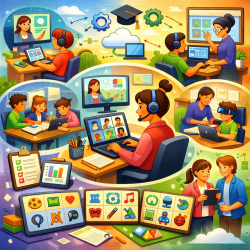
Online synchronous sessions (live video meetings)
Online asynchronous work (self-paced learning activities)
In-person meetings (hands-on design and modeling of blended strategies)
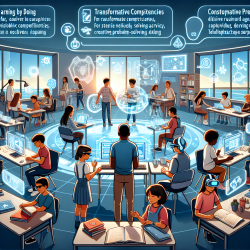
The course focused on four blended teaching competency areas:
Online integration
Data practices
Personalization
Online interaction
One of the most practical design choices was the final unit: it was intentionally personalized. Students used a choice board, selected activities aligned to their interests, and set goals for when they would submit work. This meant they didn’t just read about personalization; they experienced it.
What changed for preservice teachers: confidence, attitudes, and readiness
The researchers used a blended teaching readiness survey before and after the course (67 complete survey pairs were analyzed). The key result: scores increased significantly across all competency areas.
Personalization started as the weakest area. That’s not surprising: many new educators have limited experience designing instruction that gives students meaningful control while still ensuring progress and accountability.
But personalization also showed the largest average increase. By the end of the course, preservice teachers reported feeling much more prepared to use personalized practices.
In their reflections, many students described becoming more positive and more confident because:
They gained specific tools (like choice boards and playlists)
They saw how data could guide instruction and support student growth
They personally felt the motivational boost of having choice and relevance
One reflection captured the theme well: seeing personalization “in action” helped them feel empowered to use it later.
The five dimensions of personalization students noticed most
When students reflected on their personalized unit, the majority of comments were positive across all five dimensions:
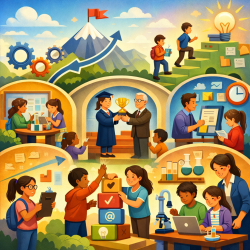
Goals: setting personal targets for what they wanted to learn and complete
Time: choosing when to work
Place: choosing where to work
Pace: working faster or slower depending on need
Path: choosing which activities to do (and sometimes designing their own)
Two dimensions stood out as especially meaningful: pace and path. Students liked being able to choose work that felt relevant and then spend the amount of time they personally needed.
This is a helpful reminder for K–12 teams: personalization doesn’t always require a complete redesign of everything. Sometimes, the biggest wins come from giving students:
Two or three meaningful options (path)
Flexible work time within clear boundaries (pace and time)
A very real catch: goal setting was harder than expected
Even though preservice teachers liked personalization, many struggled with one specific skill: setting goals and sticking to them.
Most students set target dates for assignment submission, but a majority did not meet those self-set dates (even though nearly everyone still met the final course deadline). This suggests an important insight:
If the “real” deadline is the teacher’s deadline, student-set goals may not change behavior unless students get coaching and accountability.
For schools implementing personalized learning, this is a big deal. Student autonomy grows best when paired with supports for self-regulation, such as:
check-ins and mini-deadlines
progress monitoring
simple planning tools (what I’ll do today, what I’ll do next)
teacher or mentor feedback loops
What this means for schools using online and blended services (including therapy)
At TinyEYE, we work with schools delivering therapy services online, often within blended learning environments. While this study focused on preservice teachers, the takeaways translate well to related services and student support models.
Here are a few practical connections school teams can consider:
Personalization is not just software. The study distinguishes between student-driven personalization, teacher differentiation, and software-driven adaptive learning. In therapy, this is similar to the difference between a student choosing a practice activity (personalization), a clinician selecting targets (differentiation), and a platform adjusting difficulty automatically (adaptive).
Choice can increase motivation. Students in the study consistently linked choice to engagement and ownership. In online therapy sessions, even small choices (which game, which reading passage, which order of tasks) can improve buy-in.
Support structures matter. Some preservice teachers worried that students wouldn’t take learning seriously without guidance. That concern shows up in any flexible model. The answer is not “less personalization,” but “better scaffolding,” such as routines, progress visuals, and short check-ins.
Data practices and personalization work together. Students reported learning to value data to understand where learners need help. In therapy, data is already central (baseline, progress monitoring, mastery). Blended environments make it easier to capture, review, and act on that data quickly.
Key takeaways you can use right away
If your school is trying to strengthen blended learning or expand personalized supports, this study points to a few “high impact, low confusion” moves:
Define terms as a team. Agree on what you mean by blended learning (modalities) and personalization (student control over goals/time/place/pace/path).
Let educators experience personalization as learners. Professional learning is more effective when teachers feel what students will feel.
Start with path and pace. Choice boards, playlists, and flexible pacing windows are approachable entry points.
Teach goal-setting explicitly. Autonomy is a skill. Build in checkpoints, planning supports, and reflection.
Plan for collaboration. Some participants worried personalization would be “more work.” Shared templates, team-created resources, and co-planning reduce the load.
For more information, please follow this link.