
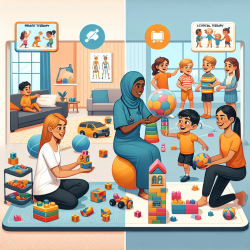
Occupational therapy (OT) can be a game-changer for students who need support with fine motor skills, sensory processing, self-regulation, handwriting, executive functioning, or daily school routines. But families often face a common question: should a child receive OT through the school, privately, or both?
While both private OT and school-based OT are delivered by qualified occupational therapists, they are designed for different purposes, follow different rules, and measure success in different ways. Understanding those differences helps families, educators, and administrators make informed decisions and set realistic expectations.
What Is School-Based OT?
School-based OT is provided when a student needs therapy to access and make progress in their education. In most cases, it is delivered as a related service under an Individualized Education Program (IEP) or, in some situations, as part of a 504 plan. The key idea is this: school OT is not meant to address every challenge a child experiences. It is meant to address the challenges that interfere with school participation and learning.
School-based OT often focuses on functional skills in the school environment, such as:
- Handwriting and written output (legibility, spacing, endurance)
- Classroom tool use (scissors, glue, rulers, manipulatives)
- Keyboarding or assistive technology access
- Organization and routines (managing materials, transitions)
- Sensory strategies that support attention and participation
- Self-care skills that affect school functioning (zippers, buttons, toileting routines when relevant)
What Is Private OT?
Private OT is typically delivered in a clinic, hospital outpatient setting, or at home. It is medically or developmentally oriented and can address a broader range of goals than school OT, including skills that may not directly impact academic access but still affect daily life.
Private OT may focus on:
- Feeding and oral-motor concerns (in some settings)
- Broader sensory processing challenges across environments
- Play skills and developmental milestones
- Daily living skills at home (dressing, bathing routines, independence)
- Emotional regulation strategies for home and community
- Strength, coordination, and motor planning as they relate to daily function
Private OT may also involve more frequent sessions and a wider range of therapeutic equipment, depending on the provider and setting.
The Biggest Difference: Purpose and Eligibility
School OT Eligibility: Educational Impact
In schools, OT is typically provided when a student’s needs impact their ability to access the curriculum or participate in school routines. A student may have fine motor delays, for example, but if they can still complete school tasks with accommodations or supports, they may not qualify for direct OT services through an IEP.
School teams often ask questions like:
- Does this need prevent the student from participating meaningfully in learning?
- Can accommodations, classroom strategies, or assistive technology reduce the barrier?
- Is OT required for the student to make appropriate educational progress?
Private OT Eligibility: Clinical Need
Private OT eligibility is usually based on clinical or developmental need, often supported by a medical referral or a developmental evaluation. The focus is on improving function across daily life, not only within school.
How Goals Differ in Practice
Because the purpose is different, goals often look different.
Examples of school OT goals might include:
- Improving written output so the student can complete classroom assignments
- Using a sensory strategy to stay engaged during group instruction
- Increasing independence with school routines like unpacking, organizing materials, or transitioning
Examples of private OT goals might include:
- Improving dressing independence at home
- Building tolerance for grooming routines
- Addressing sensory sensitivities that affect community participation
Both are valuable. They simply target different outcomes.
Service Delivery: Frequency, Setting, and Collaboration
School OT Service Models
School OT may be delivered in several ways depending on student needs and district practices:
- Direct therapy: the OT works with the student individually or in a small group
- Consultation: the OT supports teachers and staff with strategies and accommodations
- Push-in support: the OT works with the student in the classroom during real tasks
- Coaching model: the OT trains staff to implement strategies consistently
Because school schedules are complex and caseloads can be large, school OT may be less frequent than families expect, especially if a consultative model meets the student’s needs.
Private OT Service Models
Private OT often offers:
- More flexible scheduling
- Potentially higher frequency (for example, weekly sessions)
- Family training and home programs
- Access to specialized equipment depending on the clinic
Private OT may also be time-limited or episodic, depending on insurance coverage, clinical progress, and family priorities.
Evaluation and Documentation: What to Expect
School OT evaluations typically focus on educationally relevant tasks and participation. They may include classroom observations, teacher input, work samples, and standardized measures that relate to school function.
Private OT evaluations may include a broader developmental profile and may assess daily living skills, sensory processing patterns across environments, and functional routines at home and in the community.
Families sometimes notice that school and private evaluations produce different recommendations. This does not necessarily mean one is “right” and the other is “wrong.” It often reflects the different questions each setting is required to answer.
Can a Student Receive Both School OT and Private OT?
Yes. Many students benefit from both, especially when needs span home and school or when progress requires more intensive support than the school setting can reasonably provide.
That said, coordination matters. When school OT and private OT operate in silos, families may receive mixed messages or overlapping strategies. When they collaborate, the student benefits from consistency.
Ways to coordinate effectively include:
- Sharing relevant reports (with appropriate consent)
- Aligning on a small set of high-impact strategies
- Clarifying which goals are addressed at school vs at home
- Using common language for tools like visual schedules, sensory breaks, or handwriting supports
Where Online Therapy Fits In
As schools work to meet growing student needs, online therapy (teletherapy) has become an effective way to increase access to qualified providers and maintain consistent services. For OT, online delivery can support students through:
- Real-time coaching with teachers and educational assistants
- Guided practice of functional school tasks using classroom materials
- Home-school consistency when families are included appropriately
- Consultation models that build staff capacity
Online OT can be particularly helpful for districts facing staffing shortages, rural service gaps, or challenges maintaining consistent coverage throughout the year.
Decision Guide: Which Option Is Right?
Choosing between private OT and school OT is not always an either-or decision. The best choice depends on where the barriers show up and what outcomes matter most right now.
- Consider school OT if the primary concern is school participation, classroom performance, handwriting for assignments, or access to learning routines.
- Consider private OT if the primary concern is daily living skills at home, broader developmental needs, sensory challenges across environments, or you want more intensive frequency.
- Consider both if needs are significant across settings or if school services appropriately target educational access while private therapy targets home and community routines.
Key Takeaways
- School OT is designed to support educational access and participation.
- Private OT is designed to support broader daily functioning across environments.
- Eligibility, goals, and service frequency often differ because the purpose differs.
- Students can receive both, and coordination improves outcomes.
- Online OT can help schools expand access, consistency, and collaboration.
For more information, please follow this link.