
Why Retaining New Special Education Teachers Must Be a District Priority
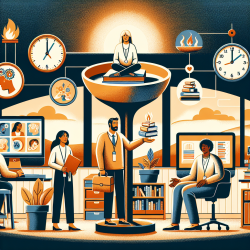
As a Special Education Director, I spend a significant portion of my time focused on one urgent reality: keeping qualified special educators in our schools. When new special education teachers experience chronic stress, they are more likely to burn out—and burnout is often a precursor to leaving the profession. The result is a cycle that impacts everyone: students who need consistent services, families who rely on stable relationships, and school teams who are already stretched thin.
The research is clear that attrition is especially common early in a teacher’s career. In special education, that early-career window can be particularly intense because the role includes not only instruction, but also case management, progress monitoring, compliance responsibilities, and ongoing collaboration with multidisciplinary teams.
In practical terms, teacher turnover creates:
- Disruptions in specially designed instruction and service delivery
- Increased workload for remaining staff
- Strain on compliance systems (timelines, documentation, IEP implementation)
- Higher costs for recruiting, hiring, and onboarding
- Reduced continuity and trust for families
District leaders cannot “solve” stress by wishing away responsibilities that are legally required. But we can reduce unnecessary friction, strengthen supports, and build the conditions that help teachers thrive.
Understanding Burnout: What It Looks Like in Special Education
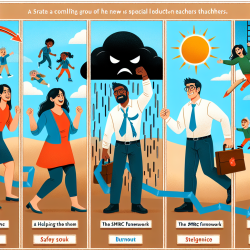
Burnout is more than having a hard week. It is commonly described as a combination of emotional exhaustion, depersonalization (feeling disconnected from the people you serve), and reduced personal accomplishment. In special education, those feelings can develop when teachers are managing high caseloads, juggling complex student needs, and navigating systems that may not be designed to support them well.
Research frequently connects attrition to factors such as:
- Work-related stress and workload intensity
- Perceived lack of administrative support
- Large or high-maintenance caseloads
- Insufficient collaboration structures
- Limited access to meaningful professional learning and resources
Importantly, many teachers report that challenging student behavior alone is not the key driver of leaving. Instead, teachers are more likely to exit when they feel unsupported in responding to those behaviors—especially when guidance, coaching, or consistent systems are missing.
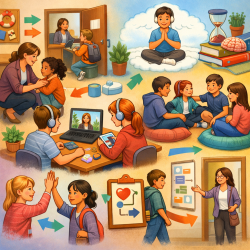
A Practical Framework for Building Resilience: SMIRC
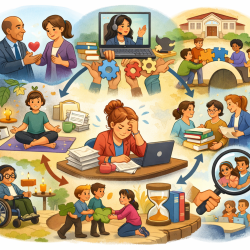
One of the most actionable contributions from Jackson and Parker (2023) is the SMIRC framework—an organized set of strategies that can be used to proactively reduce burnout and improve retention for new special education teachers. SMIRC stands for:
- Self-care
- Management of time and responsibilities
- Identify support and resources
- Relationship-building
- Collaboration
What I appreciate about SMIRC is that it is not “feel-good” advice. It is a set of tangible levers that districts, school leaders, mentors, and preparation programs can build into daily practice.
S: Self-Care That Is Sustainable (Not Another Task)
Self-care is often misunderstood as something extra teachers must do on top of everything else. In reality, sustainable wellness practices are protective factors that reduce stress effects and support attendance and longevity.
District and building leaders can normalize sustainable self-care by:
- Building brief check-ins into mentoring and supervision routines
- Encouraging realistic “micro-practices” (short walks, structured breaks, boundary-setting)
- Embedding wellness into professional learning rather than treating it as optional
- Ensuring staff know how to access employee supports when needed
From a leadership standpoint, the goal is not to tell teachers to “be more resilient” in isolation. The goal is to create working conditions where resilience is possible.
M: Management of Time and Responsibilities Through Better Systems
Special education teachers do not just teach—they manage timelines, documentation, data, meetings, and communication. When those systems are unclear or inefficient, teachers spend their energy fighting the process instead of serving students.
Practical district moves that reduce overload include:
- Clear caseload guidelines and transparent workload review processes
- Shared tools for progress monitoring, data collection, and IEP documentation
- Protected time for case management tasks (not “whenever you can fit it in”)
- Training that is job-embedded and specific (IEP writing, goal development, data-based decision-making)
When we improve systems, we reduce the “hidden hours” that often push new teachers toward exhaustion.
I: Identify Support and Resources—Then Make Access Easy
New special educators should not have to hunt for help. Support must be visible, accessible, and practical. Research highlights the importance of administrative support across multiple dimensions, including informational, emotional, instrumental, and appraisal support.
Districts can strengthen this area by:
- Providing administrators with special education-specific training so support is accurate and timely
- Creating “new special educator” resource hubs with vetted tools and templates
- Funding or facilitating membership in professional organizations to build community and reduce isolation
- Offering targeted professional development aligned to real job demands
This is also where strategic partnerships can make an immediate difference. When districts face therapist staffing shortages, for example, the impact often lands on special education teachers who are trying to compensate for gaps in related services. Reliable service delivery is not only a compliance issue—it is also a retention issue.
At TinyEYE, we see how consistent access to online therapy services can help stabilize service delivery models. When speech-language, occupational therapy, or mental health supports are delivered reliably, school teams can spend less time in crisis-mode scheduling and more time coordinating instruction and interventions.
R: Relationship-Building as a Protective Factor
Special education is deeply relational work. Teachers manage relationships with students, families, general education colleagues, paraprofessionals, and related service providers. When those relationships are strained—or when teachers feel isolated—stress increases.
Leaders can support relationship-building by:
- Establishing norms for respectful, strengths-based communication across teams
- Coaching new teachers on family communication plans (frequency, tone, documentation, cultural responsiveness)
- Reducing “siloing” between general and special education through shared planning structures
- Encouraging staff to assume positive intent while addressing problems directly and professionally
When relationships are strong, teachers are more likely to ask for help early—before small problems become reasons to leave.
C: Collaboration That Is Structured, Not Accidental
Collaboration is often discussed, but not always engineered. New special educators benefit when collaboration is built into schedules and expectations, not left to chance.
High-impact collaboration supports include:
- Meaningful induction programs that include special education-specific coaching
- Mentorship matched to role (resource, self-contained, behavior-focused, etc.)
- Clear structures for collaborating with paraprofessionals (roles, training, feedback loops)
- Opportunities for collaborative problem-solving around real classroom challenges
From a district lens, collaboration is also where we protect compliance. When teams collaborate well, we see stronger implementation of accommodations, better data for progress monitoring, and more consistent follow-through on IEP services.
What District Leaders Can Do This Month
If you are looking for immediate next steps, here are practical actions that can be implemented without waiting for a full program redesign:
- Audit caseloads and duty assignments for new special educators and identify quick workload fixes.
- Set a minimum standard for mentoring touchpoints (for example: weekly check-ins for first-year staff).
- Create a one-stop “IEP essentials” toolkit with district templates, timelines, and examples.
- Provide administrators a short training on what effective special education support looks like (information, emotional, instrumental, appraisal).
- Stabilize related services delivery through staffing plans and, when appropriate, teletherapy partnerships to reduce service gaps.
Retention Is a Student Support Strategy
When we retain special education teachers, we protect instructional continuity, strengthen school culture, and improve outcomes for students with disabilities. Resilience is not a personality trait we hope new teachers have—it is something we can build through supportive systems, practical tools, and consistent collaboration.
For more information, please follow this link.