
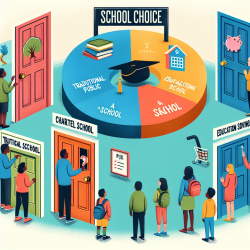
In recent years, the landscape of educational choice has expanded significantly across the United States. As various states implement new programs and policies to offer families more educational options, understanding public opinion on these initiatives becomes crucial. This blog delves into the findings from a comprehensive study examining how Americans view three primary school choice policies: education savings accounts (ESAs), school vouchers, and charter schools. Through an analysis of longitudinal survey data, we explore trends in public support, differences among demographic subgroups, and the effects of survey question framing.
The Landscape of School Choice Policies
School choice policies have long been a topic of debate in the realm of education policy. They are designed to provide families with alternatives to traditional public schools by allowing them to choose options that best fit their children's needs. The three major types of school choice policies discussed in this study are:
- Education Savings Accounts (ESAs): These accounts allow parents to use government-authorized funds for various educational purposes, such as private school tuition, tutoring, online programs, and therapies.
- School Vouchers: Vouchers provide parents with funds to pay for private or religious school tuition instead of attending public schools.
- Charter Schools: These are publicly funded schools that operate independently of the traditional public school system and have more flexibility in their operations.
Trends in Public Opinion
The study reveals that ESAs consistently receive the highest levels of support among the three policy types. Across multiple surveys conducted from 2013 to 2024, ESAs have maintained strong favorability among both the general public and school parents. This support is likely due to the flexibility and personalized options they offer families.
School vouchers and charter schools also enjoy net-positive support but with more variability over time and among different demographic groups. Voucher support tends to fluctuate more significantly based on political affiliation and community type, while charter schools see more consistent support from urban residents compared to rural areas.
Subgroup Differences
The analysis highlights notable differences in support based on political affiliation and community type:
- Political Affiliation: Republicans generally show higher levels of support for all three policy types compared to Democrats and Independents. However, ESAs exhibit less partisan polarization compared to vouchers and charter schools.
- Community Type: Urban residents tend to express higher levels of support for school choice policies compared to suburban or rural counterparts. This trend underscores the demand for diverse educational options in densely populated areas.
The Impact of Question Framing
An interesting finding from the study is the impact of survey question framing on public opinion. The way questions are worded can significantly influence respondents' attitudes toward school choice policies. For example, framing ESAs as universally accessible increases support by nearly 20 percentage points compared to a needs-based eligibility description.
Conclusion
The findings from this study provide valuable insights for policymakers, educators, and advocates involved in shaping the future of educational choice. Understanding public opinion trends and subgroup dynamics can help inform strategic decisions in policy design and implementation. Moreover, recognizing the impact of question framing highlights the importance of clear communication when discussing school choice options with the public.
For more information on this topic and detailed survey data analysis, please follow this link.