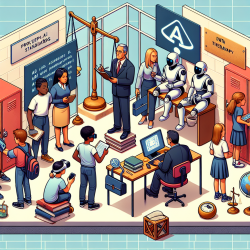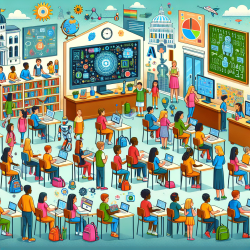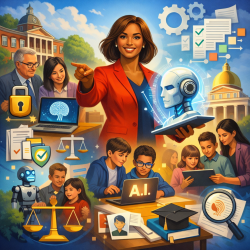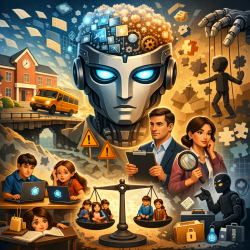
Artificial intelligence (AI) is no longer a futuristic concept in schools—it is embedded in everyday tools that students and educators use for learning, communication, assessment, and support. In K–12 settings, AI commonly appears through personalized learning platforms, automated assessment systems, predictive analytics, chatbots, and even facial recognition technologies. These systems can help educators manage workload and provide more timely feedback to learners. However, the same systems can also introduce serious ethical risks—particularly for children—if privacy, fairness, and autonomy are not explicitly protected.
For school partners like TinyEYE—an organization providing online therapy services to schools—this ethical landscape matters. Digital service delivery increasingly intersects with AI-enabled platforms (for scheduling, documentation, progress monitoring, analytics, and communications). Even when a therapy provider is not building AI models directly, they may rely on tools that do. The result is a shared responsibility: schools and vendors must ensure that technology supports students without compromising their rights or amplifying inequities.
What “AI” means in a K–12 context (in plain terms)
AI is often described as computer systems designed to mimic (and sometimes improve upon) human decision-making. In education, two foundational concepts are especially relevant:
Algorithms: step-by-step instructions that computers follow to produce an output. Algorithms can be simple (sorting a list) or complex (ranking content recommendations). Importantly, algorithms reflect human choices—what to measure, what to optimize, and what “success” looks like.
Machine learning: a method where systems learn patterns from data rather than being explicitly programmed line-by-line. A model is trained on data, then used to predict or classify new information (for example, identifying whether a student response meets a rubric standard).
In K–12, AI typically appears as a “decision support layer” that recommends content, flags risk, scores work, or nudges behavior. That layer can be helpful—but it can also be wrong, biased, or overly intrusive.
Where AI can help schools (and why educators adopt it)
Research highlights several potential benefits of AI applications in education, especially when schools face staffing shortages, growing documentation demands, and diverse student needs.
1) Personalized learning systems
Adaptive platforms can adjust content and pacing based on student performance. Done well, this can support mixed-ability classrooms and provide timely feedback. During and after the COVID-19 pandemic’s shift toward remote and hybrid learning, these systems have been positioned as a way to maintain continuity and differentiate instruction.
However, it is important to note a limitation raised in the literature: many systems model academic performance more readily than they model social, emotional, or motivational states. For student support services—including online therapy—this distinction is critical. A student’s learning data may not accurately represent their well-being, readiness, or context.
2) Automated assessment systems
Automated scoring tools can reduce teacher workload and return feedback faster—especially in large-scale environments. In principle, that efficiency can create more time for human-to-human instruction and relationship-building.
But automated assessment is also one of the most ethically sensitive uses of AI, because it can shape grades, placements, and long-term opportunities. If a scoring model is trained on biased data—or if it overvalues certain language patterns—students from marginalized backgrounds can be disproportionately harmed.
3) Predictive analytics and (in some contexts) facial recognition
Predictive analytics attempt to identify patterns that indicate a student may be at risk (for example, of failing a course). In theory, this can enable earlier support and intervention.
Facial recognition and emotion-detection tools claim to measure engagement or attention by monitoring facial expressions. These tools are particularly controversial in K–12 because they intensify surveillance and can be inaccurate across different skin tones, neurodiversity profiles, and cultural expressions.
4) Social platforms and chatbots
Social networking tools and chatbots can support communication, administrative tasks, and student access to information. For example, chatbots can help families navigate processes like registration or scheduling.
Yet social platforms are also profit-driven ecosystems that can encourage data extraction, targeted advertising, and opaque recommendation systems—raising questions about consent and student vulnerability.
The core ethical risks schools must address
The educational promise of AI is often marketed as “objective” and “value-neutral.” In practice, AI systems reflect the values, assumptions, and incentives of the people and institutions that design them. In K–12 environments—where students have limited agency—ethical safeguards must be explicit, not implied.
1) Privacy and informed consent
Privacy concerns arise when AI-enabled tools collect sensitive information, including behavioral data, location data, device identifiers, communication metadata, and learning performance data. Even when platforms request consent, families and educators may not fully understand what is being collected, how long it is retained, or who it is shared with.
In K–12, consent can be especially complicated because participation may be effectively mandatory if a school requires a platform for learning or services. Ethical practice requires more than a checkbox—it requires meaningful transparency and realistic alternatives.
2) Surveillance and chilling effects on learning
Monitoring systems can shift the classroom climate. When students believe they are constantly tracked—what they click, what they type, what they watch, how they look—they may participate less, take fewer intellectual risks, and feel less safe expressing uncertainty.
For student support services, surveillance concerns can be even more sensitive. Therapeutic relationships depend on trust, boundaries, and psychological safety. Any AI-enabled monitoring must be carefully evaluated for whether it supports care or undermines it.
3) Autonomy and manipulation
AI systems can subtly shape choices: what content is recommended, what behaviors are rewarded, what “success” is defined as, and what paths are made easier or harder. Predictive systems can also create self-fulfilling prophecies—if a student is labeled “at risk,” they may be treated differently, offered narrower opportunities, or subjected to increased scrutiny.
Autonomy matters in education because students are developing identity, agency, and decision-making skills. AI should strengthen those capacities, not replace them.
4) Bias, discrimination, and unequal impact
Bias can enter AI systems through training data, design decisions, and institutional context. Examples in the literature include gender bias in translation tools and racial bias in facial recognition. In education, algorithmic bias can appear in personalized learning pathways, automated scoring, and predictive flags.
A widely cited cautionary case is the use of algorithmic standardization in high-stakes grading contexts, where outcomes can disproportionately disadvantage students from under-resourced schools. The lesson for K–12 leaders is clear: when AI influences consequential decisions, fairness must be tested—not assumed.
A practical checklist: Questions schools (and partners like TinyEYE) should ask
Whether a school is adopting an AI-enabled learning platform, an analytics dashboard, or a tool that supports online therapy workflows, due diligence should include both technical and ethical review. The following questions can guide procurement, implementation, and ongoing monitoring:
Data collection: What data is collected (including metadata), and is each data element necessary for the stated purpose?
Data access and sharing: Who can access the data (vendor staff, subcontractors, third parties)? Is data sold, used for advertising, or used to train models beyond the school’s context?
Retention and deletion: How long is data retained, and can schools request deletion at the student level? What happens when a student leaves the district?
Transparency: Can the vendor explain, in educator-friendly language, what the system is optimizing and how recommendations or flags are generated?
Bias testing: Has the system been evaluated for disparate impact across race, disability status, language background, and socioeconomic status?
Human oversight: What decisions are automated, and what decisions remain with educators or clinicians? Is there an appeals or review process?
Student experience: Will students feel monitored? Does the tool encourage growth and agency—or compliance and risk avoidance?
Safety and boundaries: For tools touching student well-being, does the technology reinforce confidentiality, appropriate access controls, and clear role-based permissions?
Teaching AI and ethics: Building literacy alongside adoption
One of the most actionable insights from current scholarship is that schools should not only adopt AI—they should teach students and educators how AI works and why ethics matters. The literature highlights accessible, open resources from organizations such as MIT Media Lab and Code.org that help learners explore:
How datasets shape outcomes (and how imbalance can create unfair results)
How “algorithms are opinions” because they encode goals and values
How privacy and consent operate in platforms students use every day (such as video and social media environments)
This kind of instruction supports healthier technology use: students learn to question outputs, recognize power dynamics, and understand that “smart” systems can still be wrong.
Conclusion: Ethical AI is not optional in K–12
AI can meaningfully support educators and students—through personalization, efficiency, and improved access to resources. Yet in K–12 settings, the ethical stakes are high because children have limited power, data can follow them for years, and biased systems can compound existing inequities.
For organizations like TinyEYE and the schools you serve, the goal should be clear: adopt technology in ways that strengthen human relationships, protect student rights, and ensure that innovation does not come at the cost of privacy, fairness, or autonomy.
For more information, please follow this link.