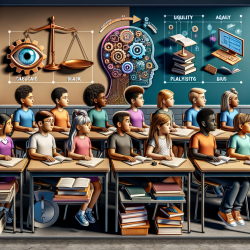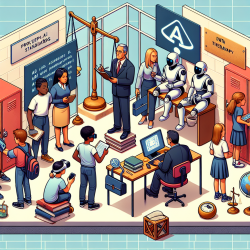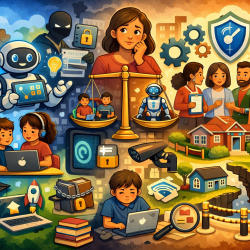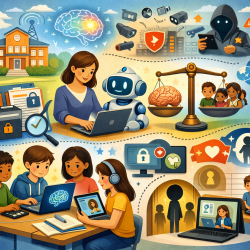
Generative artificial intelligence (GenAI) is no longer a “future” topic in K–12 education. Since the public release of ChatGPT in 2022, the pace of adoption has accelerated across Ontario. Boards are beginning to approve GenAI tools, educators are experimenting to save time and personalize learning, and vendors are marketing education-targeted products at a rapid clip.
As a Special Education Director, I see both the promise and the pressure. We are navigating staffing shortages in regulated professions (speech-language pathology, occupational therapy, social work supports, psychology), rising complexity in student needs, and increasing expectations for timely service. In that environment, GenAI can look like a quick fix.
But the Ontario Teachers’ Federation (OTF) and its affiliates, in their January 2026 discussion paper, make a critical point: while AI may make some tasks easier, it cannot replace the humanity required for quality teaching and learning. For special education leaders, that same truth applies to therapy services, relationship-based interventions, and ethical decision-making around student well-being.
Why this conversation matters now: the policy vacuum
The OTF paper highlights a central risk: the lack of comprehensive regulation. Too often, the “policy conversation” is reduced to classroom rules about what students can do with AI. That is necessary, but it is not sufficient.
We also need policies that govern:
- Development (how AI is designed and trained)
- Deployment (how it is launched, integrated, and procured)
- Use (how educators and students adopt it day-to-day)
When those three layers do not align, schools become end-users of systems that may have been built without children’s privacy, equity, or safety as a design priority. In special education, where we handle sensitive information and serve students who may be more vulnerable to harm, that gap is not theoretical.
How GenAI is already being used in Ontario schools
Even without a full provincial research picture on impact, the paper summarizes common use-cases that align with broader international categories (student-facing, teacher-facing, and system-facing). In practice, we are seeing GenAI show up in four main ways:
1) Classroom instruction and assessment support
- Drafting lesson plans and interactive activities tailored to interests and learning profiles
- Creating learning materials (examples, games, exercises)
- Generating rubrics and assessment tools
- Producing “timely feedback” aligned to success criteria
- Differentiating text for reading level, vocabulary, and multilingual access
- Supporting executive functioning (schedules, reminders, goal setting)
- Supporting social skill development (conversational practice, identifying social cues)
2) Communication and administrative tasks
- Drafting and editing emails, letters, and newsletters to families
- Translation to languages spoken in the community
- Refining report card comments for clarity and precision
3) School and board operations
- Summarizing reports and identifying trends
- Creating meeting agendas
- Outlining professional development
- Drafting public communications
4) Student-facing tools outside the classroom
Appendix examples include chatbots/companion AI, image and video generation, tutoring tools, and AI-powered search. These tools can be helpful, but they also introduce risks such as misinformation, inappropriate emotional attachment, cyber exposure, and academic integrity challenges.
The three big concerns leaders cannot ignore
1) De-professionalization of teaching (and the erosion of professional judgment)
The OTF paper frames a primary concern: GenAI can threaten teacher autonomy by eroding professional judgment. In Ontario, “Growing Success” defines professional judgment as informed by curriculum expectations, context, evidence of learning, methods of instruction and assessment, and standards that indicate success.
GenAI can support that work, but it can also replace it in ways that lead to “cognitive offloading” and eventual de-skilling. If educators increasingly rely on AI to generate feedback, assessment commentary, or instructional decisions, we risk weakening the very expertise students need us to apply.
In special education, the parallel is clear: professional judgment is the foundation of ethical programming, accommodations, and intervention planning. Tools can assist, but they cannot substitute for the nuanced interpretation of student data, family context, and lived experience.
2) Adverse effects on student learning and well-being
The paper draws a strong connection to broader concerns about technology and youth well-being. GenAI introduces additional risks:
- Reduced relationship-building if AI becomes a primary “support” instead of human connection
- Overreliance that undermines critical thinking, writing, and problem-solving
- Exposure to bias and harmful stereotypes embedded in training data
- Inappropriate emotional bonds with AI chatbots or companion tools
For students with disabilities, these concerns can be amplified. Students who already struggle with social communication, anxiety, or executive functioning may be more susceptible to dependency on AI tools that feel responsive but are not accountable, not therapeutic, and not designed to safeguard a child’s best interests.
3) Corporate encroachment into public education
The OTF paper cautions that GenAI’s rapid adoption can invite further commercialization of public education. When educators are under time pressure, vendor promises of “workload reduction” and “personalized learning” become persuasive. Historically, technology adoption can outpace evidence of efficacy, and policy guardrails arrive late.
From a district leadership standpoint, this is not an anti-technology stance. It is a governance stance. Public education must not outsource pedagogical authority, data stewardship, or professional learning priorities to corporate interests.
Six principles to anchor responsible GenAI decisions
The discussion paper outlines principles for secure and responsible technology. These are highly practical for school boards and can be translated into procurement checklists, staff guidance, and parent-facing communication:
- Transparency: plain-language clarity about goals, impacts, and informed consent
- Accountability: clear ownership and consequences when harms occur
- Equity and inclusion: fair outcomes that do not reinforce discrimination or limit access
- Security and safety: risk management, privacy protection, and safety online/offline
- Prudence: caution, anticipation of unintended consequences, and mitigation plans
- Democratic legitimacy: alignment with rule of law, rights, freedoms, and social trust
What this means for online therapy providers supporting schools
TinyEYE and other online therapy partners sit at an important intersection: student services, digital platforms, privacy expectations, and school board procurement realities. As districts work through GenAI policy, therapy services must remain clearly human-led, clinically governed, and privacy-forward.
In my role overseeing service delivery under staffing shortages, I encourage leaders to separate two conversations:
- AI to support administrative efficiency (scheduling drafts, summarizing non-identifying notes, drafting generic templates)
- AI in clinical decision-making or student-specific documentation (high risk, requires strict controls, and often should be avoided unless explicitly approved and safeguarded)
Online therapy can be a responsible, high-impact solution when it strengthens access to qualified clinicians and preserves the relational, student-centered nature of intervention. GenAI should never become a shortcut that weakens confidentiality, informed consent, or professional accountability.
Policy and procurement: the “unseen” work that protects students
The OTF paper emphasizes that procurement and deployment rules matter as much as classroom use rules. Key recommendations include aligning procurement with stronger federal/provincial regulation, requiring AI-sensitive privacy impact assessments, and using human rights impact assessments to detect bias and discrimination risks.
From a school board perspective, responsible procurement should require vendors to demonstrate:
- Evidence-based benefits for teaching, learning, and well-being
- Data minimization and limited retention
- Strong cybersecurity and regular audits
- Algorithmic transparency (what data is collected and how it is processed)
- Ongoing bias testing and inclusive, multilingual performance (including French-language considerations)
- Interoperability to avoid sole-source dependence
- Controls on updates so new features do not bypass safeguards
This is where district leaders, IT, privacy officers, educators, and unions/federations all need a shared table. Parents also deserve clear explanations of what tools are used, why, and how student information is protected.
Practical next steps for district and school leaders
If your board is feeling the urgency to “do something” about GenAI, these steps help you move forward without moving recklessly:
- Clarify what is already in use: survey staff and students to identify tools being used informally.
- Set interim guardrails: define what is prohibited (e.g., entering identifiable student information into public GenAI tools) and what is permitted with conditions.
- Align with responsible tech principles: use transparency, accountability, equity, safety, prudence, and democratic legitimacy as your evaluation lens.
- Strengthen procurement requirements: require privacy impact assessments and bias/human rights reviews before adoption.
- Invest in AI literacy: support teacher learning in foundational knowledge, practical skills, and critical evaluation of outputs.
- Keep professional judgment central: policies should explicitly affirm educator autonomy and responsibility.
- Communicate with families: provide plain-language explanations and avenues for questions.
For more information, please follow this link.