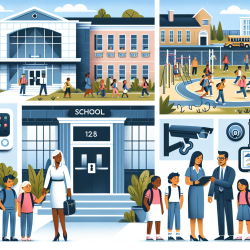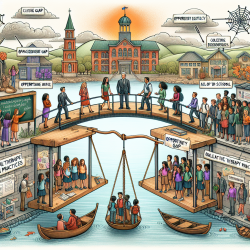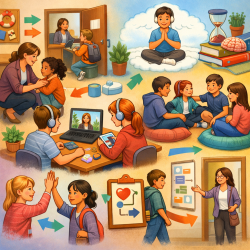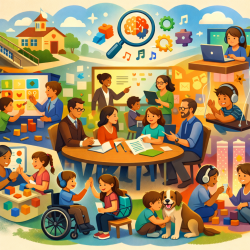
At TinyEYE, we partner with school districts every day that are working to do two things at once: protect student safety and protect student rights. Those goals are not in conflict. In fact, the strongest safety plans are usually the ones built on clear policies, consistent practices, and a proactive culture of support.
One of the most helpful resources in this area is School Policies and Legal Issues Supporting Safe Schools (Hamilton Fish Institute/NWREL, revised 2007). It emphasizes a key truth that I repeat often in leadership meetings: school safety is ultimately a human enterprise, but policy and law create the framework that helps adults respond wisely under pressure.
Below are key takeaways—written for busy administrators, educators, and student services teams—on how to build safety policies that are both effective and legally sound.
1) Start with a comprehensive approach: prevention, intervention, and response
School safety planning works best when it is not limited to “what happens after an incident.” The guidebook underscores that safer schools require broad community involvement and a comprehensive approach that includes:
- Prevention: strengthening school climate, teaching expectations, reducing opportunities for harm, and building student connection
- Intervention: identifying concerns early (behavioral, social-emotional, mental health), and providing supports before issues escalate
- Response: having clear, legally compliant procedures for discipline, threats, searches, reporting, and crisis actions
From a district leadership perspective, the practical question is: do our staff members know what to do on a normal day, not just during a crisis? Policy is only as good as staff training and implementation.
2) Due process: discipline must be fair, clear, and proportional
Discipline is one of the most powerful tools schools have to maintain order and safety, but it must align with constitutional due process requirements. The guide highlights two major components:
Substantive due process (reasonableness)
Actions must be reasonably related to legitimate school interests like safety and order. Policies that are arbitrary, overly severe, or not connected to the problem can create legal vulnerability and undermine trust.
Procedural due process (the steps you follow)
Procedural requirements increase as consequences become more serious. For short suspensions (generally 10 days or fewer), the minimum protections typically include:
- Notice of the infraction (oral or written)
- An explanation of the evidence
- An opportunity for the student to share their side
For longer removals or expulsions, districts should expect more formal safeguards (written notice to families, impartial hearing/appeal options, time to prepare, access to evidence, and decisions based on substantial evidence).
From a systems standpoint, I always recommend districts audit their discipline procedures annually to confirm they are consistent across buildings and aligned with board policy and state requirements.
3) Nondiscrimination: safety policies must be applied consistently and equitably
Safety rules must be applied uniformly to similarly situated students. The guide notes that increased scrutiny occurs when discipline or safety practices appear to treat students differently based on protected characteristics such as race, ethnicity, gender, or religion.
Importantly, the publication also references research on disproportionate discipline rates for minority students. Even when a district believes it is acting consistently, patterns in data can raise concerns and erode community confidence.
Practical strategies districts use to strengthen equity while maintaining safety include:
- Clear discipline definitions and behavior descriptors (reduce subjective decision-making)
- Ongoing staff training on consistent application
- Regular review of discipline data by race/ethnicity, disability status, and setting
- Layering in preventive supports (PBIS/MTSS, restorative practices where appropriate, counseling supports)
4) Discipline for students with disabilities: align with IDEA and safety needs
IDEA protections are central in safety-related discipline decisions. The guide explains that schools may remove a student with a disability for up to 10 days in ways comparable to peers. If removals exceed 10 days and constitute a change of placement, the IEP team must conduct a manifestation determination.
If the behavior is a manifestation of the disability (or related to failure to implement the IEP), the team must address behavior supports and typically return the student to the prior placement unless an agreed change is part of the plan.
The guide also highlights a key safety exception: regardless of manifestation, schools may place a student in an interim alternative educational setting for up to 45 school days for serious infractions involving:
- Weapons
- Illegal drugs (possession/use/sale/solicitation)
- Serious bodily injury
In practice, districts are most successful when they invest early in:
- Functional Behavioral Assessments (FBAs)
- Behavior Intervention Plans (BIPs) that are actually implemented with fidelity
- Training for staff on de-escalation and behavior supports
This is also where related services can be pivotal. When staffing shortages exist (a reality for many districts), teletherapy can help maintain continuity of counseling, social-emotional support, and consultation—especially when teams are trying to prevent repeated disciplinary removals.
5) Searches and seizures: use “reasonable suspicion” and match the scope to the concern
The guide summarizes the Fourth Amendment standard in schools: searches must be reasonable at inception and reasonable in scope. School officials generally do not need “probable cause” like law enforcement; they need “reasonable suspicion.”
Key implementation reminders include:
- A search should match the seriousness of the suspected infraction
- Age, gender, and privacy expectations matter when deciding scope
- General exploratory “sweep” searches are usually impermissible, with limited exceptions
When school resource officers (SROs) or law enforcement are involved, the legal standards can shift. The guide notes courts differ on whether probable cause applies to SRO searches, often depending on who initiated the search and the officer’s role.
6) Threats, bullying, and off-campus behavior: proceed carefully, document well, and prioritize safety
Modern safety challenges rarely stay “inside the building.” The guide discusses “true threats,” material disruption (Tinker), and the complexity of off-campus conduct—especially online speech and cyberbullying.
Districts strengthen their position when they:
- Define prohibited behaviors clearly in the student code of conduct (including cyberbullying and threats)
- Train staff on when to seek administrative/legal guidance
- Use a range of interventions (not only punitive measures)
- Document the impact on school operations and student safety
One leadership lesson here is that overreaction can create legal risk, but underreaction can create safety risk and potential liability. The best approach is a structured process: gather facts, assess credibility and impact, apply policy consistently, and ensure student supports are part of the response plan.
7) Privacy and information-sharing: FERPA is a framework, not a barrier
FERPA is often misunderstood in safety situations. The guide explains that while education records are protected, FERPA includes exceptions and allows disclosures in specific circumstances, including:
- Sharing within the district with staff who have a “legitimate educational interest”
- Disclosures to other schools where the student enrolls/transfers (with required conditions)
- Health or safety emergency disclosures to appropriate parties when necessary to protect individuals
- Disclosures allowed under certain juvenile justice provisions when state law permits and conditions are met
It also notes that “law enforcement unit records” may fall outside FERPA if they are created, maintained, and used by the designated law enforcement unit for law enforcement purposes.
The operational takeaway: districts should not wait until a crisis to decide how information-sharing will work. Clear procedures—developed with legal counsel and community partners—reduce confusion and delays when time matters.
8) Make policies usable: communicate, train, review data, and revise
The guide closes with a practical truth: policies must be publicized, understood, and consistently applied. Districts can strengthen implementation by:
- Disseminating codes of conduct and safety procedures in family-friendly formats
- Using acknowledgements (student/parent signatures) where appropriate
- Providing regular inservice training so staff know how to find and follow procedures
- Reviewing safety and discipline data to identify hotspots, trends, and disproportionality
- Revising policies when data or experience shows unintended consequences
In my experience, the districts that make the most progress are the ones that treat safety as a continuous improvement process—supported by training, data, and strong student services systems.
Where TinyEYE fits in a safer-schools strategy
Online therapy services are not a “security measure,” and they are not a substitute for strong building leadership. But they can be a meaningful part of prevention and intervention—especially when districts face staffing shortages and need reliable access to qualified clinicians.
When students have consistent access to mental health and related supports, schools are better positioned to:
- Address emerging concerns before they become disciplinary crises
- Support behavior intervention planning and skill-building
- Strengthen student connection and belonging—key protective factors for safety
For more information, please follow this link.