In schools, we often hear concerns that sound simple on the surface: “They won’t eat anything but crackers,” “Lunch is a daily battle,” or “They gag when new foods are nearby.” For some students, feeding challenges affect far more than nutrition. They can impact attention, stamina, behavior, social participation, and a student’s ability to engage in learning throughout the day.
Food chaining is one evidence-informed, student-centered approach used in feeding therapy to expand a child’s accepted foods in small, manageable steps. It is especially helpful when a student has a very limited diet, strong sensory preferences, anxiety around new foods, or rigid routines that make change difficult.
As a district leader, I appreciate approaches like food chaining because they are structured, measurable, and collaborative. They also align well with how school teams already work: we identify a baseline, set realistic goals, implement consistent strategies, and track progress over time.
What Is Food Chaining?
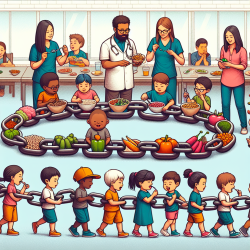
Food chaining is a systematic method of introducing new foods by linking them to foods a child already accepts. The “chain” is built by making small changes—one feature at a time—so the new food feels familiar and safe.
Instead of asking a student to jump from chicken nuggets to a mixed salad, food chaining might move from one brand of nugget to another, then to a baked nugget, then to a breaded chicken strip, and eventually to grilled chicken. Each step is intentionally chosen to be close enough to the student’s current comfort zone that it is achievable.
Who Benefits from Food Chaining?
Food chaining can support many students, including those who:
- Eat a very limited variety of foods (often fewer than 20 foods)
- Show strong brand, shape, texture, temperature, or color preferences
- Experience sensory sensitivities (smell, texture, mixed textures, “wet” foods)
- Have anxiety around unfamiliar foods or changes in routine
- Have developmental disabilities or neurodivergent profiles where rigidity and sensory needs are part of the picture
- Have a history of negative feeding experiences (gagging, choking scares, reflux discomfort)
Food chaining is not a substitute for medical evaluation when there are red flags such as frequent coughing/choking with meals, recurrent pneumonia, significant weight loss, dehydration, or suspected swallowing disorders. In those cases, school teams should partner with families to seek medical guidance and, when appropriate, a swallowing evaluation.
Why Food Chaining Works in Real Life
Food chaining is effective because it respects the student’s starting point. It does not rely on pressure, power struggles, or “just take a bite.” Instead, it builds confidence through predictable, gradual exposure.
In practice, food chaining supports:
- Safety and trust by avoiding abrupt changes that trigger refusal or gagging
- Consistency through clear steps that families and school staff can follow
- Measurable progress by tracking specific, observable behaviors (tolerates on plate, touches, smells, licks, bites, chews, swallows)
- Generalization by planning for carryover across environments (home, school, community)
Core Principles of Food Chaining
While each feeding plan should be individualized, strong food chaining programs often share these principles:
- Start with “safe foods”: Identify foods the student reliably eats without distress.
- Change one variable at a time: For example, keep flavor the same but change shape; or keep texture the same but change brand.
- Use a hierarchy of participation: Many students need to tolerate a food near them before they can touch it, smell it, or taste it.
- Prioritize calm, neutral language: Avoid bargaining, threats, or “one more bite” negotiations.
- Reinforce effort, not volume: Celebrate steps like smelling, licking, or taking a “learning bite.”
- Plan for repetition: New foods often require multiple exposures before acceptance increases.
What a Food Chain Can Look Like (Examples)
Food chains are built from the student’s accepted foods. Below are simplified examples to illustrate the concept. A therapist would tailor steps based on the student’s sensory profile, oral-motor skills, and family priorities.
Example 1: Crunchy Snack Chain
- Preferred brand of plain crackers
- Different brand of plain crackers (same shape/texture)
- Crackers with a subtle flavor change (e.g., lightly salted)
- Pretzel sticks (similar crunch, different shape)
- Pita chips (similar crunch, slightly different flavor)
Example 2: Chicken Chain
- Specific brand of chicken nuggets
- Different brand of nuggets (similar breading)
- Homemade baked nuggets (similar size and breading)
- Breaded chicken strips
- Grilled chicken pieces (start small, paired with a preferred dip)
Example 3: Fruit Chain (Texture-Sensitive Student)
- Freeze-dried apple slices (crunchy, dry)
- Fresh apple slices (thin, crisp variety)
- Peeled pear slices (similar shape, slightly softer)
- Very firm peach slices (thin)
- Soft fruit in small amounts (as tolerated)
These examples highlight a key point: the “next” food should be close enough to feel safe, but different enough to move the student forward.
How School Teams Can Support Food Chaining
In school settings, feeding therapy may be addressed through related services when a student’s feeding needs impact access to education (for example, fatigue, attention, participation, health needs, or significant mealtime distress that affects the school day). Implementation varies by district and state guidelines, and it should always be grounded in the student’s individualized plan.
Here are practical ways schools can contribute:
- Collaborate with families: Families know the student’s eating history, routines, and what has (and hasn’t) worked.
- Coordinate with nursing and health plans: Ensure allergy awareness, medical considerations, and emergency procedures are clear.
- Support predictable routines: Consistent mealtime expectations and calm supervision reduce anxiety.
- Use consistent language and goals: If the goal is “tolerates a new food on the tray,” everyone should reinforce that same step.
- Collect simple data: Track what step the student achieved (tolerated, touched, tasted) and note triggers or successes.
- Respect dignity and privacy: Feeding goals should never become a public performance during lunch.
Where Online Therapy Fits
When districts face therapist staffing shortages—particularly in occupational therapy and speech-language pathology—online therapy can help maintain service continuity and reduce delays. In feeding therapy support, online sessions can be especially effective for:
- Caregiver coaching to ensure strategies are implemented consistently at home
- Team consultation with school staff to align routines, accommodations, and data collection
- Planning individualized food chains based on detailed intake information and student response
- Progress monitoring with clear goals and measurable steps
It is important to note that some feeding concerns require hands-on assessment or medical collaboration. A high-quality model recognizes when telepractice is appropriate, when hybrid support is best, and when referral is needed.
Common Missteps to Avoid
Food chaining is most successful when it is supportive rather than forceful. Common pitfalls include:
- Moving too fast and increasing refusal or anxiety
- Changing too many variables at once (new brand, new shape, new temperature, new setting)
- Using pressure-based strategies that damage trust and reduce willingness to try
- Ignoring sensory or oral-motor needs that make certain textures genuinely difficult
- Inconsistent implementation across adults and environments
What Progress Can Look Like
Progress in food chaining is often gradual and meaningful, even when it doesn’t show up as “eating a full serving” right away. Success might include:
- Tolerating a new food on the table without distress
- Touching or smelling a food that was previously avoided
- Taking a small “learning bite” and spitting out appropriately (a valid step for some students)
- Adding one new food to the “safe list” and maintaining it over time
When teams set realistic expectations and track small wins, students often build momentum—and confidence—over time.
For more information, please follow this link.