Transitions are a normal part of the school day: arriving at school, moving from the classroom to specials, shifting from recess back to academics, changing teachers, and moving between grade levels or buildings. For many students, these changes are mildly stressful but manageable. For others, transitions can be the hardest part of the day—triggering anxiety, shutdown, refusal, aggression, tears, or elopement. As a Special Education Director, I hear this concern frequently from families and staff, and I see how quickly transition difficulty can impact learning, peer relationships, and staff capacity.
The good news is that transition challenges are highly supportable when we identify the “why,” align the right interventions, and implement them consistently across settings. This post outlines common reasons transitions are difficult, what to look for, and practical strategies schools can use immediately—along with how related services (including online therapy) can strengthen a student’s ability to cope with change.
What Do We Mean by “Transition Difficulty”?
Transition difficulty refers to a student’s struggle to move from one activity, setting, person, or expectation to another. It can show up in many ways, including:
- Refusing to line up or leave a preferred activity
- Becoming dysregulated when a schedule changes
- Meltdowns when asked to stop a task
- Slow or “stuck” behavior (freezing, non-responsiveness)
- Arguing, negotiating, or repeated questioning (“Why do we have to?”)
- Running away, hiding, or leaving the area
- Somatic complaints (headaches, stomachaches) right before transitions
It’s important to remember: transition behavior is communication. When we treat it as willful defiance, we often escalate the problem. When we treat it as a skill gap or a stress response, we can teach replacement skills and reduce the load that’s overwhelming the student.
Why Transitions Are Hard: Common Root Causes
Transition difficulty rarely has a single cause. In my experience, it’s usually a combination of skill, environment, and predictability. Here are common contributors:
1) Executive functioning and cognitive flexibility
Some students have difficulty shifting attention, stopping one task, and starting another. This is common for students with ADHD, autism, learning disabilities, and anxiety. They may need more time, more cues, and explicit instruction in “shift” skills.
2) Anxiety and uncertainty
Transitions often include unknowns: Who will be there? What will I be asked to do? Will it be loud? Will I be successful? Students who feel unsure may attempt to avoid transitions as a protective strategy.
3) Sensory processing needs
Hallways, cafeterias, assemblies, and recess transitions can be noisy, crowded, and unpredictable. Students with sensory sensitivities may become overwhelmed before they even reach the next setting.
4) Communication challenges
When students can’t express what they need (or don’t understand what’s being asked), transitions can feel unsafe. This includes students with speech-language needs, receptive language challenges, or limited functional communication.
5) Skill gaps in self-regulation
Some students need direct teaching and practice in calming strategies, coping skills, and problem-solving. Without those tools, a transition becomes the “spark” that ignites dysregulation.
6) Reinforcement patterns
If a student learns that refusing a transition results in escaping a difficult task, the refusal behavior can become stronger over time. This is not about blame—it’s about understanding what the behavior accomplishes so we can teach a better option.
What Schools Should Do First: A Practical, Team-Based Approach
Before adding a long list of interventions, I recommend a brief, structured problem-solving process:
- Define the transition: What exactly is hard (time of day, setting, adult, task demand)?
- Describe the behavior: What does it look like, how long does it last, how intense is it?
- Identify patterns: What happens right before and right after?
- Clarify the function: Is the student avoiding, seeking attention, seeking sensory input, or trying to gain control/predictability?
- Pick 1–3 strategies to implement consistently for 2–4 weeks, then review data
For students with significant needs, this process may lead to a Functional Behavioral Assessment (FBA) and a Behavior Intervention Plan (BIP). For others, targeted classroom supports may be enough.
High-Impact Strategies to Support Transitions
Below are interventions that are practical, evidence-aligned, and commonly successful when implemented consistently.
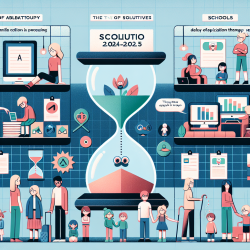
1) Make time visible and predictable
- Use visual schedules (whole-class and individual)
- Provide countdowns: “5 minutes, 2 minutes, 1 minute”
- Use timers the student can see (visual timer apps, sand timers)
- Preview changes early in the day and again right before they occur
2) Use clear, consistent transition cues
- Use the same short phrase each time (e.g., “Check schedule, then move.”)
- Pair verbal directions with a visual cue card
- Reduce language for students with receptive language needs
3) Teach a replacement routine
Instead of only telling students what to stop, teach what to do. For example:
- “Finish, clean up, check schedule, line up”
- “Stop, breathe, hands to self, walk to door”
- “Ask for help card, then transition”
Practice the routine during calm times. Many students need rehearsal the way we rehearse fire drills—before the stress hits.
4) Build in transition supports, not just consequences
- Assign a consistent “transition buddy” adult for a period of time
- Use first/then language: “First math, then Chromebook time”
- Offer structured choices: “Do you want to walk with the class or 30 seconds ahead with the aide?”
- Use a transition object (clipboard, fidget, pass) when appropriate
5) Address sensory load proactively
- Allow noise-reducing headphones in hallways
- Provide an alternate route or early release to avoid crowded hallways
- Offer heavy work or movement breaks before difficult transitions
- Teach students how to request a brief sensory break appropriately
6) Reinforce successful transitions
Reinforcement should be immediate, specific, and tied to the behavior you want:
- “You moved to reading group the first time I asked—thank you.”
- Token or point systems for younger students
- Goal tracking for older students (self-monitoring charts)
When we only respond strongly to refusal, we unintentionally make refusal the most powerful behavior in the room. Catching and reinforcing success changes that pattern.
IEP and 504 Considerations: When Transition Difficulty Impacts Access
If transition difficulty interferes with a student’s ability to access instruction, participate safely, or make progress, the team should consider whether supports belong in an IEP or 504 Plan. Depending on the student’s needs, this might include:
- Supplementary aids and services (visual schedule, adult prompting, transition pass)
- Accommodations (extra time to transition, reduced hallway exposure)
- Goals (self-regulation, functional communication, coping strategies)
- Related services (speech-language therapy, occupational therapy, counseling)
- A BIP if behavior is significant and persistent
From a compliance perspective, documentation matters. The plan should clearly describe what supports will be used, when, by whom, and how progress will be monitored. Consistency across staff is often the difference between a plan that looks good on paper and one that works in real life.
How Therapy Services Can Help (Including Online Therapy)
Transition challenges often sit at the intersection of communication, regulation, and sensory needs—areas where related service providers can be especially impactful.
- Speech-Language Pathologists (SLPs) can support receptive language, functional communication (e.g., requesting help or a break), social understanding, and scripts for coping with change.
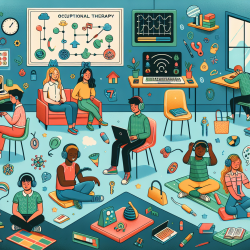
- Occupational Therapists (OTs) can address sensory processing, regulation strategies, environmental modifications, and routines that support independence.
- Mental health providers can teach coping skills, anxiety management, and cognitive-behavioral strategies appropriate for school settings.
With staffing shortages continuing across many districts, online therapy can be a practical way to maintain service continuity, reduce missed sessions, and provide consistent intervention. When teletherapy is implemented well, it can also support collaboration: providers can consult with teachers, share visuals and routines, and help staff implement strategies between sessions. The key is alignment—therapy goals should connect directly to the student’s daily transition demands, not exist in isolation.
Partnering with Families: Consistency Without Blame
Families often experience transition difficulty at home too (bedtime, leaving for school, homework). Productive school-home collaboration focuses on shared strategies and shared language:
- Use the same phrases (first/then, countdowns) across settings
- Share visuals between home and school when feasible
- Communicate about upcoming changes (assemblies, substitute teachers, schedule shifts)
- Celebrate progress, even when it’s incremental
When families feel heard and supported, we reduce conflict and increase follow-through—both of which directly benefit the student.
Closing Thoughts
Transition difficulty is not a character flaw; it’s a signal that a student needs more predictability, more support, or more skill instruction to manage change. Schools can make a measurable difference by clarifying the root cause, teaching routines explicitly, adjusting the environment, and reinforcing success. When teams align IEP supports, classroom practices, and therapy goals, transitions become teachable moments rather than daily battles.
For more information, please follow this link.