The Problem No One Wants to Say Out Loud: Shortages Are Now a Compliance Risk
Across the country, special education leaders are navigating a reality that has shifted from “temporary staffing challenge” to “structural shortage.” Speech-language pathologists, occupational therapists, mental health clinicians, and other related service providers are harder to recruit, harder to retain, and increasingly expensive to replace. Meanwhile, student needs have not slowed down, and timelines under IDEA have not become more flexible.
As a Special Education Director, I spend a lot of time in the space between what’s required and what’s possible. I’m in IEP meetings with families who are understandably frustrated. I’m in budget meetings where every department is asked to do more with less. I’m in conversations with principals who want solutions that don’t disrupt instruction. And I’m in staffing meetings where the question is no longer, “How do we hire?” but “How do we deliver services reliably when we can’t?”
When related services are inconsistent, the impacts cascade quickly:
- IEP minutes are missed and compensatory services become a real possibility
- Progress monitoring becomes less meaningful due to gaps in intervention
- Teams spend more time triaging than planning
- Families lose confidence in the system
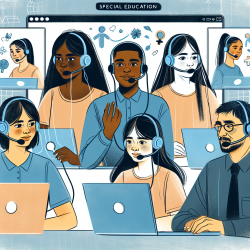
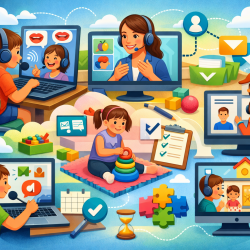
Districts need options that protect students, reduce risk, and support staff. One solution that has moved from “alternative” to “mainstream” is online therapy services delivered directly to schools through secure telepractice models.
Online Therapy in Schools: What It Is (and What It Isn’t)
Let’s clarify terms, because “teletherapy” can mean different things depending on who you ask. In the school context, online therapy is typically:
- Delivered by licensed clinicians (SLP, OT, PT, counseling, etc.)
- Provided in real time using secure, compliant technology
- Aligned to IEP goals and service minutes
- Coordinated with school teams and schedules
- Documented with session notes and progress data
What it is not:
- A generic app students use independently
- A replacement for the IEP team’s decision-making
- A “one size fits all” model that ignores student readiness or support needs
When implemented thoughtfully, online therapy can function like a stable extension of your related services team—especially in districts where vacancies and turnover have become chronic.
Why Districts Are Turning to Online Providers Now
In conferences and webinars over the past few years, one theme keeps repeating: districts aren’t seeking novelty; they’re seeking reliability. Online therapy is gaining traction because it can address the pain points that keep directors up at night.
1) Faster Access to Qualified Clinicians
Traditional hiring cycles can take months, and some positions remain open all year. Online therapy providers can often reduce time-to-service by widening the candidate pool beyond commuting distance. That matters when a student’s IEP services start now, not “after we hire.”
2) Continuity When Local Staffing Is Unstable
When a therapist resigns midyear, the disruption can be significant. Online models can help districts maintain continuity through provider networks, coverage planning, and structured onboarding.
3) Predictable Scheduling and Documentation
Many online therapy programs build in consistent session scheduling, documentation routines, and progress reporting. For directors, that structure supports oversight and helps answer the questions that arise in IEP meetings: Are minutes being delivered? What progress are we seeing? What adjustments are needed?
4) Support for Hard-to-Staff Campuses
Rural schools, small districts, and specialized programs often struggle the most. Online therapy can reduce geographic barriers and bring specialized expertise to students who otherwise might not have access.
Quality Concerns: What Families and Teams Ask First
When families hear “online therapy,” they often have reasonable questions. District teams do too. Here are the most common concerns I hear, and what matters in the response.
“Is online therapy as effective?”
Effectiveness depends on the match between student needs, clinician skill, and implementation supports. Many students respond well to teletherapy—especially when sessions are interactive, goal-driven, and supported by an on-site facilitator when needed.
“What about students who need hands-on support?”
Not every service is a perfect fit for a fully virtual model. Strong online providers will help districts determine when teletherapy is appropriate, when a hybrid approach is better, and what on-site support is required (for example, an aide or trained staff member to assist with positioning, materials, or behavior support).
“How do we protect privacy and confidentiality?”
Districts should expect secure platforms, clear data handling practices, and alignment with FERPA and other applicable requirements. Ask about encryption, access controls, session environments, and documentation storage.
“Will this feel disconnected from the school team?”
It shouldn’t. The best models build communication routines with teachers, case managers, and parents, and they provide clear progress updates that integrate into IEP review cycles.
What Legal Compliance Looks Like in an Online Service Model
From an IDEA perspective, the question is not “in-person vs. online.” The question is whether the district is providing FAPE and implementing the IEP as written. Online therapy can support compliance when it is implemented with the same seriousness as any other service delivery model.
Key compliance practices to look for include:
- Verification of clinician licensure and credentialing aligned to your state requirements
- Clear service logs tied to IEP minutes
- Progress monitoring aligned to IEP goals, with data that can be shared at reporting periods
- Defined protocols for missed sessions and make-up services
- Collaboration expectations with IEP teams and parent communication
Districts should also ensure that IEP teams consider service delivery decisions individually. Online therapy can be offered as a method of delivering the service, but placement and services must remain individualized and team-driven.
Implementation: The Make-or-Break Details Districts Can’t Skip
Online therapy succeeds when districts plan for the realities of school operations. If you’re considering an online partner such as TinyEYE, focus on the practical elements that determine whether the program will run smoothly.
Start with a Readiness Checklist
- Do we have appropriate spaces for sessions (quiet, private, consistent)?
- Who will support students to and from sessions, especially younger learners?
- What technology is required, and who supports troubleshooting?
- How will schedules coordinate with core instruction and related services blocks?
- How will we communicate with families about the service model?
Define Roles Clearly
One common pitfall is assuming “someone” will facilitate. Successful programs define who does what:
- Online clinician: therapy, documentation, progress reporting, collaboration
- On-site support (when needed): student escort, basic tech support, materials, behavior support
- Case manager/IEP team: service coordination, IEP updates, parent communication
- District lead: oversight, vendor coordination, compliance monitoring
Build a Communication Rhythm
Consistency reduces surprises. Consider:
- Monthly check-ins between district leads and the provider
- Regular progress snapshots aligned to reporting periods
- Clear escalation pathways for attendance issues, lack of progress, or scheduling conflicts
How Online Therapy Helps Directors Manage the “Human Side” of Shortages
Staffing shortages don’t just affect students; they affect the morale and workload of the staff you still have. When vacancies persist, remaining clinicians carry larger caseloads, principals field parent concerns, and special education teams spend time putting out fires.
Online therapy can relieve pressure by:
- Stabilizing service delivery so teams can focus on instruction and student support
- Reducing the need for constant recruitment cycles
- Providing coverage options when staff take leave or resign
- Supporting equitable access across schools, not just those that can recruit locally
In my experience, the districts that do best are those that treat online therapy as a strategic staffing solution—not as a last-minute patch.
Questions to Ask Any Online Therapy Provider (Including TinyEYE)
If you’re evaluating partners, here are practical questions that help you compare models:
- How do you recruit, vet, and credential clinicians for our state?
- What is your average time from referral to service start?
- How do you handle missed sessions and make-up minutes?
- What does progress monitoring look like, and how often do we receive reports?
- How do clinicians collaborate with teachers and IEP teams?
- What technology platform do you use, and what privacy safeguards are in place?
- What training do you provide for on-site facilitators and school staff?
- How do you support students with higher needs or challenging behaviors?
The Bottom Line: Stability Is a Student Support Strategy
When related services are inconsistent, students lose momentum and districts absorb risk. Online therapy is not a silver bullet, but it is a proven way to stabilize services, expand access to qualified clinicians, and protect IEP implementation—especially during persistent staffing shortages.
For districts exploring options, a strong next step is to map your current gaps (vacancies, missed minutes, hard-to-staff buildings) and determine where online therapy could provide immediate stability without compromising quality. If you’re considering a partner like TinyEYE, prioritize clear compliance practices, strong clinician support, and a collaborative approach that integrates with your school teams.
To learn more about online therapy models for schools, you can explore resources and service options at https://www.tinyeye.com.