When Support Matters Most, the First Step Is Clarity
Families often arrive at the same crossroads: a child is struggling with communication, learning, behavior, sensory needs, or emotional regulation, and adults agree that support is needed. What comes next can feel confusing. Should the child receive services through an IEP at school? Should the family pursue private therapy? Can they do both?
As a provider of online therapy services to schools, TinyEYE frequently partners with educators and families who are sorting through these questions. The good news is that both school-based IEP services and private therapy can be valuable. The best choice depends on your child’s needs, the impact on school functioning, and what kind of therapy goals you are trying to accomplish.
What Is an IEP (and What Is It Designed to Do)?
An IEP is an Individualized Education Program created for a student who qualifies for special education services under the Individuals with Disabilities Education Act (IDEA) in the United States (or comparable legislation and policies in other regions). The IEP is a legal document and a plan. It outlines:
- How a student’s disability impacts their education
- Measurable annual goals tied to school performance
- Special education instruction and related services (such as speech-language therapy, occupational therapy, physical therapy, counseling, or social work)
- Accommodations and modifications
- How progress will be measured and shared
The key point is this: IEP services are intended to support a student’s access to and progress in their education. School-based therapy is not “medical” therapy; it is educationally relevant therapy.
What Is Private Therapy (and What Is It Designed to Do)?
Private therapy typically occurs in a clinic, private practice, hospital setting, or via teletherapy arranged by a family. It may be paid for through insurance, out-of-pocket, grants, or other funding sources. Private therapy is designed to address a child’s needs more broadly across home, community, and daily life.
Depending on the provider and setting, private therapy may focus on:
- Functional communication at home and in the community
- Feeding and swallowing
- Fine motor skills for daily living (dressing, utensil use, hygiene routines)
- Emotional regulation and mental health
- Social skills in community contexts
- Longer sessions or different therapy intensity than what is feasible in school
Private therapy goals are often broader than school goals, and they can be shaped more directly by family priorities and day-to-day challenges outside the classroom.
IEP vs Private Therapy: The Core Differences
1) Eligibility and Access
- IEP: A student must be evaluated and found eligible under IDEA categories (or local equivalents). The disability must adversely affect educational performance and require specialized instruction.
- Private therapy: A child can typically begin services based on a clinical recommendation, physician referral, or parent choice, depending on local rules and insurance requirements.
2) Purpose of Services
- IEP: Services support educational access and progress. Goals are tied to school participation and learning outcomes.
- Private therapy: Services support broader functioning and quality of life across environments, often including home routines and community participation.
3) Setting and Service Delivery
- IEP: Therapy is delivered in the school setting (in-person or online), often individually or in small groups, and may be integrated into classroom routines.
- Private therapy: Therapy is delivered in a clinic, home, or online, often with more direct caregiver involvement and home practice built into the plan.
4) Frequency and Intensity
- IEP: Frequency is determined by what the IEP team believes is necessary for educational benefit. It is often constrained by school schedules and staffing.
- Private therapy: Frequency can sometimes be higher or more flexible, depending on family availability and funding.
5) Cost
- IEP: Provided at no cost to families as part of public education.
- Private therapy: May involve copays, deductibles, private pay rates, or coverage limitations.
What School-Based Therapy Typically Targets
In schools, therapists focus on skills that directly affect a student’s ability to learn and participate. Examples might include:
- Speech-language therapy: following directions, classroom vocabulary, expressive language for academic tasks, intelligibility for participation, pragmatic language for group work
- Occupational therapy: handwriting or keyboarding access, sensory strategies for classroom regulation, fine motor skills for school tools, visual-motor integration for academic tasks
- Mental health supports: coping strategies for school stress, emotional regulation in the classroom, social problem-solving with peers
School teams often ask a guiding question: “What does the student need in order to access the curriculum and make meaningful progress?”
What Private Therapy Often Targets
Private therapy can take a wider lens. Examples might include:
- Speech-language therapy: conversation skills across settings, stuttering therapy, AAC support beyond school needs, feeding therapy (when appropriate and within scope)
- Occupational therapy: daily living skills, sensory routines for home, sleep-related regulation strategies, self-care independence
- Counseling/psychotherapy: anxiety, depression, trauma, family transitions, or other concerns not limited to school functioning
Private therapy may also provide more time for caregiver coaching and home programming, which can be a powerful lever for change.
Can a Child Receive Both an IEP and Private Therapy?
Yes. Many children benefit from both, especially when needs show up across environments. It is not “double dipping” when the goals are different or when services address different contexts. In fact, a well-coordinated approach can reduce frustration and speed up progress.
That said, coordination matters. When school and private providers work in isolation, families can end up with:
- Conflicting strategies (for example, different cueing methods or behavior supports)
- Overlapping goals that compete for time and energy
- Too much therapy load, leading to burnout for the child
If your child receives both, consider signing releases so providers can communicate, share progress, and align strategies while still respecting privacy and professional boundaries.
How to Decide: Practical Questions for Families and Teams
If you are weighing IEP services, private therapy, or both, these questions can help clarify the best next step:
- Is the challenge impacting school performance? If it interferes with learning, participation, behavior, or access, an IEP evaluation may be appropriate.
- Are the needs broader than school? If the primary struggles are at home or in the community, private therapy may be a better fit (or a helpful supplement).
- What kind of goals do we need? School goals should be educationally relevant; private goals can be broader and family-driven.
- How urgent is the need? Private therapy may be faster to start in some cases, while school evaluations and eligibility processes can take time.
- What does the child tolerate well? Some children do best with shorter, school-integrated sessions; others benefit from longer, clinic-style work.
- What supports will generalize? Skills practiced in the environment where they are used often generalize more easily.
Where Online School-Based Therapy Fits In
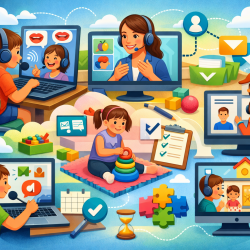
Online therapy in schools can expand access when districts face staffing shortages, scheduling constraints, or geographic barriers. When delivered thoughtfully, teletherapy can support IEP goals while keeping services consistent and measurable.
For many students, online therapy also offers practical advantages:
- More consistent scheduling across the school year
- Access to specialized providers who may be difficult to recruit locally
- Engaging digital tools that support practice and data collection
- Opportunities for collaboration with school teams
Most importantly, online school-based therapy remains anchored in the purpose of the IEP: helping students access learning and make meaningful educational progress.
A Helpful Way to Think About It
If you’re still unsure, try this simple framing:
- IEP services help a student succeed in school.
- Private therapy helps a child function across life.
- Together, they can form a more complete support system when coordinated well.
No single pathway is “better” in every situation. The best plan is the one that matches your child’s needs, respects their time and energy, and creates steady progress in the places that matter most.
For more information, please follow this link.