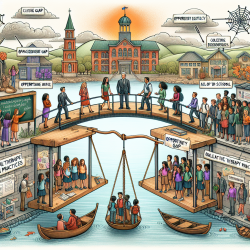
Why instructional time is back in the spotlight
In the wake of COVID-19 disruptions, many policymakers and district leaders have renewed calls to expand instructional time—through longer school days, extended school years, or targeted “acceleration” initiatives. The logic is straightforward: more time should create more opportunity to learn.
Yet the evidence base suggests a more nuanced reality. The September 2022 EdWorkingPaper “Instructional Time in U.S. Public Schools: Wide Variation, Causal Effects, and Lost Hours” (Kraft & Novicoff) highlights three critical insights:
- On average, U.S. instructional time is broadly comparable to other high-income countries.
- Within the U.S., instructional time varies dramatically from school to school.
- Even when time is scheduled, a meaningful share can be lost to absences, interruptions, and other factors—meaning schools may be able to “find time” without changing the calendar.
For school systems making decisions under tight budgets and staffing constraints, the key question becomes: should we add time, or should we protect and improve the time we already have?
How much time do U.S. students spend in school—compared with other countries?
A common assumption in public debate is that U.S. students spend less time in school than peers abroad. Kraft and Novicoff challenge that narrative using international datasets (OECD and PISA) focused on lower secondary grades.
The headline finding is that the U.S. sits in a broadly similar range of total instructional time compared with other high-income countries. The U.S. tends to have:
- Longer school days (more hours per day than the international average), but
- Shorter school years (fewer days per year than some countries).
In other words, the U.S. often reaches comparable annual totals through a different “mix” of days and hours. This matters because policy proposals frequently focus on a single lever (like adding days) without considering how the overall design of time affects learning, staffing, and student well-being.
The bigger issue: wide variation across U.S. public schools
Even if national averages look comparable internationally, the U.S. story is defined by decentralization. States set minimum requirements in different ways (days, hours, or both), and districts can add time if resources allow. The result is a patchwork that creates unequal learning opportunities.
Using nationally representative U.S. data (the 2015–16 National Teacher and Principal Survey), the paper estimates that the typical public school is in session about:
- 6.87 hours per day
- 178.71 days per year
- 1,227 total hours per year
But the most important statistic is the spread: schools at the 90th percentile provide about 190 more hours per year than schools at the 10th percentile—roughly five and a half weeks of schooling. That is not a marginal difference; it is a structural gap in access to learning time.
Where does the variation come from?
The paper documents several patterns that are relevant for district planning:
- State policy differences explain a meaningful share of variation in total school hours, especially through differences in hours per day.
- School level matters: elementary schools tend to have fewer total hours than middle and high schools.
- Charter schools, on average, operate with more total hours than traditional public schools, with a notable “upper tail” of urban charters that extend time substantially.
- Location matters: suburban schools average fewer hours than rural schools and schools in towns, while cities show wider dispersion (some very low-time schools and some very high-time schools).
For leaders focused on equity, this raises an important planning implication: “time” is not distributed evenly, and students’ access to it depends heavily on geography and governance.
Does more instructional time improve achievement?
The research synthesis in the paper reaches a balanced conclusion: additional instructional time can raise student achievement, but how time is increased and how it is used strongly influence results.
What the causal evidence suggests
- Extending the school year shows some of the most consistent positive effects. Adding days can improve outcomes, and losing days (due to weather closures, strikes, or policy changes) can reduce achievement.
- Extending the school day has more mixed results in the U.S. research base, though international evidence often finds positive effects—especially where baseline instructional time is relatively low.
- Bundled reforms (for example, extended time combined with tutoring, stronger instruction, or other school-improvement strategies) frequently show larger gains than time alone.
A practical takeaway for decision-makers is that time behaves like other school resources: it is often necessary but not sufficient. If added minutes are not protected from disruption or used for high-quality instruction and targeted support, the return on investment can be limited.
The overlooked opportunity: recovering “lost” learning time within the existing day
One of the paper’s most actionable contributions is its distinction between different layers of time:
- Allocated time: what the schedule promises.
- Potential time: time available when students and teachers are present and instruction is not disrupted.
- Enacted time: time when students are actually engaged in learning.
Many debates focus on allocated time (adding days or hours). But the case study of Providence Public School District (PPSD) demonstrates how large the gap can be between allocated and potential time.
Case study findings: how much time can be lost?
Using conservative assumptions and combining administrative data with observational estimates of interruptions, the paper estimates that students in PPSD lose approximately:
- 16% of allocated instructional time in elementary school
- 21% in middle school
- 25% in high school
In high school, that loss equates to about 258 hours per year—approximately 45 days of school. The largest contributors include:
- Unexcused student absences (especially pronounced in high school)
- Outside interruptions (intercom announcements, phone calls, and the disruption that follows)
- Teacher absences (with substitutes not always able to deliver sustained instruction)
This is a powerful reframing: before a district pays for calendar expansion, it may be able to reclaim a meaningful share of learning time by reducing preventable losses.
Implications for school and district strategy
For district leaders, the research points to two complementary pathways—both of which can be pursued without treating “more time” as a single, one-size-fits-all solution.
1) Targeted expansion where time is lowest
Because instructional time varies so widely, expanding time may be most defensible where current time is well below typical levels. This approach also aligns with research suggesting diminishing returns: the lowest-time schools may see the biggest gains from additional hours or days, if used well.
2) Protect and strengthen the time already scheduled
Recovering lost time can be a high-leverage strategy, particularly when staffing and budgets make large expansions difficult. Districts can consider actions such as:
- Attendance improvement strategies (early outreach, family engagement, data-driven monitoring, and supportive interventions)
- Reducing avoidable classroom interruptions (tightening protocols for announcements and non-urgent calls)
- Strengthening substitute coverage and teacher attendance supports (so instruction continues when absences occur)
- Reducing exclusionary discipline when appropriate and increasing in-class supports to keep students learning
Where TinyEYE fits: supporting learning by reducing barriers to engaged time
Instructional time only translates into achievement when students are present, regulated, and able to participate meaningfully. Schools are increasingly asked to address barriers that sit at the intersection of learning, communication, and well-being.
TinyEYE’s online therapy services can support schools’ efforts to make instructional time more effective by helping districts:
- Improve access to speech-language and mental health supports that may reduce learning disruptions over time
- Provide services in a flexible format that can reduce scheduling friction for schools and families
- Support student communication and self-regulation skills that underpin classroom participation
While therapy services are not a substitute for instructional improvement or attendance policy, they can be an important part of a broader strategy to increase the share of the day that becomes real, engaged learning time.
Conclusion: time is a resource—equity and effectiveness depend on how it is used
The evidence does not support a simple claim that the U.S. is universally “behind” other countries on instructional time. Instead, the more urgent finding is domestic: some students receive dramatically less time than others, and many students lose a substantial share of scheduled time to preventable factors.
For districts deciding what to do next, the research suggests a balanced approach: expand time strategically where it is lowest, and aggressively protect the instructional time already on the schedule. Both strategies can matter—especially when paired with strong instruction and targeted student supports.
For more information, please follow this link.