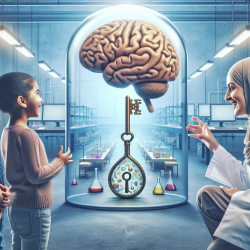
Artificial intelligence (AI) is no longer a “future trend” in education—it’s already influencing how students learn, how teachers plan, and how schools support diverse needs. For special and inclusive education, the stakes are even higher: when AI is designed and implemented well, it can remove barriers and expand access; when it’s implemented poorly, it can unintentionally exclude the very students it’s meant to support.
A 2026 systematic literature review published in Contemporary Educational Technology (Nantaburom & Wetcho, 2026) synthesized peer-reviewed research from 2017–2024 to understand how AI is being used in special and inclusive education, what challenges schools face, and what ethical issues must be addressed. The review analyzed 21 studies drawn from major databases (including Scopus, Web of Science, ERIC, and ProQuest) and identified clear themes that school leaders and student support teams can use as a practical roadmap.
For organizations like TinyEYE—supporting schools through online therapy services—this matters because AI is increasingly woven into the same ecosystem as teletherapy, digital learning platforms, accessibility tools, and student data systems. Understanding the evidence helps schools make smarter, safer decisions.
What the research says AI is doing best in inclusive and special education
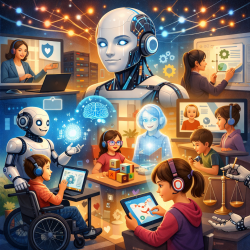
The review highlights AI’s strongest contributions in three broad areas: personalization, accessibility, and early identification/intervention support. In practice, these show up in tools and platforms that adapt to student needs, reduce communication barriers, and help educators notice patterns earlier.
1) Personalization and assistive learning: meeting students where they are
One of the most consistent findings across the literature is that AI can support more personalized learning experiences—especially when students need alternative pathways to access content or demonstrate understanding.
Examples of AI-enabled approaches discussed in the review include:
- Adaptive learning systems that adjust difficulty, pacing, or content presentation based on student performance.
- Intelligent tutoring systems that provide guided practice and feedback, sometimes in smaller steps than a busy classroom can offer.
- Mastery learning platforms that help students progress once skills are demonstrated, rather than moving on by schedule.
- Behavior analytics tools that can help detect engagement patterns or learning behaviors that may signal a need for support.
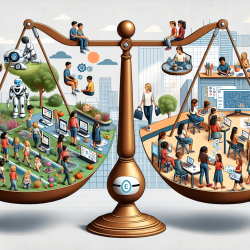
For special education teams, personalization is not just a convenience—it’s often the difference between access and exclusion. But the review also emphasizes a key tension: personalization can drift into “classification” (labeling students by categories or predicted traits), which can be harmful if it narrows expectations or reinforces bias. That’s why inclusive design and oversight matter.
2) AI tools supporting physical, sensory, and communication access needs
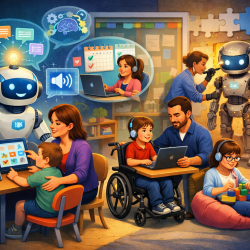
Another major theme is how AI-driven assistive technologies can increase independence and participation for students with physical, visual, auditory, motor, or speech-related disabilities.
The review points to widely used tools and capabilities such as:
- Screen readers and voice assistants (e.g., VoiceOver, TalkBack, Siri, Google Assistant) supporting navigation and access to digital content.
- Object identification and visual support tools (e.g., Lookout by Google) that help students interpret their environment.
- Speech-to-text / live transcription (e.g., Otter.ai, Google Live Transcribe) supporting students who are Deaf or hard of hearing.
- Voice control tools (e.g., Google Voice Access) supporting students with motor access needs.
From a school services perspective, these tools can complement therapy goals—especially when students need consistent access supports across settings (classroom, home, therapy sessions, and independent work time). The key is ensuring that tools are selected based on student needs and are implemented with training and monitoring, not simply “turned on” and assumed to work for everyone.
3) Chatbots in inclusive education: fast help, low pressure, but not a replacement for humans
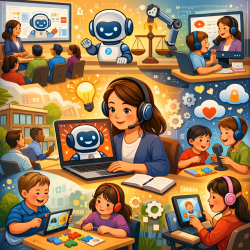
AI chatbots are frequently promoted as a scalable way to support learners—and the review acknowledges real benefits. Chatbots can provide immediate responses, repeat instructions without frustration, and offer text-based or voice-based interaction depending on student needs.
Research summarized in the review suggests chatbots can:
- Provide on-demand explanations and supplementary learning resources.
- Create a non-judgmental practice space for students who fear making mistakes publicly.
- Support accessible communication through text for some students and audio for others.
At the same time, the literature also flags limitations that matter in real classrooms: chatbots may lack emotional understanding, may require careful training, and can give inaccurate or overly generic responses. For students with complex needs, AI should be viewed as a support layer—not the core relationship. In special education, progress is often built on trust, co-regulation, and nuanced observation—areas where human professionals remain essential.
Where schools get stuck: implementation challenges that don’t show up in the product demo
The review identifies several recurring barriers that can slow or derail effective AI adoption in inclusive settings. These challenges aren’t just technical—they’re organizational and human.
- Teacher readiness and capacity: Educators may not receive enough training to use AI tools effectively or to interpret outputs responsibly.
- User involvement gaps: Students with disabilities are often underrepresented in design, testing, and feedback cycles—leading to tools that “work in theory” but fail in real use.
- Inconsistent personalization quality: Some tools claim to be adaptive but don’t meaningfully reflect individual needs, contexts, or accessibility requirements.
- System integration issues: AI tools may not align with curriculum, IEP processes, accessibility policies, or the school’s existing technology stack.
For school leaders, this is a reminder that procurement is only the beginning. Sustainable implementation typically requires professional development, clear usage guidelines, and ongoing evaluation.
The ethical issues schools can’t afford to ignore
Ethics is not a side conversation in special and inclusive education—it’s central. The review highlights fairness, transparency, privacy, and inclusive design as core concerns, echoing broader global discussions about AI ethics.
In practical school terms, ethical AI use means asking questions like:
- Fairness: Does this tool perform equally well for students with different disabilities, language backgrounds, or communication styles?
- Transparency: Can educators and families understand what the system is doing and why it makes certain recommendations?
- Privacy and consent: What data is collected (audio, video, behavior logs), who can access it, and how long is it stored?
- Inclusive design: Were people with disabilities involved in designing and testing the tool (“nothing about us without us”)?
These questions become even more important when AI tools use sensitive student data or influence high-stakes decisions (such as referrals, placement, or intervention intensity). AI should support professional judgment—not replace it.
What this means for schools using online therapy services (and how TinyEYE fits in)
Online therapy and digital service delivery are already part of how many schools meet student needs. AI will increasingly intersect with that reality—through scheduling automation, documentation supports, accessibility features, progress monitoring, and student-facing learning tools.
Based on the themes in the research, schools can take a few practical steps to adopt AI responsibly while protecting inclusive values:
- Start with student needs, not tools: Define the access barrier first, then evaluate whether AI is the right support.
- Build an implementation plan: Include training, troubleshooting, and a clear “who does what” model for teachers, clinicians, and IT.
- Evaluate with an inclusion lens: Pilot with diverse learners, including students who use AAC, students with sensory needs, and students with multiple exceptionalities.
- Set ethical guardrails: Document privacy expectations, data handling, and how AI outputs will (and will not) be used in decision-making.
- Keep humans at the center: AI can scale information and access, but inclusive education depends on relationships, expertise, and collaboration.
For TinyEYE, the opportunity is to help schools navigate this shift with clarity—supporting service continuity, accessibility, and evidence-informed practice while keeping student dignity and equity front and center.
The bottom line
The systematic review makes one point unmistakably clear: AI can be transformative for special and inclusive education, but only when it is implemented with ethical intent, educator capacity-building, and meaningful involvement of the people most impacted—students with disabilities and their communities.
Schools that treat AI as a “plug-and-play” solution risk frustration, inequity, and mistrust. Schools that treat AI as a carefully governed support—aligned to curriculum, accessibility, and inclusive practice—can unlock real gains in participation, independence, and learning.
For more information, please follow this link.