Why Teacher Expectations Matter More Than We Think
In schools, expectations are not just private thoughts. They show up in everyday decisions: who gets called on, who gets coached through a difficult task, who receives detailed feedback, and who is offered enrichment. A growing body of research finds that teachers’ beliefs about students can meaningfully influence students’ academic performance and broader school experiences over the course of a year.
This matters for every student, but it matters especially for students who have historically been underestimated due to race, socioeconomic status, disability, language background, or other identity markers. When expectations are inaccurate or biased, they can limit access to rigorous instruction and supportive relationships. When expectations are high and paired with the right supports, they can become a powerful protective factor that helps students persist, engage, and achieve.
The Research Model: How Expectations Become Outcomes
Decades of research describe a consistent pattern: teachers form expectations, those expectations shape teacher behavior, students respond to that treatment, and outcomes shift accordingly. This process model (associated with Brophy & Good and supported by Rosenthal & Jacobson’s work) helps explain why expectations are not “soft” variables. They are mechanisms that influence opportunity.
In practical terms, expectations can affect:
Instructional opportunities (who gets challenged, who gets remediation, who gets meaningful practice)
Quality of feedback (specific and actionable vs. vague or minimal)
Student engagement (how often students are invited into discussion and higher-order thinking)
Relationships (warmth, patience, trust, and willingness to repair conflict)
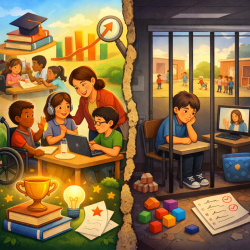
When expectations are low, students may receive fewer opportunities to demonstrate growth. Over time, that can look like lower performance, reduced confidence, and weaker academic identity. When expectations are high and instruction is equitable, students are more likely to experience rigorous learning and sustained support.
Biased Expectations: A Key Driver of Inequity
Research in social psychology and education repeatedly finds that teacher expectations can vary based on student characteristics, including race and socioeconomic status. Studies cited in the literature review report patterns such as lower expectations for Black and Latinx students compared to white peers, and lower expectations for students experiencing poverty.
These expectation gaps matter because they can create a self-fulfilling cycle:
Students sense what adults believe about them.
They may receive fewer chances to engage in grade-level work.
They may internalize lower academic confidence or belonging.
Achievement differences widen, reinforcing the original (biased) belief.
Importantly, the research also notes a parallel risk: some students may benefit from overly generous assumptions (often tied to affluence or whiteness). That can lead to more encouragement, more benefit of the doubt, and more access to advanced opportunities. Equity work requires schools to pay attention to both sides of this imbalance.
What Shapes Teacher Expectations?
The literature review highlights several mechanisms that influence how expectations form and how they translate into classroom experience.
1) Mindset: Fixed vs. Growth Beliefs About Ability
Mindset theory (often associated with Carol Dweck) distinguishes between beliefs that intelligence is fixed and beliefs that ability can grow with effective instruction, practice, and support. Teachers who hold stronger growth beliefs are more likely to interpret struggle as part of learning rather than as evidence of limitation.
Why this matters in special education and intervention contexts: students receiving services often have a long history of being defined by what they cannot do yet. A growth-oriented approach reframes support as skill-building, not sorting.
2) Teacher-Student Relationships
Expectations and relationships influence each other. When teachers expect success, they may invest more in connection, provide more patient coaching, and interpret behavior through a more compassionate lens. When expectations are low, conflict can increase and closeness can decrease.
Research cited in the review suggests that relationship quality (closeness, conflict, perceived support) can vary based on biases tied to ethnicity, appearance, and socioeconomic status. That variation can influence academic recommendations and long-term opportunities.
3) Teacher Skillset and Behavior
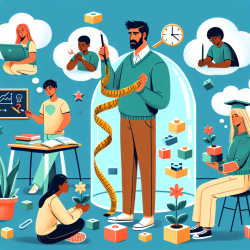
Even when educators value equity, expectations can leak into practice through subtle behaviors: how long a teacher waits for an answer, how often they prompt a student to revise, whether they assign complex tasks, and how they group students.
Over time, these small decisions add up to different learning trajectories.
What High Expectations Look Like in Real Classrooms
High expectations are not the same as “no accommodations” or “everyone does the same thing.” In special education, the goal is ambitious, individualized growth with appropriate supports. High expectations are best understood as a commitment to access, progress, and dignity.
High-expectation practice often includes:
Grade-level access with scaffolds (supports that help students engage in the same essential thinking)
Specific, actionable feedback that teaches students how to improve
Multiple ways to show learning while maintaining rigorous goals
Mixed-ability opportunities so students are not isolated from strong models and rich discussion
Predictable routines and relationship repair that protect belonging and reduce conflict
Interventions That Can Raise Expectations (Without Causing Harm)
The literature review emphasizes that interventions should be carefully designed. Some efforts to raise expectations have unintentionally increased racial disparities, which is a critical warning for school leaders: “high expectations” messaging without structural support can become pressure, punishment, or exclusion.
Research points to several promising approaches.
Growth Mindset-Supportive Teaching Practices
Interventions that help teachers see ability as developable can shift classroom decisions. Messaging that groups can improve over time and that individuals can change has been shown to influence future behavior. When teachers internalize growth beliefs, they are more likely to persist with students, provide better feedback, and maintain academic press.
Building a Classroom Culture That Normalizes Growth
Teacher beliefs contribute to classroom norms. When struggle is treated as expected and productive, students are less likely to disengage or interpret difficulty as proof they do not belong. This is particularly important for students who have experienced repeated academic failure or stigma.
Empathic Mindset Approaches
Work designed to reduce bias in discipline through empathy-based framing may also support higher expectations. When educators interpret behavior through a lens of stress, development, and unmet needs, they are more likely to respond with instruction and support rather than exclusion.
Where TinyEYE Fits: Supporting Schools to Align Expectations with Effective Support
As an online therapy provider partnering with schools, TinyEYE sits at an important intersection: related services, student access, and team-based problem-solving. While teacher expectations are formed in classrooms, they are strengthened (or weakened) by the systems around teachers.
Online therapy services can support high expectations when they help schools:
Reduce “wait to fail” patterns by increasing access to timely speech-language therapy, occupational therapy, or mental health supports where appropriate
Use data to clarify need so expectations are based on evidence and progress monitoring rather than assumptions
Strengthen collaboration between therapists and educators to align goals, classroom strategies, and carryover supports
Protect instructional time with flexible scheduling options that reduce disruption and increase consistency
Promote student agency by setting clear, achievable targets and celebrating growth over time
In special education, the most harmful expectation is not “this will be hard.” It is “this won’t change.” Effective therapy and strong instruction both communicate the opposite: skills can grow, and we will teach them.
What School Leaders Can Do Next
Shifting expectations is not a one-time training. It is an ongoing practice supported by routines, reflection, and shared language. School leaders can begin with a few high-leverage moves:
Audit opportunity: Who gets grade-level tasks, enrichment, leadership roles, and advanced coursework?
Look for “soft” signals: Wait time, feedback quality, and who gets coached vs. rescued.
Support teacher learning: Pair mindset work with concrete instructional strategies and coaching.
Strengthen relationships: Build structures for connection, repair, and culturally responsive communication.
Monitor for unintended effects: Track outcomes by subgroup to ensure interventions reduce, not widen, disparities.
Conclusion: Expectations Are a Daily Equity Practice
The research is clear: teacher expectations predict student outcomes, in part because expectations shape behavior, relationships, and access to meaningful learning opportunities. Bias can distort expectations, creating patterns that limit achievement for students who most need schools to be places of possibility. The encouraging finding is that expectations can change, and well-designed interventions can improve outcomes.
When schools combine high expectations with the right supports, students are more likely to experience rigorous learning, stronger belonging, and sustained growth. That is the goal: not optimism alone, but equitable opportunity backed by skilled instruction and integrated services.
For more information, please follow this link.